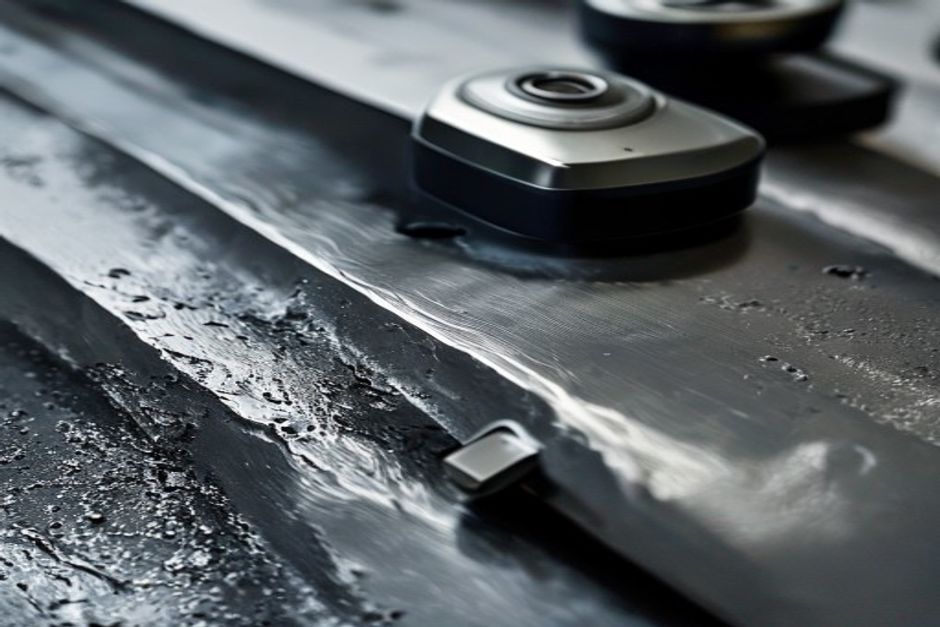
Surface finish — the texture, roughness, and waviness of a machined surface — directly impacts component performance across multiple dimensions: wear resistance, friction characteristics, fatigue life, corrosion resistance, sealing effectiveness, and aesthetic quality. Specifying the correct surface finish standard is as critical as specifying dimensional tolerances.

Understanding Surface Finish Parameters
Ra (Average Roughness)
Ra is the arithmetic average deviation of the surface profile from a mean line. It is the most widely used surface roughness parameter worldwide — though it has significant limitations. Ra does not distinguish between a surface with occasional deep scratches and one with uniform fine peaks and valleys; mathematically, both can produce the same average. Despite this, Ra remains the default surface finish specification for most engineering drawings.
Rz (Mean Peak-to-Valley Roughness)
Rz averages the height difference between the five highest peaks and five lowest valleys within a sampling length. Unlike Ra, Rz is sensitive to occasional deep scratches or isolated surface defects — making it more useful for applications where peak-to-valley depth is critical (sealing surfaces, bearing journals).
Rt (Maximum Roughness Depth)
Rt measures the absolute maximum peak-to-valley height within the evaluation length. This is the most conservative (highest reported value) surface roughness metric and is used for critical sealing and contact surfaces.
Surface Finish Achievable by Process
| Технологический процесс | Typical Ra (µin / µm) | Примечания |
|---|---|---|
| Saw Cut | 250-500 / 6.3-12.5 | Rough, visible saw marks |
| CNC Milling (roughing) | 125-250 / 3.2-6.3 | Visible tool marks, sharp edges |
| CNC Milling (finishing) | 32-63 / 0.8-1.6 | Standard machined finish |
| CNC Turning (finishing) | 16-63 / 0.4-1.6 | Smooth cylindrical surfaces |
| Grinding | 4-32 / 0.1-0.8 | High-precision bearing journals |
| EDM (single pass) | 32-63 / 0.8-1.6 | Matte EDM surface, recast layer |
| EDM (skim pass) | 4-16 / 0.1-0.4 | Polished EDM with fine recast |
| Lapping | 1-8 / 0.025-0.2 | Optical flatness, seal surfaces |
| Полировка | 1-4 / 0.025-0.1 | Mirror finish, plastic molds |
Surface Finish for Engineering Plastics
Engineering plastics machined with proper parameters achieve excellent surface finishes without post-processing:
- Нейлон (PA6, PA66): 32-63 Ra achievable with sharp carbide tools at 10,000+ RPM. High-helix end mills reduce tearing common in nylon machining.
- POM (ацеталь): 16-63 Ra with excellent consistency. POM machines cleanly with sharp tools; dull tools cause smearing.
- PEEK: 16-63 Ra achievable at moderate feeds. Coolant improves finish quality.
- Поликарбонат: 32-125 Ra typical. Aggressive feed rates cause chipping at edges.
How to Specify Surface Finish
- Specify Ra on the engineering drawing for general surfaces (e.g., “Ra 63 max”)
- Use Rz for sealing surfaces where occasional peaks must be controlled
- Require measurement reports (CMM with roughness probe or profilometer) for critical surfaces
- Be realistic: specifying Ra 4 on a milled surface drives cost without adding functional value — use the coarsest surface finish that meets functional requirements
ЧАСТО ЗАДАВАЕМЫЕ ВОПРОСЫ
What is the practical value of Surface Finish Standards for Machined Components: Complete Guide?
Surface Finish Standards for Machined Components: Complete Guide helps connect material choice, process limits, cost, and application risk before committing to production.
What should be checked first for Surface Finish Standards for Machined Components: Complete Guide?
Начните с реальных требований к применению, предполагаемых условий эксплуатации, объема производства, требований к допускам и ожиданий в отношении контроля качества.
What usually causes problems in Surface Finish Standards for Machined Components: Complete Guide?
Проблемы, как правило, возникают из-за неясных требований, неподходящих материалов, нереалистичных допусков, отсутствия критериев контроля или поздних изменений в проекте.
How can buyers reduce risk with Surface Finish Standards for Machined Components: Complete Guide?
Покупатели могут снизить риски, предоставив перед составлением коммерческого предложения чертежи, условия эксплуатации, критические размеры, планируемые объемы закупок и требования к качеству.