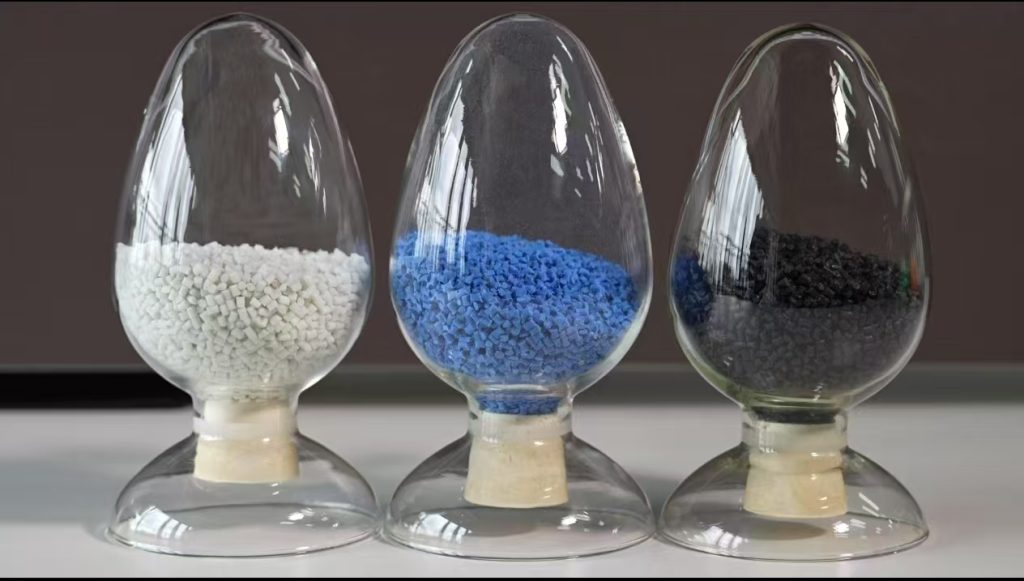
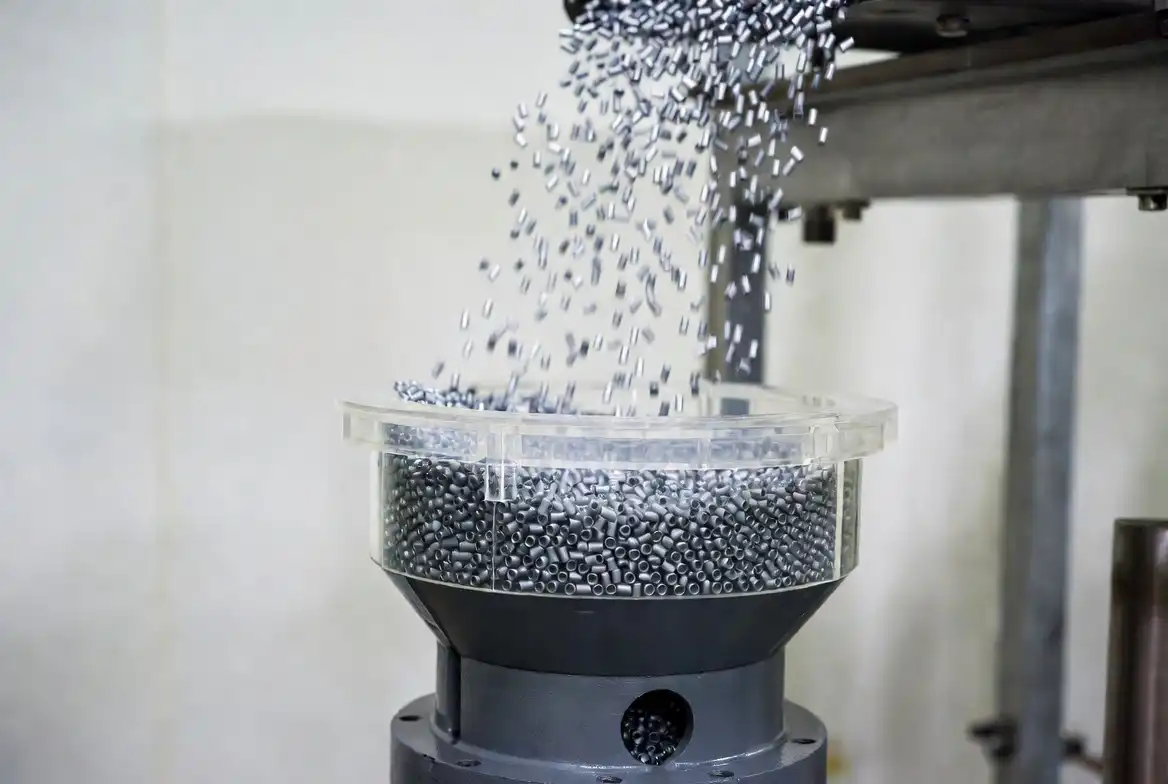
PA6 GF30 is Nylon 6 reinforced with a nominal 30% glass fiber by weight. It is selected when unfilled PA6 does not provide enough stiffness, creep resistance or dimensional stability. This guide combines a real commercial-grade datasheet, typical cross-supplier property ranges, moisture effects and injection-molding starting conditions.
PA6 GF30 at a Glance
The example values below come from the downloadable PA6 WHG30A datasheet. That PDF does not state specimen conditioning; confirm the method and validate molded parts before design approval.
What Does PA6 GF30 Mean?
- PA6 identifies Polyamide 6, also called Nylon 6.
- GF identifies glass-fiber reinforcement.
- 30 identifies the nominal glass-fiber content by weight.
PA6 GF30 is a material family, not one universal recipe. Heat stabilizers, impact modifiers, lubricants, pigments, flame retardants, resin viscosity and fiber system can all change the final properties and molding behavior. Two materials marked PA6 GF30 are therefore not automatically interchangeable.
PA6 WHG30A Manufacturer Datasheet
The downloadable manufacturer TDS identifies the commercial grade as PA6 WHG30A. The following values are reproduced from that one-page document. They are typical product values, not guaranteed design limits.
| Недвижимость | Стандарт испытаний | Единица | PA6 WHG30A |
|---|---|---|---|
| Прочность на разрыв | ISO 527-2 | МПа | 165 |
| Tensile Strain at Break | ISO 527-2 | % | 9 |
| Прочность на изгиб | ISO 527-2 | МПа | 230 |
| Модуль упругости | ISO 178 | МПа | 6000 |
| Izod Notched Impact Strength | ISO 179 | кДж/м² | 17 |
| Temperature of Deflection Under Load | ISO 75-2/B | °C | 175 |
| Melting Index | ISO 1183 | g/10 min | 20 |
| Плотность | ISO 1183 | г/см³ | 1.36 |
| Molding Shrinkage | ISO 2577 | % | 0.6 |
| Воспламеняемость | UL 94 | - | - |
Read the test conditions: ISO 75-2/B is the 0.45 MPa HDT method; it cannot be compared directly with the 1.8 MPa ranges below. The PDF does not state specimen conditioning. Its impact row names Izod but cites ISO 179 (Charpy), its flexural-strength row cites the tensile standard ISO 527-2, and its melting-index row cites ISO 1183 (density); confirm those methods with the supplier before using the figures for approval. The UL 94 result is blank. Request the current signed TDS, batch certificate of analysis and applicable RoHS, REACH or UL documents for the selected grade.
Download PA6 WHG30A Datasheet (PDF)
Need the compound rather than only the data? See the Страница продукта PA6 GF30 for grade selection and send the part requirements with your datasheet or sample request.
PA6 GF30 Typical Property Data
The following tables show illustrative ranges across commercial PA6 GF30 formulations, not additional specifications for WHG30A. Use them only to identify questions for grade selection; values can differ with formulation, specimen thickness, method and conditioning. The WHG30A PDF above is the source for that named grade.
Illustrative PA6 GF30 Mechanical Ranges (Dry as Molded Examples)
| Недвижимость | Значение (типичный диапазон) | Метод испытания | Единица |
|---|---|---|---|
| Модуль упругости при растяжении | 9,500-10,500 | ISO 527-1/-2 | МПа |
| Прочность на разрыв | 170-190 | ISO 527-1/-2 | МПа |
| Удлинение при разрыве | 3.0-4.5 | ISO 527-1/-2 | % |
| Модуль упругости | 8,000-9,500 | ISO 178 | МПа |
| Прочность на изгиб | 260-290 | ISO 178 | МПа |
| Ударная вязкость по Шарпи (с надрезом) | 12-16 | ISO 179/1eA | кДж/м² |
| Ударная вязкость по Шарпи (без надреза) | 75-95 | ISO 179/1eU | кДж/м² |
| Ударная вязкость по Изоду (с надрезом) | 11-15 | ISO 180/A | кДж/м² |
| Твёрдость по вдавливанию шариком | 200-230 | ISO 2039-1 | МПа |
Физические свойства
| Недвижимость | Значение (типичный диапазон) | Метод испытания | Единица |
|---|---|---|---|
| Плотность | 1.35-1.38 | ISO 1183 | г/см³ |
| Водопоглощение (23 °C, насыщение) | 5.5-6.5 | ISO 62 | % |
| Водопоглощение (23 °C, равновесная относительная влажность 50%) | 1.5-2.0 | ISO 62 | % |
| Усадка при формовании (параллельная, 1,6 мм) | 0.25-0.40 | ISO 294-4 | % |
| Усадка при формовании (нормальная, 1,6 мм) | 0.80-1.10 | ISO 294-4 | % |
| Усадка после формования (параллельная, 1 час при 110 °C) | 0.05-0.10 | ISO 294-4 | % |
| Усадка после формования (стандартная, 1 час при 110 °C) | 0.10-0.15 | ISO 294-4 | % |
Тепловые свойства
| Недвижимость | Значение (типичный диапазон) | Метод испытания | Единица |
|---|---|---|---|
| Температура плавления (ДСК, 10 К/мин) | 218-222 | ISO 11357-1/-3 | C |
| Температура HDT при давлении 0,45 МПа | 215-220 | ISO 75-1/-2 | C |
| Температура HDT при давлении 1,8 МПа | 195-210 | ISO 75-1/-2 | C |
| Температура размягчения по Викату (VST/B50) | 205-215 | ISO 306 | C |
| Коэффициент линейного теплового расширения (параллельное направление, 23–55 °C) | 2.0-3.0 x 10⁻⁵ | ISO 11359-1/-2 | 1/K |
| Коэффициент линейного теплового расширения (нормальный, 23–55 °C) | 6.0-9.0 x 10⁻⁵ | ISO 11359-1/-2 | 1/K |
| Теплопроводность | 0.28-0.35 | DIN 52612 | Вт/(м·К) |
| Удельная теплоемкость | 1.5-1.7 | — | Дж/(г·К) |
Электрические свойства
| Недвижимость | Значение (типичный диапазон) | Метод испытания | Единица |
|---|---|---|---|
| Диэлектрическая проницаемость (1 МГц) | 3.5-4.5 | IEC 60250 | — |
| Коэффициент потерь (1 МГц) | 0.01-0.03 | IEC 60250 | — |
| Объемное сопротивление | 1013-1015 | IEC 60093 | ом·см |
| Удельное сопротивление поверхности | 1012-1014 | IEC 60093 | ом |
| Сравнительный индекс отслеживания (CTI) | 500-600 | IEC 60112 | V |
| Диэлектрическая прочность (1,6 мм) | 30-35 | IEC 60243-1 | кВ/мм |
Воспламеняемость
| Недвижимость | Значение | Метод испытания | Примечания |
|---|---|---|---|
| UL 94 Rating (0.8 mm) | HB | UL 94 | Standard GF30 is not flame retardant |
| UL 94 Rating (1.6 mm) | HB | UL 94 | FR V-0 requires specialized FR compound |
| Limiting Oxygen Index (LOI) | 22-24% | ISO 4589 | Burns in normal atmosphere |
| Auto-Ignition Temperature | >400 C | ASTM D1929 | — |
Property Changes with Moisture Conditioning
PA6 absorbs moisture from the environment. At equilibrium with 50% RH at 23 C, a PA6 GF30 part will absorb approximately 1.5-2.0% water by weight. This changes the mechanical properties significantly. Tensile strength decreases by 30-40%, flexural modulus by 25-35%, and impact strength increases by 50-100%. The data table below shows the approximate shift from dry-as-molded to conditioned (50% RH) values:
| Недвижимость | Dry (as molded) | Conditioned (50% RH, 23 C) | Change |
|---|---|---|---|
| Прочность на разрыв (МПа) | 180 | 110-130 | -30 to -40% |
| Модуль упругости (ГПа) | 9.0 | 6.0-7.0 | -25 to -35% |
| Charpy Notched Impact (kJ/m2) | 14 | 20-28 | +50 to +100% |
| HDT at 1.8 MPa (C) | 200 | 65-75 (wet) | Significant drop at full saturation |

Параметры обработки
Сушка
PA6 GF30 must be dried to a moisture content below 0.10% (target 0.05%) before injection molding. Recommended drying: 80 C for 4-6 hours in a desiccant dryer with a dew point of -30 C or lower. Tray drying at 80 C for 8-12 hours is acceptable for non-critical applications but is less reliable than desiccant drying. Do not dry above 90 C — oxidative discoloration (yellowing) begins at higher temperatures.
Литье под давлением
| Параметр | Recommended Range | Примечания |
|---|---|---|
| Melt Temperature (nozzle) | 250-280 C | Lower end for thin walls, upper for thick |
| Температура пресс-формы | 80-100 C | 100 C preferred for crystallinity and surface |
| Скорость впрыска | От среднего до быстрого | Faster fill reduces fiber orientation variation |
| Hold Pressure | 50-80% of injection pressure | Enough to pack out shrinkage, avoid overpacking |
| Противодавление | 5-15 bar (hydraulic) | Higher back pressure improves melt homogeneity |
| Скорость вращения винта | 50-150 rpm | Lower end for larger shot sizes to avoid shear heating |
| Residence Time (max at melt temp) | 10-15 minutes | Purge if longer; degraded PA6 produces burn marks and strength loss |
Mold Design Considerations
- Gate type: All standard gate types are suitable. Pin gates, edge gates, and fan gates all work. Tunnel (submarine) gates require attention to gate diameter — minimum 0.8 mm to avoid excessive shear with 30% GF.
- Gate location: Position the gate so flow is into the thickest section. Avoid long flow paths that allow the melt front to cool before the cavity fills.
- Вентиляция: Adequate venting is critical. Poor venting leads to burn marks, short shots, and die buildup. Vent depth: 0.01-0.02 mm.
- Draft angle: Minimum 1 degree, 2 degrees preferred for textured surfaces. GF grades shrink tightly onto cores — adequate draft prevents ejection damage.
- Steel selection: 30% glass fiber is abrasive. For production runs exceeding 100,000 shots, use hardened tool steel (min. 52 HRC) for cavities and cores, especially at gates and high-wear areas.
Comparing PA6 GF30 with Related Grades
PA6 GF30 is a common selection, but the following cross-grade values are screening examples, not a matched set of supplier specifications. Compare test method, load and conditioning before using them in a design decision. See the PA6 GF15, PA6 GF30 и PA6 GF40 pages for the available grade routes.
| Недвижимость | PA6 без наполнителя | PA6 GF15 | PA6 GF30 | PA6 GF50 | PA66 GF30 |
|---|---|---|---|---|---|
| Прочность на разрыв (МПа) | 80 | 120-140 | 170-190 | 200-230 | 180-200 |
| Модуль упругости (ГПа) | 2.8 | 5.5-6.5 | 8.0-9.5 | 14-16 | 9.0-10.5 |
| Изод с надрезом (кДж/м²) | 5-7 | 7-10 | 11-15 | 13-18 | 10-13 |
| HDT at 1.8 MPa (C) | 65-75 | 180-195 | 195-210 | 210-215 | 240-255 |
| Плотность (г/см³) | 1.14 | 1.23 | 1.36 | 1.56 | 1.37 |
| Относительная стоимость | 1.0x | 1.1x | 1.2x | 1.4x | 1.3x |
PA6 Glass Fiber Grade Comparison: GF15 vs GF30 vs GF40 vs GF50
Glass fiber content drives the performance-cost trade-off in PA6 compounds. The table below shows how increasing glass fiber from 15% to 50% changes key mechanical and thermal properties. Use these screening values to narrow your grade selection before requesting commercial datasheets.
| Недвижимость | PA6 без наполнителя | PA6 GF15 | PA6 GF30 | PA6 GF40 | PA6 GF50 |
|---|---|---|---|---|---|
| Tensile Strength (MPa, dry) | 70 – 85 | 110 – 130 | 160 – 190 | 180 – 200 | 200 – 220 |
| Модуль упругости (МПа) | 2,500 – 3,000 | 4,500 – 5,500 | 8,000 – 10,000 | 10,500 – 12,000 | 13,000 – 15,000 |
| Удлинение при разрыве (%) | 20 – 40 | 3 – 5 | 3 – 5 | 2 – 3 | 1.5 – 2.5 |
| Charpy Notched Impact (kJ/m², 23°C) | 5 – 8 | 8 – 12 | 10 – 15 | 12 – 16 | 13 – 17 |
| Плотность (г/см³) | 1.13 – 1.15 | 1.20 – 1.23 | 1.35 – 1.38 | 1.44 – 1.48 | 1.55 – 1.58 |
| HDT/A, 1.8 MPa (°C) | 60 – 75 | 180 – 195 | 200 – 210 | 210 – 215 | 215 – 220 |
| Температура плавления (°C) | 220 – 225 | 220 – 225 | 220 – 225 | 220 – 225 | 220 – 225 |
| Mold Shrinkage (flow, %) | 1.0 – 1.5 | 0.4 – 0.7 | 0.2 – 0.5 | 0.15 – 0.35 | 0.10 – 0.25 |
| Типовые применения | Non-structural clips, covers | Housings, brackets, medium stiffness | Engine covers, fan shrouds, power tool housings | High-stiffness frames, pump bodies | Metal replacement, extreme rigidity |
Selection guidance: PA6 GF30 is the most commonly specified glass-filled PA6 grade because it delivers the best stiffness-to-cost ratio for typical structural applications. Move to GF40 or GF50 only when the application demands stiffness approaching aluminum or when wall thickness is constrained. Stay with GF15 when flow into thin-wall features or impact toughness at low temperature matters more than maximum rigidity.
PA6 GF30 Commercial Grade Equivalents
| Supplier | PA6 GF30 Grade | Основные особенности |
|---|---|---|
| BASF | Ultramid B3WG6 / B3EG6 | General-purpose, heat-stabilized, excellent surface finish |
| DuPont | Zytel 73G30 HSL | Heat-stabilized, widely specified in automotive |
| LANXESS | Durethan BKV 30 H2.0 | Heat-aged, good flow for thin-wall parts |
| DSM / Envalior | Akulon K224-G6 | General-purpose, good chemical resistance |
| Domo / Solvay | Technyl C216 V30 | Widely available in Asia, good processability |
| EMS-Grivory | Grilon BG-30 | Good impact balance, suitable for structural parts |
| Radici | Radilon S RV300 | Easy flow, suitable for complex geometries |
| Энсингер | TECAMID 6 GF30 | Stock shapes and machined parts |
When substituting between PA6 GF30 suppliers, compare full datasheets in the same conditioned state (dry-as-molded vs 50% RH), verify mold shrinkage in both flow and transverse directions, and run a production-tool trial. Even nominally equivalent PA6 GF30 grades differ in fiber length retention, color stability, heat aging, and processing window.
Where PA6 GF30 Is Used
PA6 GF30 is commonly considered for structural parts that need higher stiffness and heat resistance than unfilled PA6. The selected commercial grade still has to meet the part’s impact, moisture, chemical, appearance, electrical and flame requirements.
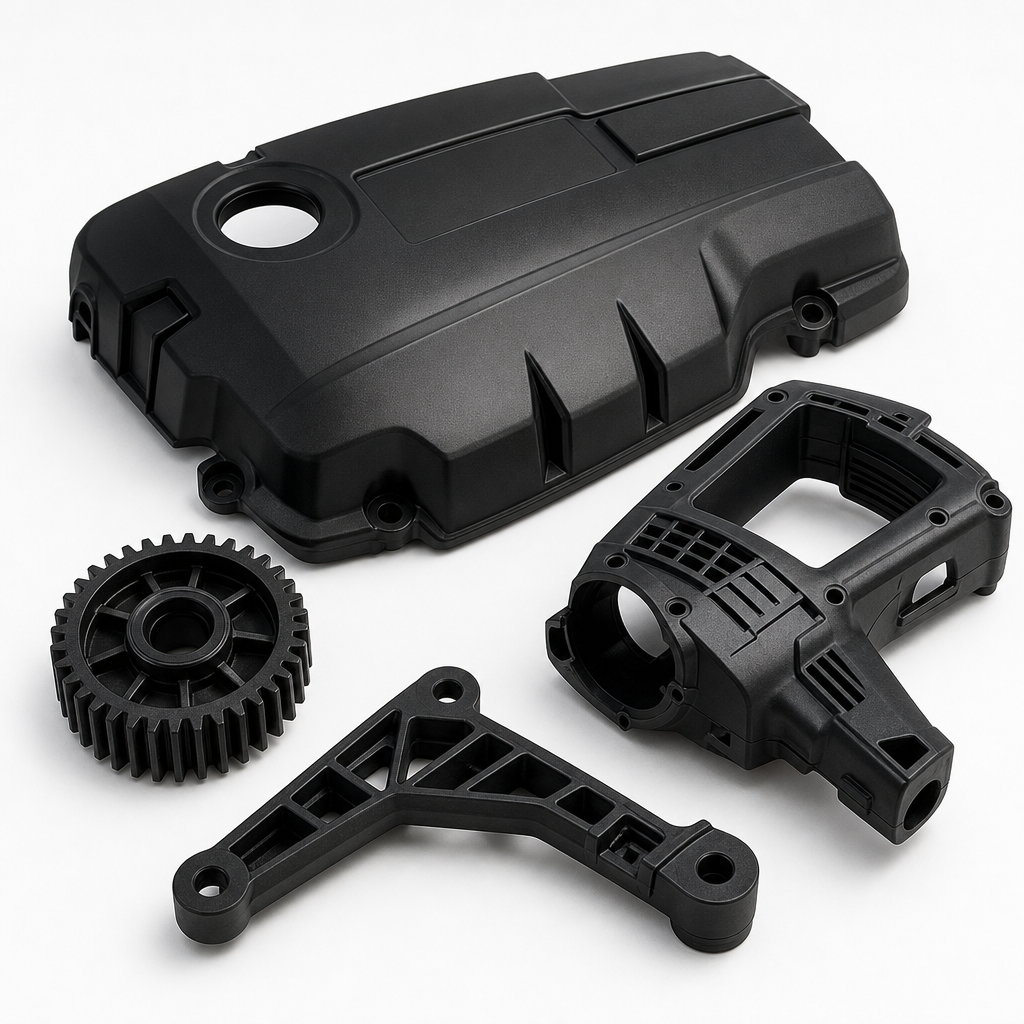
Fan shrouds, structural housings, brackets and selected under-hood components.
Pump bodies, impellers, machine housings and load-bearing supports.
Housings, connectors and supports when the grade meets the required electrical and flammability ratings.
Stiff housings, frames and mechanical components where fiber orientation and surface finish are controlled.
О наших поставках инженерных пластиков
As an ISO 9001 certified engineering plastics manufacturer and exporter, we produce PA6 GF30 in heat-stabilized, impact-modified, UV-stabilized and color-matched variants. For the selected formulation, our technical team can provide the matching datasheet, batch-specific certificate of analysis and applicable RoHS, REACH or UL documentation. Send your target properties, annual volume and delivery destination to discuss a standard grade or custom formulation.
Need a PA6 GF30 datasheet for your application or a quotation for supply? Свяжитесь с нашей командой — specify your volume, delivery destination, and any special requirements (color, certification, impact modification). The current datasheet and quotation scope are confirmed for the selected grade and requirements.
Часто задаваемые вопросы
Is PA6 GF30 one standardized material?
No. PA6 GF30 identifies a PA6 material family with a nominal 30% glass-fiber level. The additive package, resin viscosity, fiber system and conditioning state vary by commercial grade, so compare the complete TDS and validate the molded part.
Is PA6 GF30 the same as PA66 GF30?
No. Both contain nominal 30% glass fiber, but PA6 and PA66 use different base polymers. They differ in melting and heat performance, moisture response, processing window and grade availability.
Is standard PA6 GF30 flame retardant?
Not automatically. A standard grade and a PA6 GF30 FR grade are separate selections. Confirm the exact UL 94 rating, specimen thickness and certification for the chosen commercial grade.
Какие основные характеристики следует проверять в техническом паспорте PA6-GF30?
Check tensile strength, flexural modulus, the named impact method, HDT test load, density, shrinkage and specimen conditioning. As a named example, WHG30A lists 165 MPa tensile strength (ISO 527-2), 6,000 MPa flexural modulus (ISO 178) and 175°C HDT (ISO 75-2/B, 0.45 MPa). Do not treat the cross-supplier ranges as guarantees for WHG30A.
Почему показатели прочности, указанные в техническом паспорте PA6-GF30, различаются у разных поставщиков?
Glass fiber type and length, coupling system, base resin, additives and conditioning can change the result. Compare values measured by the same method and conditioning state; there is no universal percentage allowance that makes two grades equivalent.
Как мне интерпретировать значения из технического паспорта PA6-GF30 при разработке моего проекта?
Choose dry or conditioned data to match the part’s actual service environment, then validate critical dimensions and loads on molded samples. The WHG30A PDF does not state conditioning. Set design margins from the part loads, environment and failure consequences; the datasheet alone does not define a universal safety factor.
Какие параметры обработки должны быть указаны в хорошем техническом паспорте PA6-GF30?
Check the selected grade’s drying, melt and mold temperatures, moisture limit and injection settings. The WHG30A one-page PDF provides property data but no processing window; the parameters above are starting points for trials, not guaranteed WHG30A settings.
Technical Review and Data Sources
Technical author and reviewer: WanHan Technical Team
Last Technical Review: September 28, 2026
- WanHan PA6 WHG30A Technical Data Sheet is the source for the named WHG30A values on this page.
- ISO 1183, ISO 527-2, ISO 178, ISO 179, ISO 75-2/B and ISO 2577 are cited as printed in that TDS; noted method inconsistencies must be confirmed before approval.
- Cross-supplier values are reference ranges. Exact properties depend on grade, test method and conditioning; use the current grade TDS and representative testing for qualification.