
This nylon 3d printing fdm guide explains practical considerations for material selection, design review, manufacturing, and sourcing decisions.
Comparing FDM and SLS nylon 3D printing for functional prototypes — material properties, surface quality, cost, and when each technology delivers superior results.
Why Nylon Dominates Functional 3D Printing
When functional prototypes demand mechanical performance — not just visual form — nylon emerges as the material of choice. Unlike PLA or ABS, nylon offers genuine engineering-grade properties: high tensile strength, excellent fatigue resistance, chemical stability, and meaningful flexural performance. The choice between FDM (fused deposition modeling) and SLS (selective laser sintering) determines cost, surface quality, part geometry freedom, and material performance.
For engineers evaluating additive manufacturing for functional prototypes, this comparison provides actionable guidance based on real material data and manufacturing constraints.
FDM Nylon 3D Printing: Desktop Accessibility
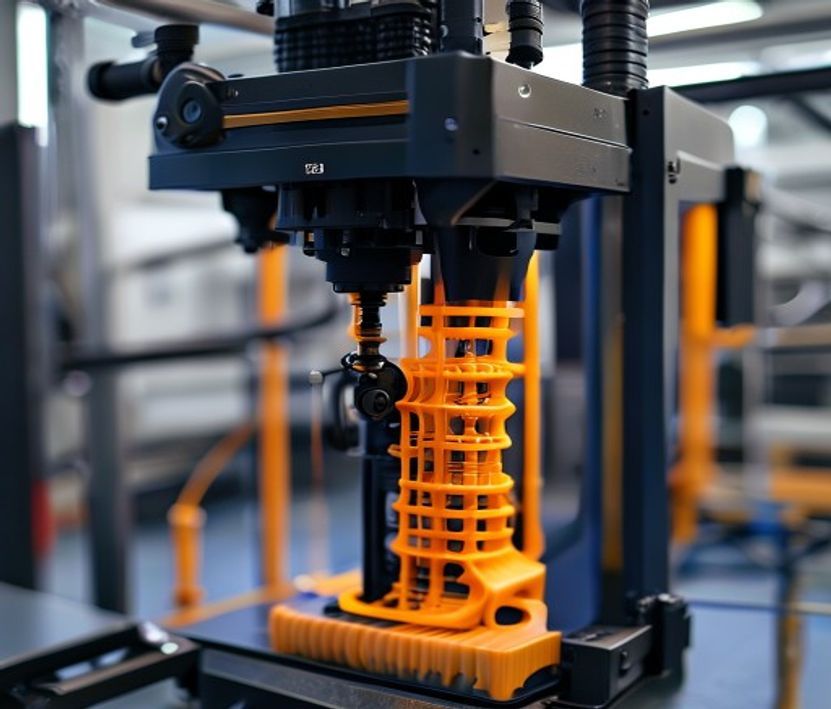
FDM with nylon filament brings industrial-grade material to accessible platforms. Printers like Prusa, Bambu Lab, and Raise3D can process nylon with proper enclosure and filament drying.
Nylon Filament Options for FDM:
- PA6 (нейлон 6) — Best overall balance of strength and printability for FDM. Requires enclosure to maintain chamber temperature above 25°C. Print temperature: 250-265°C. Bed adhesion is challenging — PEI sheet or glue stick required. Higher moisture sensitivity demands active drying before and during printing.
- PA12 (нейлон 12) — Superior moisture resistance makes PA12 the easier FDM option. Lower water absorption means fewer print failures from moisture bubbles. Available from brands including MatterHackers, eSUN, and Polymaker. Print temperature: 255-270°C.
- Carbon Fiber Nylon (PA6-CF, PA12-CF) — Available from nylonplastic.com in both 1.75mm and 2.85mm diameters. Carbon fiber reinforcement increases stiffness and provides ESD properties. Requires hardened steel nozzle (0.4mm minimum) due to abrasive fiber content. Layer adhesion improvement over standard nylon with reduced thermal expansion warpage.
Strength Data Comparison (isotropic tensile strength, printed flat on bed):
| Материал | Прочность на разрыв | Модуль упругости | HDT (0.45 MPa) |
|---|---|---|---|
| PA6-CF (FDM) | 52-58 MPa | 6,200 MPa | 180 °C |
| PA12 (FDM) | 42-48 MPa | 1 800 МПа | 150 °C |
| PA6 (FDM) | 45-52 MPa | 2,000 MPa | 155°C |
|---|---|---|---|
| ABS (FDM) | 35-42 MPa | 2,200 MPa | 85 °C |
The key limitation of FDM: strength is highly anisotropic. Parts printed vertically have 40-60% lower tensile strength than parts printed flat due to inter-layer adhesion limits. Engineers must account for this orientation effect in load calculations.
SLS Nylon 3D Printing: Complex Geometry Without Supports
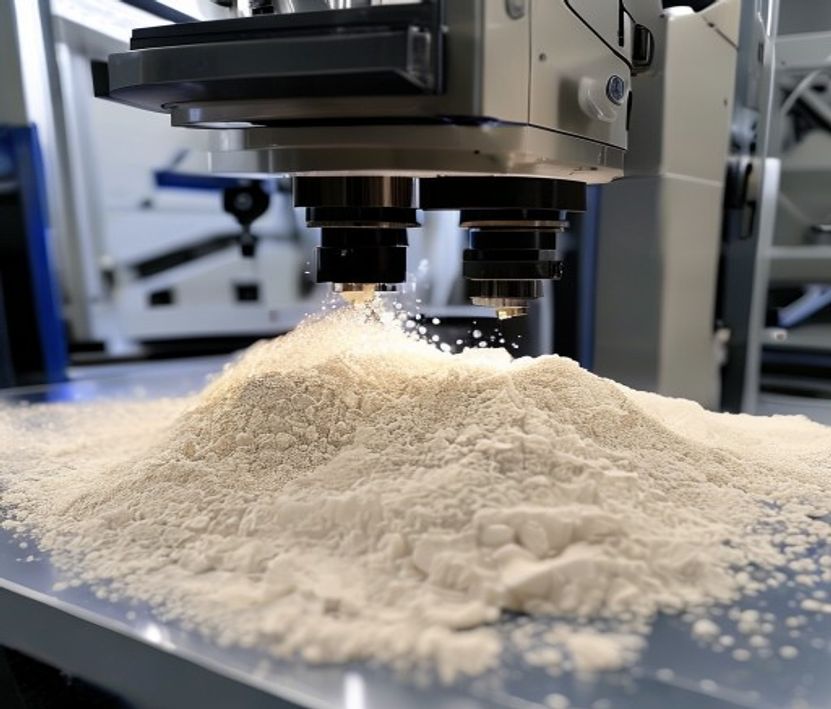
Selective Laser Sintering uses a high-power laser to fuse nylon powder layer by layer. The process eliminates support structure requirements — enabling truly complex geometries impossible with FDM.
SLS Materials:
- PA12 — The standard SLS material. Provides excellent dimensional accuracy (±0.3% or ±0.1mm, whichever is greater). Surface roughness Ra: 8-15 μm (somewhat grainy). Tensile strength: 45-50 MPa (isotropic — no orientation effect). elongation at break: 15-20%.
- PA11 — Derived from renewable castor oil. Superior impact resistance and UV stability. More expensive but better for outdoor applications. Lower moisture sensitivity than PA12.
- PA12-GF (Glass Filled) — Increased stiffness (flexural modulus: 4,500 MPa vs. 1,700 MPa for standard PA12). Reduced ductility. Excellent for functional testing of components requiring stiffness.
- TPU SLS — Flexible nylon composite enabling elastic parts via SLS. Shore A hardness 85-90. Limited elongation recovery compared to injection molded TPU, but suitable for flexible prototypes.
SLS Key Advantages:
– Isotropic mechanical properties (no print orientation effect)
– No support structures needed — unlimited design complexity
– 30% powder recycling (mixed with fresh powder, 70/30 ratio)
– Excellent for small-batch production (10-500 units)
SLS Limitations:
– High equipment cost ($100,000-500,000 for industrial systems)
– Part wall thickness minimum: 0.8mm (design constraint)
– Surface finish requires post-processing for cosmetic parts
– Higher per-part cost for large volumes vs. injection molding
Head-to-Head Comparison: FDM vs. SLS Nylon
Анализ затрат:
For a 100×100×10mm functional prototype part:
– FDM PA6-CF (nylonplastic.com filament): ~$3-5 material cost
– SLS PA12 (professional service): $15-40 per part
For small-batch production (10-100 parts), FDM wins on unit cost. For 100-1000 parts, SLS becomes cost-competitive due to reduced labor and no tooling requirements.
Качество поверхности:
– FDM: Visible layer lines (0.1-0.2mm). Can be smoothed with acetone vapor (ABS) or mechanical sanding. Carbon fiber reinforced nylons show fiber texture on surfaces.
– SLS: Grainy texture, matte surface. Post-processing (bead blasting, tumbling, sanding) improves appearance. Vapor smoothing not applicable.
Сравнение механических свойств:
| Недвижимость | FDM PA6-CF | SLS PA12 | Injection Molded PA6-GF30 |
|---|---|---|---|
| Прочность на разрыв | 52-58 MPa | 45-50 MPa | 170 МПа |
| Isotropic | Нет | Да | Да |
| Max Operating Temp | 180 °C | 150 °C | 200°C |
|---|---|---|---|
| Dimensional Tolerance | ±0,5 мм | ±0.3mm | ±0,05 мм |
Note: Injection molding still outperforms both AM processes by 3-4× in mechanical properties due to superior fiber orientation and crystallinity. AM is for prototypes and bridge production — not a substitute for injection molding in structural applications.
When to Choose FDM vs. SLS for Nylon Prototypes
Choose FDM Nylon when:
– Budget is under $5,000 for equipment
– Carbon fiber reinforcement is needed (ESD, stiffness)
– Part requires specific color or surface finish
– Production volume exceeds 50 units (FDM wins on unit cost)
– You already have an enclosed FDM printer
Choose SLS Nylon when:
– Design complexity is extreme (undercuts, complex lattice, hidden channels)
– Isotropic mechanical properties are critical for your test
– You need functional testing within 1-2 weeks without major capital investment (use a service bureau)
– Wall thickness constraints require unsupported thin sections
Гибридный подход — Many engineering teams use both: FDM for rapid iteration and low-cost prototypes, SLS for functional verification and small-batch bridge production. This approach optimizes cost throughout the product development cycle.
nylonplastic.com’s Role — We supply PA6-CF and PA12-CF filaments for FDM printing, in both 1.75mm and 2.85mm diameters. Our carbon fiber reinforced nylons are formulated for minimal moisture absorption and consistent extrusion. Available for immediate shipment to North America, Europe, and Southeast Asia.
ЧАСТО ЗАДАВАЕМЫЕ ВОПРОСЫ

В каких случаях целесообразно использовать 3D-печать с использованием нейлона: FDM или SLS для изготовления функциональных прототипов?
3D-печать из нейлона: FDM против SLS для функциональных прототипов — это хороший вариант, когда быстрая итерация, сложная геометрия, низкая стоимость изготовления пресс-форм или мелкосерийное производство имеют большее значение, чем себестоимость одной детали, изготовленной методом литья.
Что следует учесть перед выбором метода 3D-печати из нейлона: FDM или SLS для изготовления функциональных прототипов?
Проверьте размер детали, свойства материала, качество обработки поверхности, допуск на размеры, тепловое воздействие, направление нагрузки и необходимость последующей обработки.
Как 3D-печать из нейлона (FDM и SLS) для изготовления функциональных прототипов сравнивается с ЧПУ-обработкой?
3D-печать позволяет быстро создавать сложные формы, в то время как обработка на станках с ЧПУ часто более эффективна для получения точных поверхностей, более жестких допусков и материалов производственного класса.
Что влияет на стоимость 3D-печати из нейлона: FDM или SLS для функциональных прототипов?
Стоимость зависит от материала, объема сборки, времени печати, высоты слоя, удаления поддержки, финишной обработки, контроля и количества деталей в сборке.

