Выбор между PC-ABS и поликарбонатом — это типичная задача, которая возникает, когда масштаб проекта выходит за рамки возможностей PLA, PETG и стандартного ABS. Оба материала предназначены для изготовления функциональных деталей, однако они предъявляют разные требования к принтеру и технологическому диапазону.
Если вам нужен практический ответ, то чистый ПК, как правило, превосходит ПК-АБС по термостойкости и прочности, в то время как ПК-АБС часто выигрывает благодаря простоте обработки и меньшему риску коробления.
Почему эти два материала ведут себя по-разному
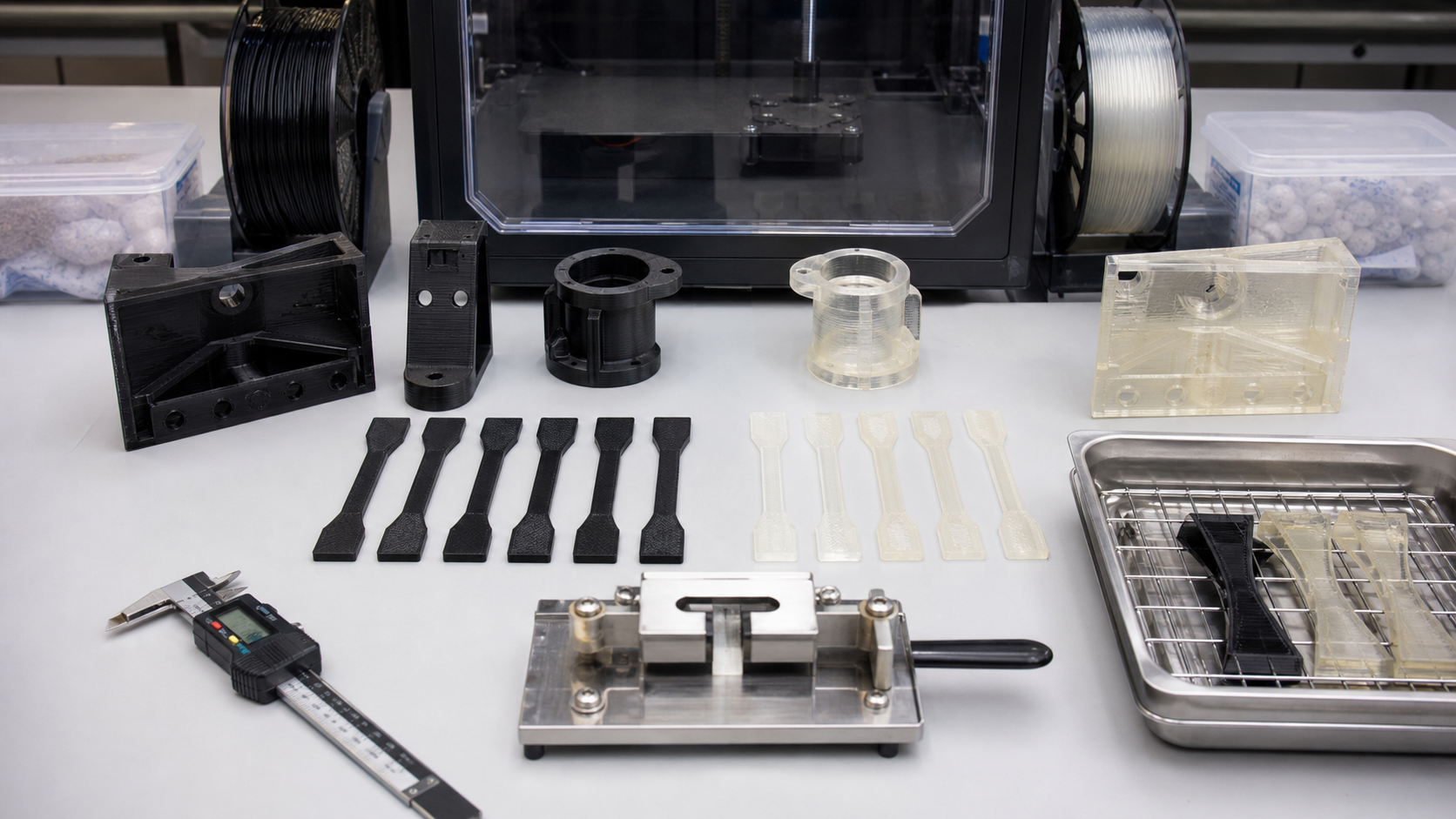
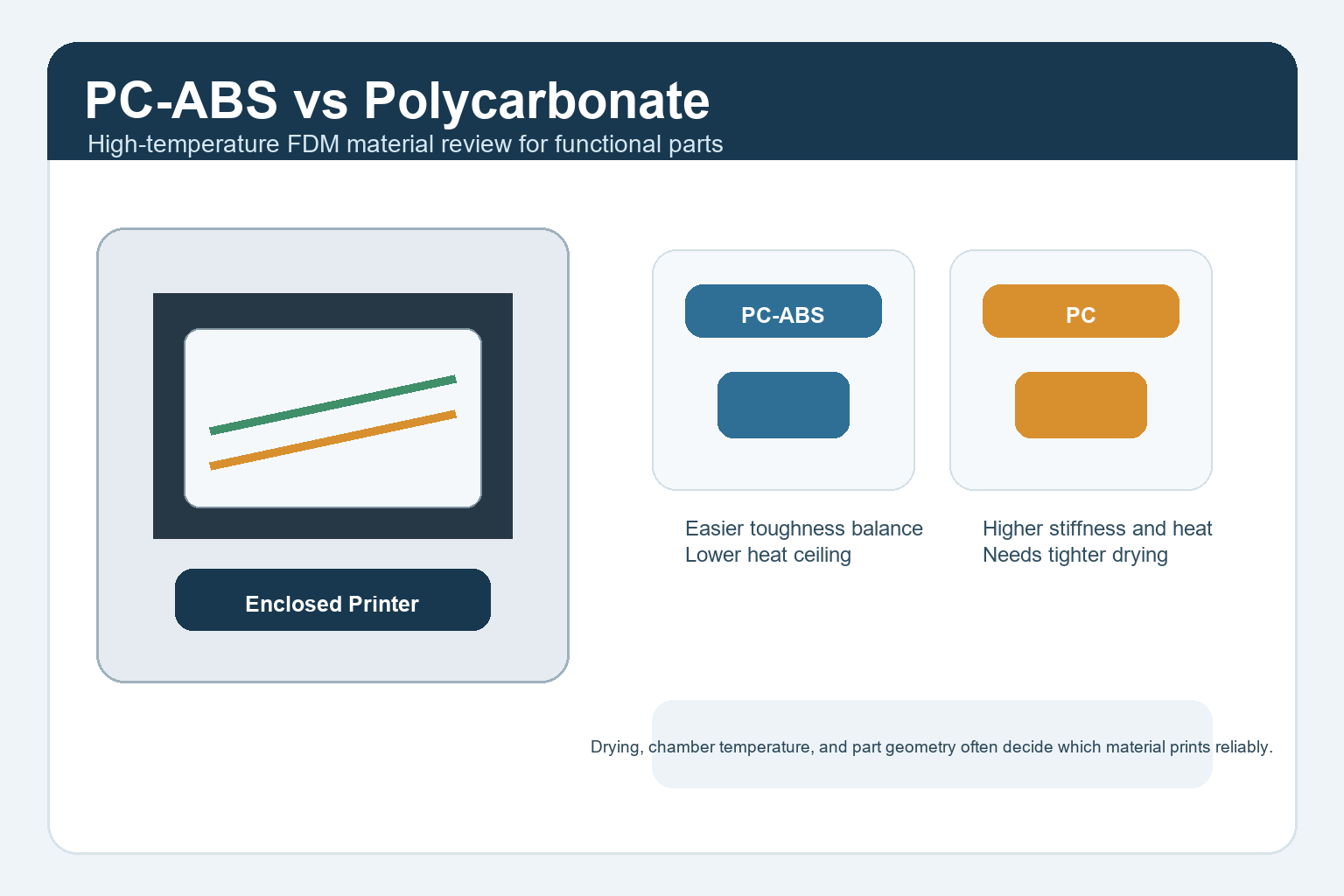
Поликарбонат обеспечивает более высокие тепловые характеристики и ударную вязкость, но, как правило, требует более высокой температуры, стабильных условий в камере и более тщательного контроля влажности. PC-ABS уступает по устойчивости к экстремальным температурам, но зато отличается более простой печатью.
Именно поэтому многие инженерные команды начинают с использования PC-ABS для изготовления корпусов и крышек, а к чистому поликарбонату (PC) переходят только в том случае, если для конкретного применения действительно требуется дополнительный запас по термостойкости.
Сравнение вкратце
Выбор зависит не только от максимальной температуры сопла. На то, какой материал позволит изготовить более качественную деталь, влияют также температура камеры, размер печати, эстетические требования и характер возможных отказов.
| Коэффициент отбора | PC-ABS | Поликарбонат (PC) |
|---|---|---|
| Риск деформации | Нижний | Выше |
| Термостойкость | Хорошо | Выше |
| Ударопрочность | Хорошо | Выше |
| Требования к принтеру | Требовательный | Более сложные |
| Оптимальный вариант использования | Прочные корпуса | Конструкционные детали, подвергаемые воздействию высоких температур |
Когда PC-ABS является лучшим выбором для инженерных целей
Выбирайте PC-ABS, если рабочая камера вашего принтера имеет ограниченные размеры, деталь достаточно велика, из-за чего при печати из чистого поликарбоната возникает сильная деформация, или если конструкция требует более гибкого технологического процесса для изготовления прототипов и мелких партий деталей.
Часто это является разумным промежуточным материалом, когда команда хочет перейти от АБС, не сталкиваясь сразу со всеми сложностями, связанными с использованием чистого поликарбоната.
Когда «чистый» ПК оправдывает дополнительную нагрузку на процессор
Выбирайте чистый поликарбонат (PC), если деталь подвергается воздействию более высоких рабочих температур, более сильным ударным нагрузкам или более жестким условиям эксплуатации, которые могут привести к тому, что PC-ABS будет работать на пределе своих возможностей.
Если принтер, сушилка и камера печати позволяют это сделать, чистый поликарбонат зачастую является более надежным долгосрочным решением для изготовления функциональных деталей конечного назначения.
Related Reading
- Руководство по 3D-печати с использованием нити для ПК
- Руководство по температурам печати на поликарбонате (PC)
- Руководство по 3D-печати с использованием смеси PC-ABS
Functional-Part Selection Checklist
| Требование | PC-ABS starting point | Pure PC starting point |
|---|---|---|
| Heat and impact | Balanced toughness with easier processing | Higher heat and impact ceiling with a controlled printer |
| Деформация | Usually more forgiving but still needs a stable chamber | Higher shrinkage stress; chamber and bed control matter more |
| Сушка | Dry to the filament supplier’s moisture limit | Critical because moisture can reduce layer bonding and finish |
| Проверка | Test snap fits, heat exposure and impact on the actual geometry | Test wall thickness, orientation, annealing and load case |
Record nozzle, bed, chamber, drying time, layer height and cooling settings with each revision. If the geometry will move to injection molding, recheck shrinkage, ribs, bosses and draft before tooling. Compare the PC vs nylon filament guide when moisture or wear matters.
ЧАСТО ЗАДАВАЕМЫЕ ВОПРОСЫ
PC-ABS печатается легче, чем поликарбонат?
Как правило, да. PC-ABS часто более терпим к отклонениям, чем чистый поликарбонат, но для обоих материалов все же рекомендуется сушка, использование закрытого корпуса и стабильный контроль температуры.
В каких случаях следует выбрать поликарбонат вместо PC-ABS?
Выбирайте поликарбонат в тех случаях, когда более высокая термостойкость, жесткость или прозрачность важнее, чем удобство печати. Перед запуском серийного производства деталей уточните точный тип материала и возможности принтера.
Нужно ли сушить материалы PC-ABS и PC перед печатью?
Да. Оба материала могут впитывать влагу. Сушка и хранение в герметичной упаковке помогают уменьшить образование пузырьков, нитей, слабых слоев и неровностей поверхности.

