
Температура печати нейлона должна быть откалибрована с учётом конкретного филамента PA6 или PA66, принтера, уровня влажности и геометрии детали.
Start with the exact filament’s nozzle, bed and drying instructions. PA6, PA66, blends and reinforced grades can behave differently even when they share a nylon name. Dry the spool first, then change one setting at a time within both the filament window and the printer’s ratings.
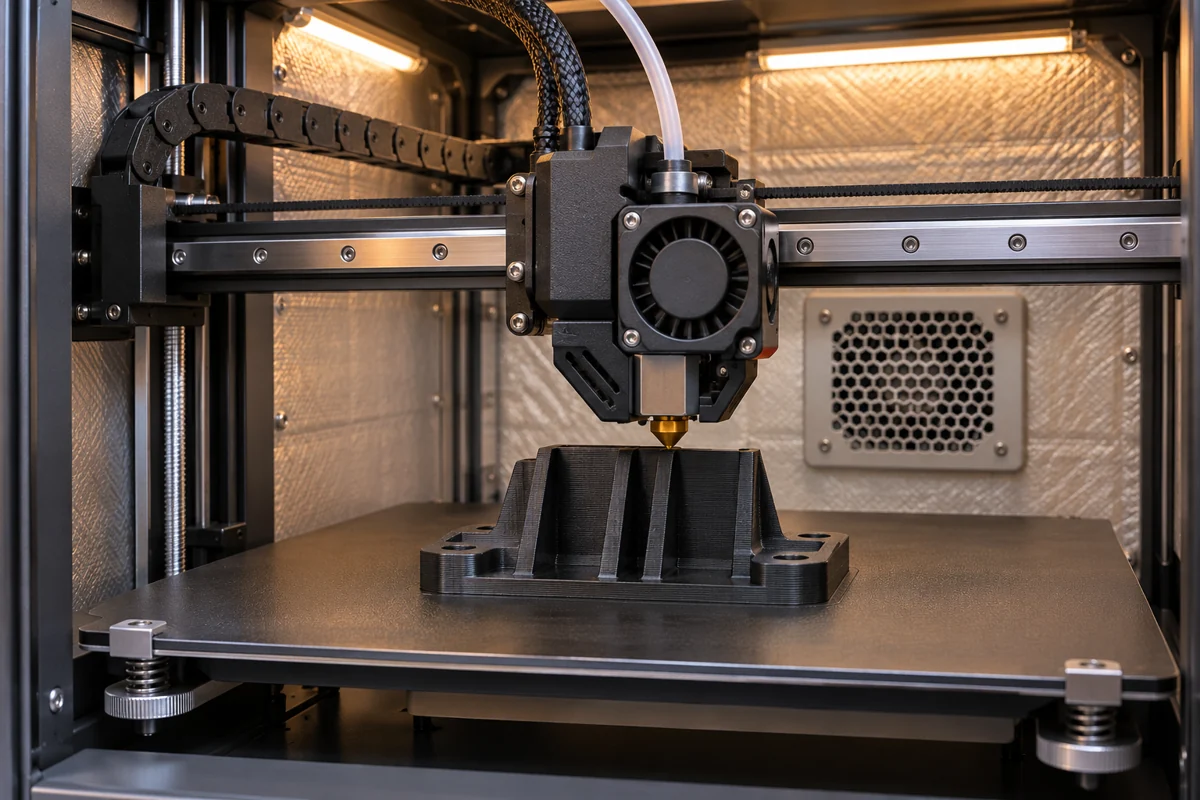
Понимание тепловых свойств нейлона
Нейлон (полиамид) — это полукристаллический термопласт, требующий особого контроля температуры во время печати. В отличие от PLA или PETG, нейлон имеет узкий диапазон параметров обработки, в котором одновременно обеспечиваются оптимальная адгезия слоев и точность размеров.
Semicrystalline nylon has both a glass transition and a melting range. A resin melting point describes a material property. A printer setpoint also depends on formulation, flow, nozzle hardware and the conditions of the build.

Настройки температуры хотенда
Диапазон температур PA6 (нейлон 6)
Use the PA6 filament supplier’s window. For example, Fiberon PA6-CF20 calls for 280–300°C at the nozzle and 40–50°C at the bed. These figures apply to that carbon-filled grade.
Диапазон температур PA66 (нейлон 66)
Confirm whether the spool is PA66, a copolyamide or a filled grade. Polymaker PolyMide CoPA is a PA6/PA66 copolymer with a specified 250–270°C nozzle range and a 25–50°C bed range. For a PA66 spool, use the grade sheet and verify the hotend rating before loading it. See the nylon family comparison for the material decision.

Температура ложа и адгезия
Нейлон известен своими проблемами с прилипанием к рабочей поверхности. Вот несколько проверенных решений:
Рекомендуемые температуры в постели
| Нить | Bed range in supplier guide | Build surface |
|---|---|---|
| Fiberon PA6-CF20 | 40–50°C | Check the filament and build plate guidance. |
| PolyMide CoPA | 25–50°C | Supplier lists PC and textured PEI, with adhesive where needed. |
| Other PA6, PA66 or filled grade | Use the exact grade sheet | Follow the printer and plate maker’s adhesion and release instructions. |
Решения в области адгезии
Start with a clean, compatible surface, then check first-layer height and release instructions. Apply only an adhesive permitted by the plate and filament suppliers. Test on a small part before committing to a large build.
Температура в камере и корпус
Check whether the filament calls for an enclosure, a controlled chamber temperature or ambient printing. An enclosure can limit drafts, but it does not deliver a guaranteed chamber temperature. Use the machine’s documented controls.
Если у вашего принтера нет корпуса, рекомендуем оправдывает ли ваш проект использование оборудования производственного уровня.
Калибровка температурной башни
A temperature tower lets you compare several nozzle settings with the same spool, speed, cooling and orientation. Put each step inside the grade’s published window and the printer’s limit. Inspect bridges, surface and layer bonding, then print a coupon that represents the real part.
Record the setpoint for each segment in your slicer. Check the actual change points in the toolpath preview, and keep the first layer and other controls fixed while comparing the segments.
Помните: перед проведением испытаний на термостойкость нейлон должен быть сухим!
Устранение типичных неполадок
Недостаточная экструзия при данной температуре
Если даже при высоких температурах наблюдается недостаточная экструзия:
- Проверьте, не забиты ли сопла (особенно при работе со стеклонаполненным нейлоном)
- Check the hotend rating and the filament’s stated flow conditions
- Рекомендуется использовать сопло из закаленной стали для абразивных вариантов
Деформация, несмотря на правильную температуру
Деформация часто связана с адгезией к рабочей платформе, а не с температурой хот-энда:
- Adjust bed temperature within the supplier and machine limits
- Нанесите дополнительный клей
- Следите за тем, чтобы в корпусе поддерживалась постоянная температура
Плохая адгезия слоя
Если слои легко отделяются друг от друга:
- Try a small temperature change within both documented limits
- Use the filament maker’s cooling guidance and compare a small coupon
- Проверить наличие загрязнения влагой
Особые моменты
Нейлон, армированный стекловолокном
Glass-filled nylon can abrade the nozzle and change flow behavior. Follow the exact filament maker’s nozzle, speed and temperature guidance.
Нейлон с углеродным волокном
Carbon-fiber nylon also needs grade-specific nozzle and moisture control. Compare stiffness using the same specimen orientation and conditioning.
Смеси нейлона
Copolyamides and blends have their own process windows. Use the current grade sheet and verify the listed settings on a small build.
Related Reading
Часто задаваемые вопросы
С какой температуры сопла следует начинать при печати из PA6?
Use the range listed on your exact spool’s technical sheet. Calibrate with dry filament and keep every step within the printer’s nozzle rating.
Требует ли PA66 более высокой температуры сопла, чем PA6?
The PA66 base polymer has a higher melting range, but an actual filament’s grade, fillers and additives determine the print window. Compare the two supplier profiles before selecting settings.
Почему нейлон по-прежнему деформируется, даже если температура сопла установлена правильно?
Деформация также зависит от адгезии к рабочей платформе, условий в камере, охлаждения, геометрии и влажности. Проверьте все эти факторы вместе, а не просто повышайте температуру сопла.
Следует ли просушить нейлон перед проверкой температурной настройки?
Да. Влага может привести к неравномерной экструзии и образованию слабых или шероховатых слоев, что сделает результаты температурного теста недостоверными. Следуйте инструкциям по сушке для конкретного филамента и держите его в сухом состоянии во время печати.
Для проведения экспертизы детали пришлите чертеж или файл CAD, класс качества и способ обработки (если определены), количество, рабочую температуру, нагрузку, критические посадки и приемочные требования. Обсудите деталь и технологический процесс изготовления.

