UL94 — это международный эталон для классификации горючести пластиковых материалов. Этот стандарт, разработанный компанией Underwriters Laboratories, определяет, как пластиковый образец реагирует на открытое пламя — самозатухает ли он, капают ли с него горящие частицы или полностью сгорает. Для инженеров, занимающихся подбором материалов для электрических корпусов, автомобильных компонентов и бытовой электроники, понимание классификации по стандарту UL94 не является факультативным — это обязательное требование к соответствию.
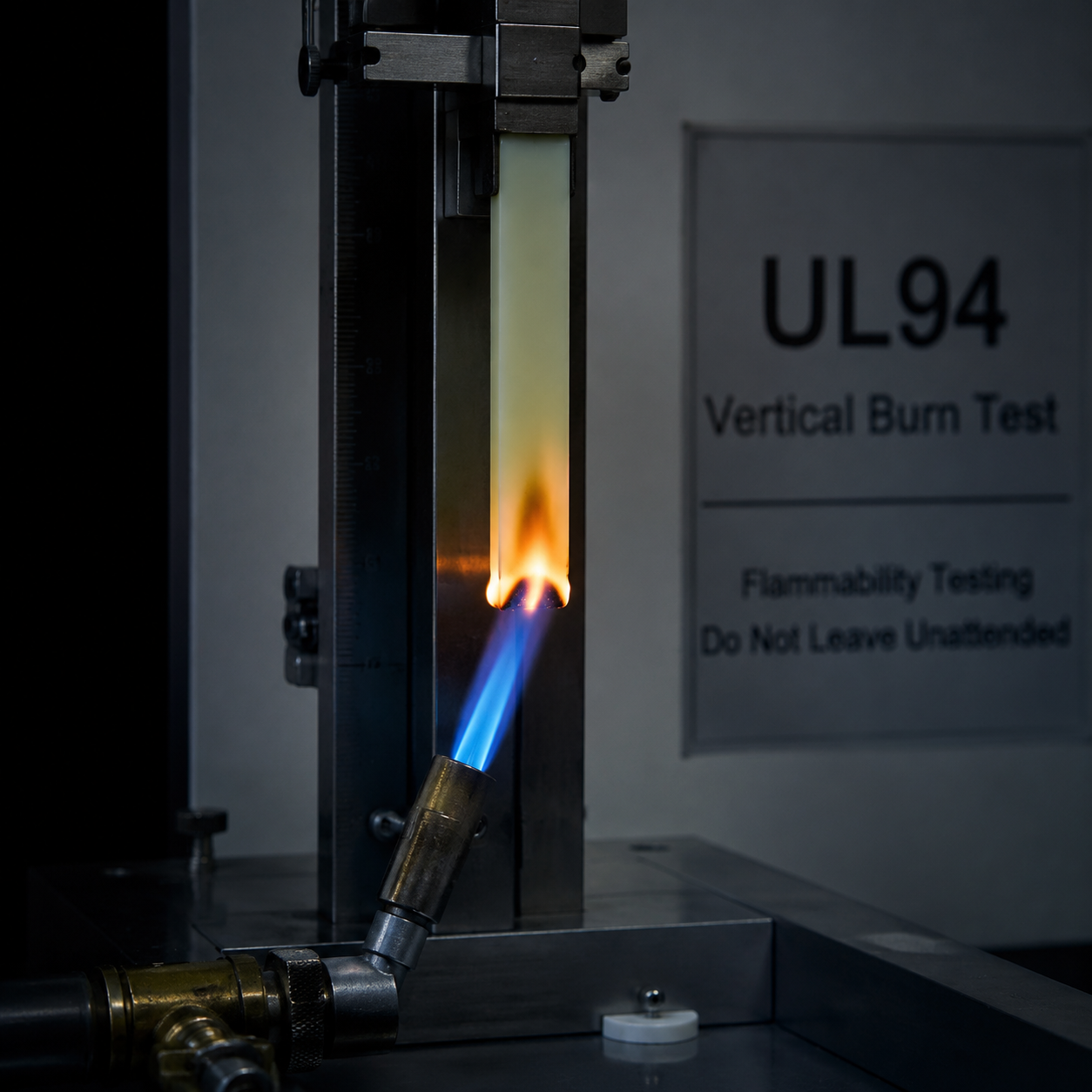
Методы испытаний по стандарту UL94
Стандарт UL94 определяет три основных ориентации при испытаниях. Каждая из них моделирует различные сценарии воздействия огня, встречающиеся в реальных условиях эксплуатации.
Горизонтальное горение (HB)
Испытание на горизонтальное горение является наименее строгим. Образец удерживается в горизонтальном положении, и к его свободному концу в течение 30 секунд подводится пламя. Для получения класса HB материал должен либо гореть со скоростью ниже установленного порога (обычно 75 мм/мин для образцов толщиной менее 3 мм), либо прекратить горение до достижения контрольной отметки в 100 мм.
Материалы класса HB допускаются к применению в случаях, когда риск возгорания невелик, а нормативные требования минимальны. В потребительских товарах, содержащих внутренние компоненты, не проводящие ток, часто используются материалы класса HB.
Вертикальный ожог (V-0, V-1, V-2)
Испытание на вертикальное горение является значительно более строгим. Образец удерживается в вертикальном положении, и к его нижнему краю дважды подносят пламя длиной 20 мм, каждый раз на 10 секунд. Класс огнестойкости определяется по времени послегорения, времени послесвечения и наличию горящих частиц.
- V-0: Время догорания ≤ 10 секунд за один цикл испытания, общее время догорания ≤ 50 секунд для 5 образцов, отсутствие горящих капель
- V-1: Время догорания ≤ 30 секунд за один цикл испытания, общее время догорания ≤ 250 секунд для 5 образцов, отсутствие горящих капель
- V-2: Критерии послесвечения такие же, как у V-1, но допускаются горящие капли
Тест 5 В (5VA, 5VB)
Испытание при напряжении 5 В соответствует наивысшей степени интенсивности, предусмотренной стандартом UL94. Вместо небольшого пламени горелки к образцам в виде планки и пластины пять раз по 5 секунд подвергают воздействию пламени длиной 125 мм. Это имитирует более интенсивное и продолжительное воздействие огня.
- 5VA: Время послегорения ≤ 60 секунд, отсутствие прогорания (отсутствие отверстия) в образце пластины
- 5VB: Время послегорения ≤ 60 секунд; в образце пластины допускается прогорание (образование отверстий)
Таблица определений классов по стандарту UL94
| Рейтинг | Ориентация на тестирование | Применение пламени | Предел послесвечения (на одно применение) | Пламенные капли | Прожигание |
|---|---|---|---|---|---|
| HB | Горизонтальный | 30 с (один раз) | Н/Д (ограничение скорости расходования средств) | Разрешено | Н/Д |
| V-2 | Вертикальный | 2 × 10 с | ≤ 30 с | Разрешено | Н/Д |
| V-1 | Вертикальный | 2 × 10 с | ≤ 30 с | Не допускается | Н/Д |
| V-0 | Вертикальный | 2 × 10 с | ≤ 10 с | Не допускается | Н/Д |
| 5VB | Вертикальная перекладина + табличка | 5 × 5 с (пламя длиной 125 мм) | ≤ 60 с | Не допускается | Разрешено |
| 5 ВА | Вертикальная перекладина + табличка | 5 × 5 с (пламя длиной 125 мм) | ≤ 60 с | Не допускается | Не допускается |
Типы антипирогенных добавок
Для достижения классов по стандарту UL94 необходимо включить в полимерную матрицу добавки, замедляющие горение (FR). Выбор химического состава таких добавок оказывает существенное влияние на эксплуатационные характеристики, стоимость и соответствие экологическим нормам.
Галогенизированные антипирогенные добавки
Бромированные и хлорированные соединения чрезвычайно эффективны в прерывании цепной реакции горения. Они действуют преимущественно в газовой фазе, улавливая свободные радикалы. Галогенированные системы позволяют достичь класса UL94 V-0 при относительно низких концентрациях (10–20%) и являются экономически выгодными. Однако при горении они выделяют коррозионные и токсичные газы, что приводит к ужесточению нормативных ограничений в соответствии с директивами RoHS и WEEE.
Безгалогенные антипирогенные добавки (на основе фосфора)
Антипирогенные добавки на основе фосфора — в том числе органофосфаты, фосфонаты и красный фосфор — действуют преимущественно в конденсированной фазе, способствуя образованию обугливающегося слоя. Этот слой обугливающегося материала действует как барьер, изолируя лежащий под ним полимер от тепла и кислорода. Такие системы являются основным выбором для безгалогенных составов, особенно в электронике, где соблюдение экологических норм является обязательным.
Антипирогенные добавки на основе азота
Меламин и его производные (цианурат меламина, полифосфат меламина) при разложении выделяют инертные газообразные соединения азота, которые разбавляют горючие газы и охлаждают зону горения. Их часто применяют в сочетании с антипиренами на основе фосфора для достижения класса огнестойкости V-0 в полиамидах и полиуретанах.
Неорганические огнезащитные добавки
Тригидрат алюминия (ATH) и гидроксид магния (MDH) разлагаются с поглощением тепла и выделением водяного пара. Для обеспечения эффективности требуется их высокая концентрация (часто 40–65%), что может существенно ухудшить механические свойства. Эти наполнители широко используются в изоляции проводов и кабелей, а также в безгалогенных материалах с низким уровнем дымовыделения.

Компромиссы между физическими свойствами
Добавление антипирогенных добавок неизбежно ухудшает механические характеристики. Степень этого влияния зависит от химического состава антипирогенных добавок, уровня их содержания и исходного полимера.
- Снижение предела прочности на разрыв: 10-25% в зависимости от типа FR и нагрузки
- Снижение ударной вязкости: 15-30%, в частности с неорганическими наполнителями
- Относительное удлинение при разрыве: В марках, модифицированных FR, может снизиться на 30–50%
- Увеличение плотности: Добавки FR, как правило, повышают плотность материала на 5–15%
- Окно обработки: Некоторые добавки FR сужают диапазон температур переработки, что повышает риск термической деградации в процессе формования
Белгалогенные системы на основе фосфора, как правило, лучше сохраняют механические свойства, чем неорганические аналоги с эквивалентными классами по стандарту UL94. Армирование стекловолокном (обычно 15–30%) часто сочетается с добавками, повышающими огнестойкость, для восстановления утраченной прочности и жесткости.
Распространенные марки огнестойких пластиков
| Марка материала | Класс по стандарту UL94 | Прочность на разрыв (МПа) | HDT (1,82 МПа) (°C) | Основные особенности |
|---|---|---|---|---|
| PA66 FR V-0 (GF25) | V-0 при 0,8 мм | 140-160 | 235-245 | Превосходная термическая стабильность, хорошая текучесть |
| PC/ABS FR V-0 | V-0 при 1,5 мм | 55-65 | 95-110 | Хорошая эффективность, экономичность |
| PBT FR V-0 (GF30) | V-0 при 0,8 мм | 120-140 | 200-215 | Быстрая кристаллизация, стабильность размеров |
| PPO FR V-0 | V-0 при 1,5 мм | 55-70 | 120-140 | Низкая плотность, превосходные диэлектрические свойства |
| PEI (Ultem) | V-0 (присущее) | 100-110 | 195-210 | Встроенная огнестойкость, добавки не требуются |
Ключевые приложения

Электротехнические шкафы
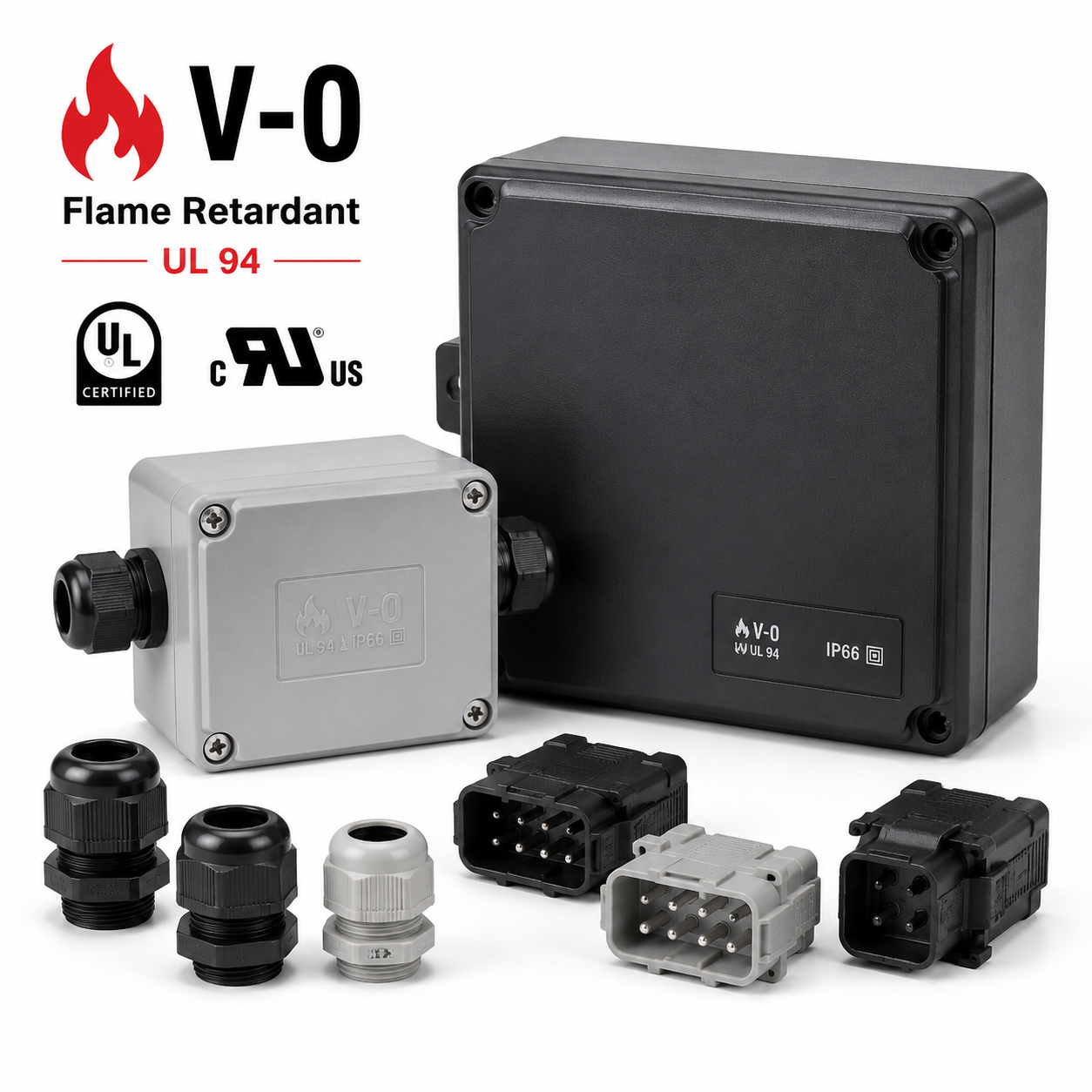
В соответствии с нормативными требованиями для изготовления автоматических выключателей, корпусов распределительных устройств и соединительных коробок необходимо использовать материалы класса V-0. Эти корпуса должны сдерживать любую внутреннюю дугу или возгорание, вызванное коротким замыканием, предотвращая распространение огня на окружающие конструкции. Для этих целей обычно используются материалы PC/ABS FR V-0 и PA66 FR V-0.
Разъемы и клеммные колодки
Высоковольтные разъёмы, применяемые в промышленном оборудовании и автомобильных системах, требуют использования тонкостенных изделий, соответствующих классу огнестойкости V-0. Материал PBT FR V-0 GF30 широко используется благодаря своим превосходным характеристикам текучести, что позволяет изготавливать изделия с толщиной стенок до 0,4 мм при сохранении соответствия классу огнестойкости V-0.
Компоненты аккумуляторов для электромобилей
Корпуса аккумуляторных модулей, держатели элементов, опоры шин и высоковольтные разъёмы в электромобилях должны обладать исключительной огнестойкостью. Для изготовления критически важных компонентов корпусов аккумуляторов всё чаще используются материалы класса 5VA, что позволяет обеспечить соответствие самым строгим стандартам безопасности. В этом сегменте преобладают марки PA66 FR и PBT FR.
Бытовая электроника
Корпуса зарядных устройств, корпуса сетевых адаптеров, а также внутренние изоляционные барьеры в ноутбуках и смартфонах должны соответствовать классам V-0 или V-1. В данном сегменте предпочтение отдается безгалогенным огнестойким материалам в связи с обязательствами брендов в области устойчивого развития и экологическими посланиями, адресованными потребителям.
Влияние директив RoHS и WEEE на выбор огнестойких материалов

Директива об ограничении использования опасных веществ (RoHS) запрещает применение определенных бромированных антипиренов — в частности, полибромированных бифенилов (ПББ) и полибромированных дифениловых эфиров (ПБДЭ) — в электрическом и электронном оборудовании, продаваемом в ЕС. Директива об отходах электрического и электронного оборудования (WEEE) дополнительно поощряет использование безгалогенных материалов для облегчения переработки оборудования по окончании срока службы.
В результате отрасль значительно переориентировалась на безгалогенные системы огнезащиты на основе фосфора и азота. Хотя эти альтернативы, как правило, дороже в расчете на килограмм, для достижения эквивалентных показателей по стандарту UL94 они часто требуют меньших доз, что частично компенсирует разницу в стоимости. Кроме того, безгалогенные марки стали маркетинговым преимуществом: многие производители оригинального оборудования (OEM) теперь прямо требуют указания обозначения “HF” (безгалогенный) в спецификациях материалов.
UL94 Rating Selection Checks
| Вопрос | What to confirm |
|---|---|
| Рейтинг | V-0, V-1, V-2, 5VA or 5VB at the specified thickness |
| Specimen | Material grade, color, thickness, conditioning and test method |
| Part design | Wall transitions, vents, connectors, ignition source and enclosure geometry |
| Документация | Current certificate or test report tied to the purchased resin lot |
UL94 flame retardant plastics must be checked at the exact grade and thickness used in the part. A classification is not a blanket guarantee for every finished assembly; review electrical, thermal and regulatory requirements together.
Часто задаваемые вопросы
В чём заключается разница между классами UL94 V-0 и 5VA?
Основные различия заключаются в интенсивности воздействия пламени и требовании к прогоранию. В испытании V-0 используется пламя длиной 20 мм, которое дважды воздействует на образцы в виде стержней в течение 10 секунд каждый раз. В испытании 5VA используется пламя длиной 125 мм, которое пять раз воздействует на образцы в виде стержней и пластин в течение 5 секунд каждый раз. Что ещё более важно, стандарт 5VA требует, чтобы в образце в форме пластины во время испытания не образовалось ни одного отверстия (прогорания), тогда как в стандарте V-0 испытание образцов в форме пластины вообще отсутствует. Материал, прошедший испытание по стандарту V-0, может не пройти испытание по стандарту 5VA, если он не способен противостоять прогоранию в условиях более интенсивного пламени 5V. Стандарт 5VA примерно на один–два уровня интенсивности по шкале UL94 превосходит стандарт V-0.
Что лучше с точки зрения соблюдения экологических норм: галогенизированные или безгалогенные антипирогенные добавки?
Белгалогенные антипирогенные добавки (на основе фосфора, азота и неорганические) являются предпочтительным выбором с точки зрения соблюдения экологических требований. Ключевые причины включают: (a) соблюдение ограничений директивы RoHS в отношении бромированных антипиренов PBB и PBDE, (b) предотвращение выбросов коррозионных галогенистоводородных газов при сгорании, (c) улучшенную перерабатываемость в соответствии с требованиями директивы WEEE, а также (d) соответствие требованиям производителей оригинального оборудования (OEM) в области устойчивого развития и сертификациям экомаркировки. Хотя галогенизированные системы отличаются более низкой стоимостью и высокой эффективностью при низких концентрациях, тенденция в области регулирования неуклонно направлена на использование безгалогенных альтернатив, особенно в потребительской электронике и автомобильных салонах.
Насколько добавление антипирена ухудшает механические свойства PA66?
Типичное снижение механических свойств PA66 FR V-0 (армированного стекловолокном 25%) по сравнению с неогнестойким PA66 GF25 составляет: снижение предела прочности на разрыв примерно на 10–15% (с 160–180 МПа до 140–160 МПа), снижение ударной вязкости на 15–25% и снижение относительного удлинения при разрыве на 30–50%. Белгалогенные системы огнезащиты на основе фосфора, как правило, лучше сохраняют механические свойства, чем бромированные системы при эквивалентных классах по UL94. Армирование стекловолокном играет решающую роль в восстановлении жесткости и прочности; у неармированного огнезащищенного PA66 падение предела прочности на разрыв может превышать 25% по сравнению с неармированным PA66. Для критически важных конструкционных применений стандартной практикой является использование стекловолокна с долей 25–35% для компенсации потери свойств, вызванной применением антипиренов.
Влияет ли добавление антипирена на технологичность литья под давлением?
Да, антипирогенные добавки могут существенно влиять на формуемость. К ключевым факторам, которые необходимо учитывать при переработке, относятся: (a) более узкий диапазон переработки — многие антипирогенные добавки начинают разлагаться при температурах, превышающих рекомендуемую температуру плавления всего на 10–20 градусов Цельсия, что требует более строгого контроля температуры; (b) повышенная вязкость расплава — некоторые огнезащитные добавки (особенно неорганические типы, такие как MDH и ATH) повышают вязкость расплава, сокращая длину потока и потенциально вызывая недолив в тонкостенных участках; (c) коррозия пресс-форм — галогенированные антипирогенные добавки могут выделять кислотные побочные продукты при технологических температурах, что требует использования коррозионно-стойких сталей для пресс-форм и регулярного технического обслуживания пресс-форм; (d) износ шнека и цилиндра — неорганические антипирогенные наполнители обладают абразивными свойствами и ускоряют износ шнеков, цилиндров и упорных колец. Правильная конструкция пресс-формы (более широкие литниковые отверстия, оптимизированные системы литниковых каналов) и параметры переработки (умеренные скорости шнека, регулирование противодавления) позволяют смягчить большинство этих проблем.

