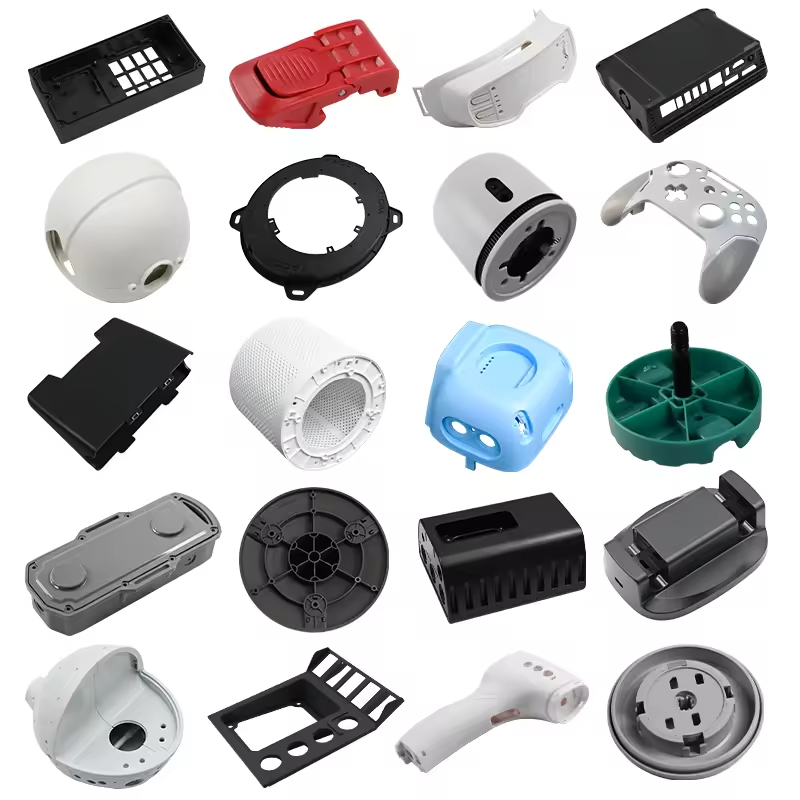
1. Введение: Почему ребра и выступы играют важную роль в литье под давлением
При литье под давлением разработчики деталей постоянно сталкиваются с одной из основных задач: обеспечение прочности конструкции жесткость и прочность при этом сохраняя равномерную толщину стенок. Простое увеличение толщины стенок приводит к росту затрат на материалы, увеличению продолжительности цикла и появлению деформации, впадины и внутренние пустоты. Ребра и выступы позволяют решить эту проблему.
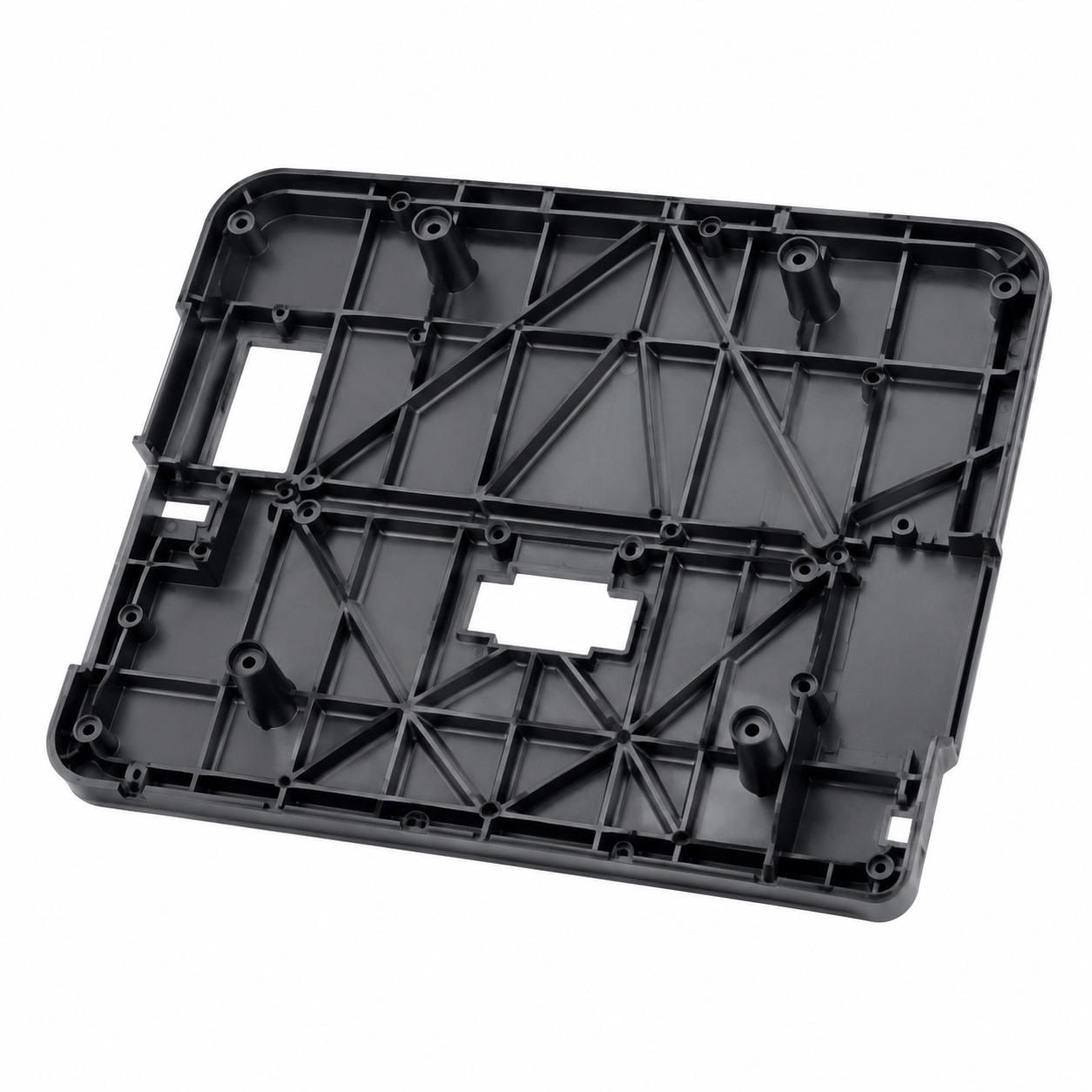
Ребра представляют собой тонкие, похожие на стенки выступы, которые значительно повышают изгибную жесткость без пропорционального увеличения толщины стенки. Правильно спроектированное ребро может удвоить момент инерции детали, увеличив при этом объем материала всего на 10–20%.
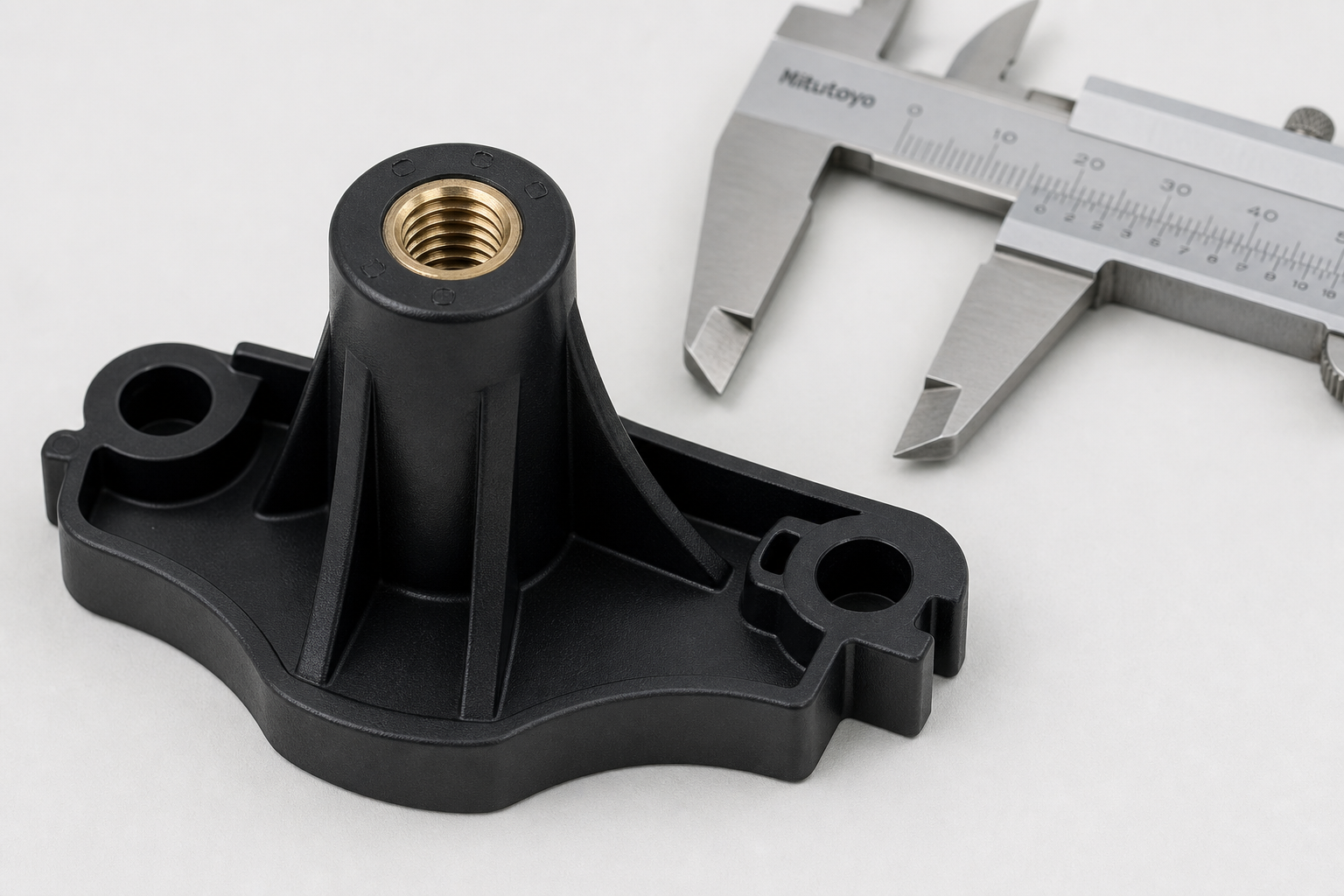
Руководители представляют собой цилиндрические выступы, предназначенные для установки саморезы, резьбовые вставки или установочные штифты. Они обеспечивают концентрацию усилий крепления и должны быть тщательно спроектированы, чтобы избежать появления вмятин на видимой поверхности.
В данном руководстве рассматриваются проверенные правила проектирования, таблицы размеров и типичные ошибки для ребер и выступов в деталях из пластика, изготовленных методом литья под давлением. Независимо от того, разрабатываете ли вы корпуса для бытовой электроники, детали автомобильного салона или корпуса медицинского оборудования, эти принципы применимы повсеместно.
2. Правила проектирования ребер и передовой опыт
2.1 Толщина ребра
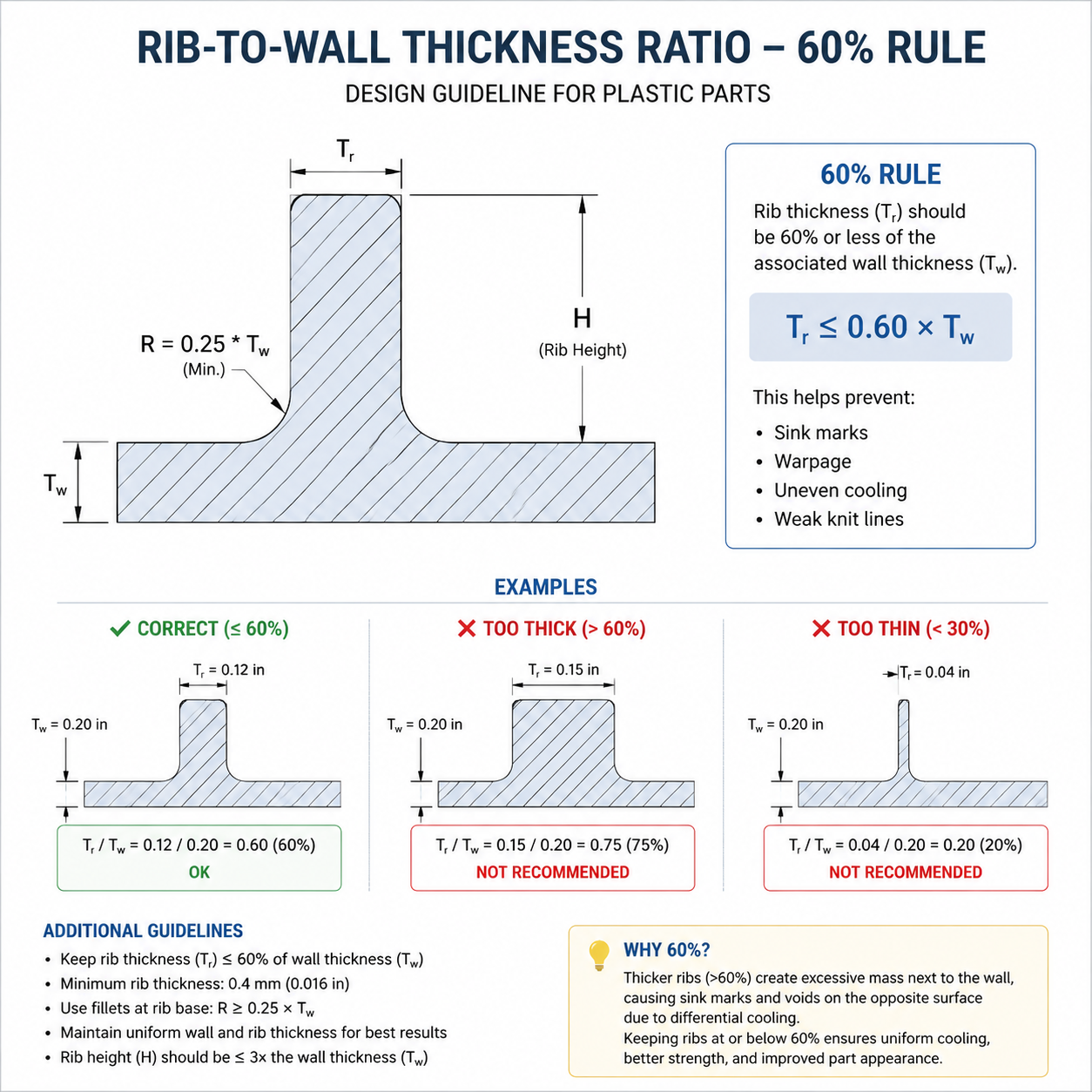
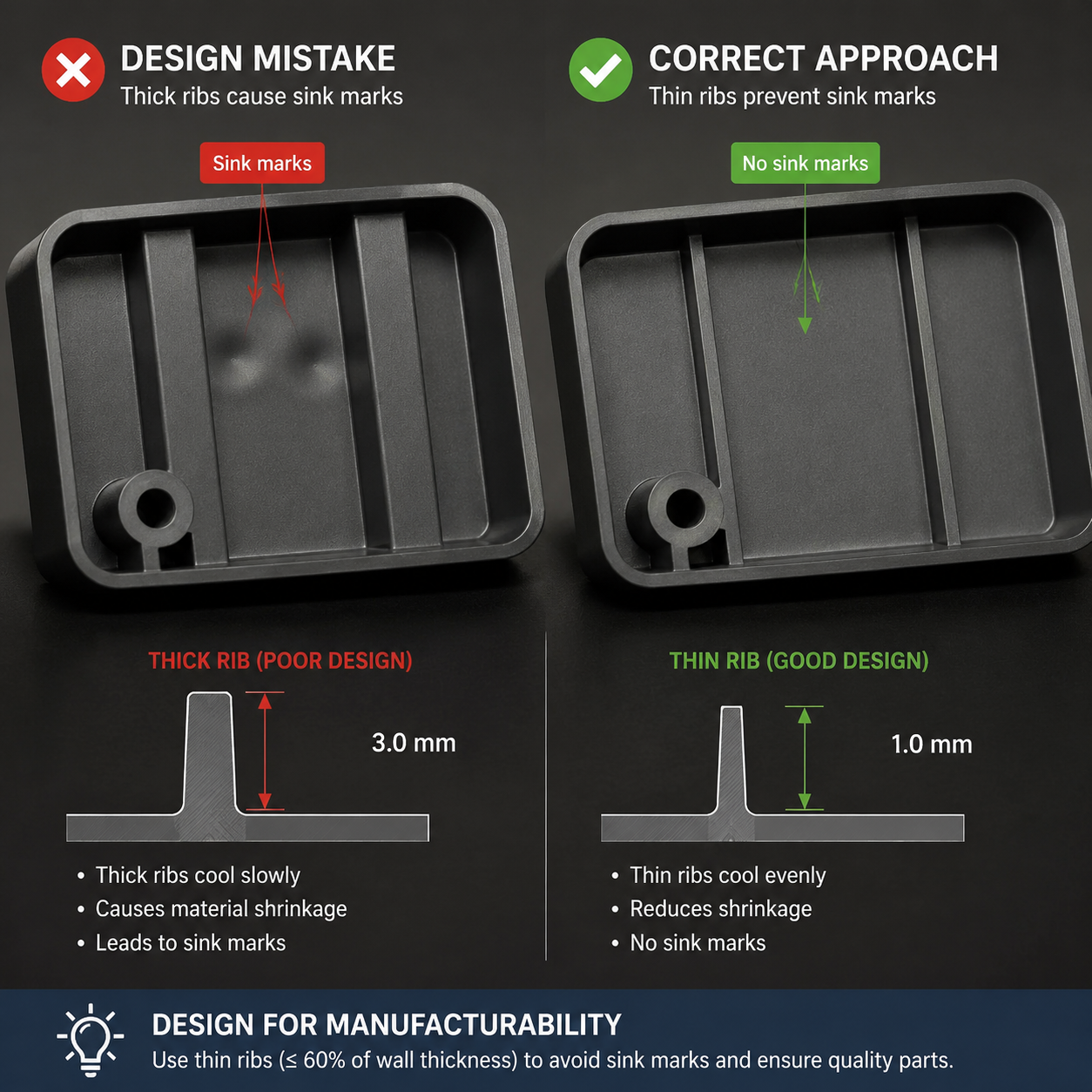
Самое главное правило: Толщина ребра не должна превышать 60% от номинальной толщины стенки у основания ребра.
| Номинальная толщина стенки (мм) | Максимальная толщина основания ребра (мм) |
|---|---|
| 1.0 | 0.60 |
| 1.5 | 0.90 |
| 2.0 | 1.20 |
| 2.5 | 1.50 |
| 3.0 | 1.80 |
| 3.5 | 2.10 |
| 4.0 | 2.40 |
Нарушение правила 60% приводит к тому, что основание ребра остывает медленнее, чем прилегающая стенка, что создает заметный след от раковины на противоположной поверхности. Для поверхности класса A по стандартам косметической промышленности, ограничьте толщину ребра значением 40–50% от толщины стенки для обеспечения дополнительного запаса прочности.
2.2 Высота ребра
Максимальная высота ребра не должна превышать В 3 раза больше толщины основания ребра. Высокие и тонкие ребра трудно заполнить, они подвержены образованию дефектов заполнения и их сложно извлечь из формы. Для конструктивных ребер из инженерных термопластов (PA, PBT, POM) практические ограничения следующие:
- Стандартные ребра: Высота ≤ 3 × толщина ребра
- Глубокие ребра: Высота ≤ 5 × толщина ребра (требуется более широкое основание или усилительные элементы)
- Узоры с перекрестными ребрами: Высота ≤ 5 × толщина ребра (пересечения усиливают друг друга)
2.3 Угол наклона
Каждое ребро должно содержать минимальный угол наклона 0,5 градуса с каждой стороны. Недостаточный уклон приводит к чрезмерной силе выталкивания, что может привести к повреждению ребра или детали. Рекомендуемый уклон в зависимости от материала:
| Тип материала | Минимальная осадка (с каждой стороны) | Рекомендуемый проект (для каждой стороны) |
|---|---|---|
| Без наполнителя (ПП, ПЭ, АБС) | 0,5° | 1,0° |
| С стеклонаполнителем (PA6-GF30, PBT-GF30) | 1,0° | 1,5° |
| Высокотемпературные (PPS, PEEK) | 1,0° | 2,0° |
| Текстурированные поверхности (из любого материала) | 1,5° на каждые 0,025 мм глубины текстуры | — |
2.4 Расстояние между ребрами
Расстояние между соседними ребрами должно составлять не менее В 2 раза больше номинальной толщины стенки на расстоянии друг от друга. При меньшем расстоянии между ребрами образуются зоны с большей толщиной материала, которые охлаждаются неравномерно, что приводит к появлению вмятин и концентрации внутренних напряжений. При использовании параллельных рядов ребер следует соблюдать минимальное расстояние между центрами, равное 2,5–3,0 номинальной толщины стенки, чтобы обеспечить равномерное охлаждение.
3. Правила дизайна Boss
3.1 Наружный диаметр втулки
Босс Внешний диаметр должен быть примерно в 2 раза больше диаметра винта для саморезов. Это обеспечивает достаточное зацепление с материалом и одновременно сводит к минимуму риск образования вмятин.
| Размер винта | Номинальный диаметр (мм) | Внешний диаметр (мм) | Пилотное отверстие (мм) | Толщина стенки (мм) | Мин. высота (мм) |
|---|---|---|---|---|---|
| M2 | 2.0 | 4.0 | 1.6 | 1.2 | 4.0 |
| M2,5 | 2.5 | 5.0 | 2.0 | 1.5 | 5.0 |
| M3 | 3.0 | 6.0 | 2.4 | 1.8 | 6.0 |
| M4 | 4.0 | 8.0 | 3.2 | 2.4 | 8.0 |
| M5 | 5.0 | 10.0 | 4.0 | 3.0 | 10.0 |
| M6 | 6.0 | 12.0 | 4.8 | 3.6 | 12.0 |
| M8 | 8.0 | 16.0 | 6.5 | 4.75 | 16.0 |
Примечание: Толщина стенки выпуклости не должна превышать 60% от номинальной толщины стенки детали. Если это ограничение не может быть соблюдено (например, в случае большого винта на тонкой стенке), используйте усилительные вставки или ребра для внешнего усиления выступления вместо того, чтобы утолщать стенку выступления.
3.2 Высота босса и соотношение сторон
Высота босса, как правило, не должна превышать В 3 раза больше внешнего диаметра втулки. Высокие выступы без опоры подвержены прогибу при вкручивании винтов и могут сломаться. Для более высоких выступов используйте:
- Вставки: Треугольные арматурные элементы, соединяющие выступ со стенкой основания
- Соединения ребер: Закрепите опору к соседним конструктивным ребрам
- Конструкция зенкера: Утопите головку винта, чтобы уменьшить эффективную высоту
3.3 Угол наклона для выступов
И тот, и внутреннее ядро и внешняя поверхность Выступы требуют наличия уклона. Внутренний сердечник (сердечниковый штифт) должен иметь минимальный уклон 0,5 градуса. Наружная поверхность может иметь немного меньший уклон, если выступ невысокий, однако настоятельно рекомендуется соблюдать минимальный уклон 0,5 градуса. Для выступов высотой более 10 мм следует увеличить уклон сердечника до 1,0 градуса, чтобы обеспечить надёжное извлечение без следов трения.
4. Распространённые ошибки в проектировании и способы их устранения
4.1 Толстые ребра, вызывающие вмятины
Проблема: Толщина ребра, превышающая 60% номинальной толщины стенки, приводит к образованию локализованного скопления материала, которое остывает медленнее, чем окружающие области. По мере усадки более толстой части во время охлаждения она тянет прилегающую поверхность внутрь, создавая заметный след от раковины на внешней поверхности.
Решение: Уменьшите толщину ребра до значения ≤60% (желательно 50%) от номинальной толщины стенки. Если жесткость конструкции окажется недостаточной, используйте несколько более тонких ребер или узоры из поперечных ребер вместо одного толстого ребра. Для деталей с поверхностями класса A следует применять правило 40% и добавлять текстурирование поверхности, чтобы замаскировать незначительные впадины.
4.2 Высокие боссы, из-за которых выстрелы получаются короткими
Проблема: Выступы, высота которых превышает их диаметр более чем в 3 раза, образуют длинный и узкий канал течения. Фронт расплава остывает, не достигнув вершины выступа, что приводит к короткий кадр или неполное заполнение на конце выступа.
Решение: Высота выступов должна не превышать 3 диаметра. В случае, если высокие выступы неизбежны, увеличить размер затвора, повысить температуру расплава или установить выпускной штифт в области выпускного выступа, чтобы обеспечить выход застрявшего воздуха. Анализ потока расплава позволяет спрогнозировать характер заполнения формы и подтвердить, будет ли высокий выпускной выступ полностью заполнен при заданных параметрах технологического процесса.
4.3 Недостаточная тяга, приводящая к проблемам с выбросом
Проблема: Ребра и выступы с уклоном менее 0,5 градуса заклиниваются на сердечнике формы во время выталкивания. Это приводит к следы от перетаскивания, обесцвечивание под нагрузкой или даже частичное разрушение когда выталкивающие штифты сдвигают деталь с сердечника.
Решение: На всех вертикальных поверхностях следует применять уклон не менее 0,5 градуса, увеличивая его до 1,0–1,5 градуса для материалов со стеклонаполнителем и текстурированных поверхностей. На 2D-чертеже всегда указывайте угол наклона, а не только в 3D-модели, поэтому изготовитель пресс-формы не сможет это упустить из виду. Проверьте углы наклона в программе CAD перед передачей проекта в отдел инструментального производства.
4.4 Отсутствие радиуса закругления угла в месте соединения ребра с основанием
Проблема: Острый угол в месте соединения ребра с основной стенкой образует концентрация напряжений а также ограничение потока. Острый внутренний угол действует как выемка, что значительно сокращает ресурс на усталость и повышает риск возникновения трещин.
Решение: Добавить минимальный радиус 0,25–0,5 мм в месте соединения ребра с стенкой. Такой радиус снижает концентрацию напряжений и улучшает текучесть расплава. Для деталей, подвергающихся циклическим нагрузкам или ударам, следует использовать значение 0,5–0,75 мм. Это небольшое изменение геометрии практически не влияет на стоимость пресс-формы, но значительно повышает долговечность детали.
5. Проектирование усилительных вставок и угловых укреплений
5.1 Усилительные накладки для армирования выступов
Усиливающие вставки представляют собой треугольные опорные пластины, соединяющие выступ со стенкой основания детали. Они значительно повышают поперечную жесткость и сопротивление изгибу при минимальных затратах материала. Правила проектирования усилительных пластин:
- Толщина усилительной вставки: Равна толщине ребра или немного меньше её (≤60% от номинальной толщины стенки)
- Высота вставки: 50–75% по высоте выступления
- Ширина вставки у основания: 1,5–2,0 × внешний диаметр выступления
- Количество усилительных вставок: Как правило, 3–4, равномерно распределенные по окружности выступов
- Черновик: Такой же угол наклона, как у выступов или ребер
5.2 Укрепление углов
У пластиковых корпусов коробчатой формы наличие угловых ребер даёт значительный эффект. Диагональное ребро, проходящее через внутренний угол, увеличивает жесткость на кручение с использованием материала 40–60% с минимальным добавлением материала. Рекомендации по проектированию:
- Положение ребер: Расположено по центру под углом 45 градусов по отношению к углу
- Толщина ребра: Так же, как и стандартные правила для ребер (толщина стенки ≤60%)
- Глубина ребра: на 2–3 толщины стенки в полость детали
- Длина ребра: Выступать на расстояние не менее 3–5 толщин стенки вдоль каждой угловой грани
5.3 Узоры «крестообразные ребра» и «соты»
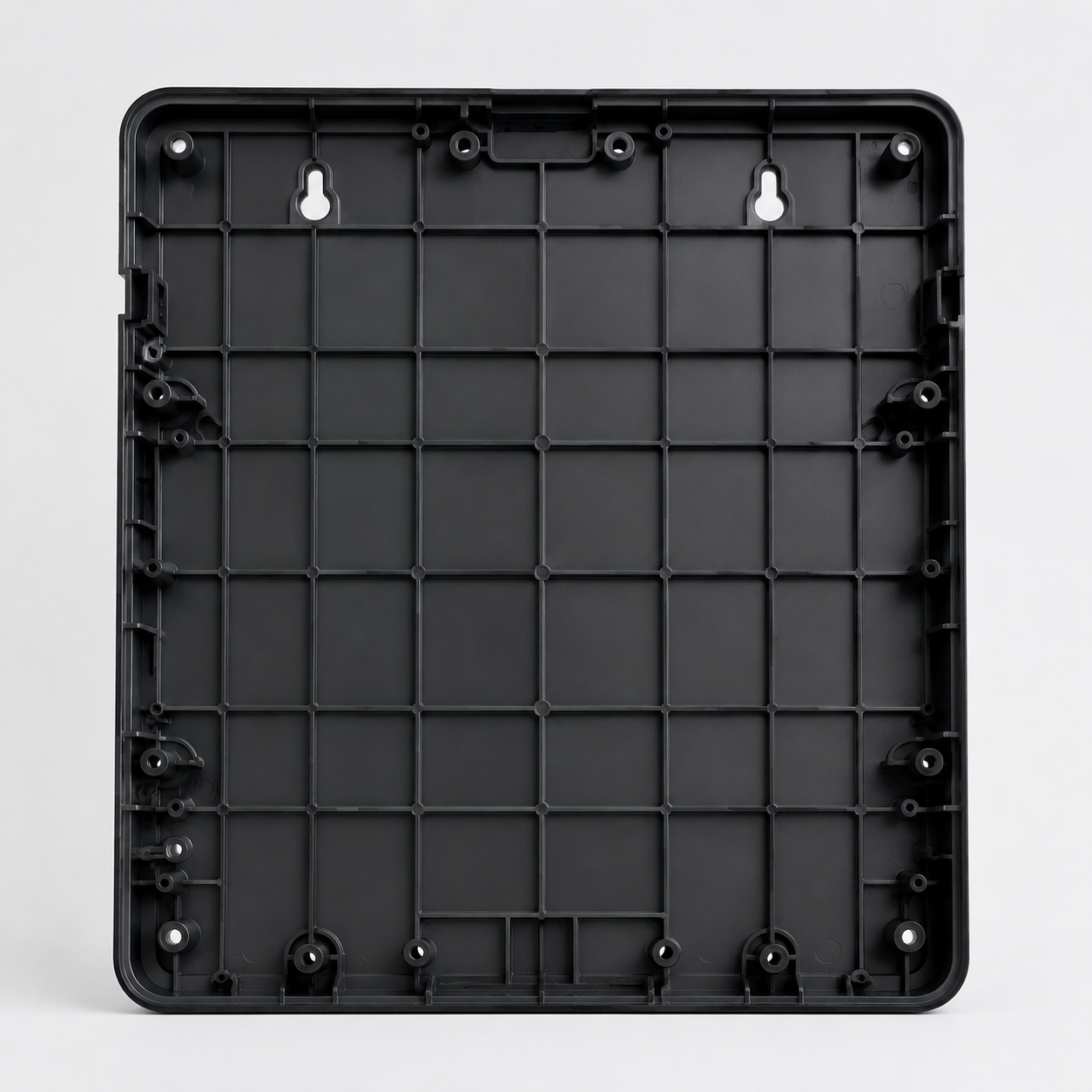
В случае больших плоских панелей сетчатый или сотовый рисунок ребер обеспечивает отличное соотношение жесткости к весу. Пересекающиеся ребра взаимно укрепляют друг друга, предотвращая потери устойчивости, что позволяет увеличить высоту ребер (до 5-кратной толщины ребра). Сотовые структуры особенно эффективны, поскольку они равномерно распределяют нагрузки по всем шести граням каждой ячейки. При проектировании решетчатых конструкций:
- Размер клетки: 5–10 × номинальная толщина стенки
- Радиус пересечения ребер: Не менее 0,5–1,0 мм, чтобы избежать появления очагов концентрации напряжений в узловых точках
- Черновик: К всем ребрам сетки применяется то же правило: 0,5–1,0 градуса
6. Таблица комплексных расчетов: рекомендуемые размеры в зависимости от размера винта
В приведенной ниже таблице представлены все критические размеры резьбы для саморезов диаметром от M2 до M8. Используйте эти значения в качестве исходных при проектировании, корректируя их с учетом конкретных свойств материала и требований к применению.
| Параметр | M2 | M2,5 | M3 | M4 | M5 | M6 | M8 |
|---|---|---|---|---|---|---|---|
| Номинальный диаметр резьбы | 2,0 мм | 2,5 мм | 3,0 мм | 4,0 мм | 5,0 мм | 6,0 мм | 8,0 мм |
| Наружный диаметр втулки | 4,0 мм | 5,0 мм | 6,0 мм | 8,0 мм | 10,0 мм | 12,0 мм | 16,0 мм |
| Начальное отверстие (саморезь) | 1,6 мм | 2,0 мм | 2,4 мм | 3,2 мм | 4,0 мм | 4,8 мм | 6,5 мм |
| Толщина стены «Boss» | 1,2 мм | 1,5 мм | 1,8 мм | 2,4 мм | 3,0 мм | 3,6 мм | 4,75 мм |
| Минимальная высота босса | 4,0 мм | 5,0 мм | 6,0 мм | 8,0 мм | 10,0 мм | 12,0 мм | 16,0 мм |
| Толщина усилительного уголка | 1,0 мм | 1,2 мм | 1,4 мм | 1,8 мм | 2,2 мм | 2,6 мм | 3,4 мм |
| Рекомендуемое зацепление винта | 3,0 мм | 3,8 мм | 4,5 мм | 6,0 мм | 7,5 мм | 9,0 мм | 12,0 мм |
| Минимальная номинальная толщина стенки выступления | 2,0 мм | 2,5 мм | 3,0 мм | 4,0 мм | 5,0 мм | 6,0 мм | 8,0 мм |
7. Часто задаваемые вопросы
Какова минимально допустимая толщина ребра, которую можно использовать при литье под давлением?
Практическая минимальная толщина ребра зависит от характеристики потока материала и возможности заполнения формы. Для большинства термопластов без наполнителя (ABS, PC, PP) минимальная толщина на конце ребра составляет примерно 0,5–0,6 мм. При значениях ниже этого уровня возникает задержка потока расплава — материал стремится заполнить более толстую основную стенку, а не тонкое ребро. Для материалов, армированных стекловолокном, минимальное значение увеличивается до 0,8–1,0 мм из-за более высокой вязкости. Всегда консультируйтесь с вашим производителем анализ потока в пресс-форме чтобы убедиться в возможности заполнения перед окончательной обработкой тонких ребер. Полезное практическое правило: толщина кончика ребра никогда не должна быть меньше 40% от максимальной толщины основания ребра, чтобы обеспечить непрерывный путь потока.
В каких случаях следует использовать ребра жесткости вместо простого увеличения толщины стенки?
Вместо утолщения стенок используйте ребра, когда Жесткость является конструктивным требованием, а не просто прочностью. Момент инерции ребер растёт экспоненциально с увеличением высоты (I = bh³/12), что означает: ребро, высота которого в 3 раза превышает толщину стенки, увеличивает изгибную жёсткость по сравнению с базовой стенкой примерно в 27 раз — при этом на его изготовление требуется лишь небольшая часть материала, которая понадобилась бы для утолщения всей стенки. Утолщать стенку следует только в том случае, если: (1) деталь подвергается равномерные нагрузки на растяжение или сжатие вместо того чтобы изгибаться, (2) деталь должна ударопрочность распределены по всей поверхности, либо (3) эстетическая поверхность не допускает никакого риска образования впадин от ребер с противоположной стороны. Даже в этих случаях следует рассмотреть возможность усиления толстого участка с помощью тщательно спроектированных ребер, чтобы не превышать толщину стенки 4–5 мм, поскольку при превышении этого значения время цикла и коробление становятся серьезными проблемами.
Как следует спроектировать головку для саморезов, предназначенных для пластика?
При использовании саморезов в термопластиках решающее значение имеют три конструктивных параметра: диаметр пилотного отверстия, толщина стенки выступления и длина зацепления. Для большинства материалов пилотное отверстие должно составлять 75–80% от номинального диаметра винта (например, 2,4 мм для винта M3). Толщина стенки выступления должна составлять не менее 40% от диаметра винта, но не превышать 60% от номинальной толщины стенки детали. Длина зацепления (глубина проникновения винта) должна составлять 2,0–2,5× диаметра винта для обеспечения надёжной защиты от срыва резьбы. Например, для самореза M3 требуется выступ с наружным диаметром 6 мм, направляющее отверстие 2,4 мм и глубина зацепления не менее 6–7,5 мм. На чертеже молдинга всегда указывайте диаметр направляющего отверстия — никогда не полагайтесь на производителя пресс-форм при сверлении отверстий, поскольку впрессованные направляющие отверстия гораздо точнее и экономичнее, чем последующее сверление. Рассмотрите возможность использования латунные резьбовые вставки если предполагается многократная сборка/разборка, поскольку саморезы теряют прочность крепления после 3–5 циклов вкручивания в большинство пластиков.
Как избежать появления вмятин на ребрах, не снижая при этом жесткость конструкции?
Чтобы избежать появления вмятин на ребрах, необходимо применять комплексный подход, направленный на устранение первопричины: в зонах локальной концентрации массы охлаждение происходит медленнее, чем в окружающих областях. К ключевым стратегиям относятся: (1) Уменьшить толщину ребра до 40–50% от номинальной толщины стенки — самый прямой способ, даже если для этого придется использовать больше ребер жесткости, чтобы компенсировать потерю жесткости. (2) Добавьте радиус в месте пересечения ребра с основанием (0,25–0,5 мм) для сглаживания зоны термического перехода. (3) Использовать литье под давлением с использованием газа для толстых ребер — газовый сердечник выдалбливает ребро, полностью устраняя концентрацию массы. (4) Обработать противоположную поверхность — легкая текстура (MT-11000 или мельче) визуально маскирует незначительные впадины. (5) Перенести рисунок ребер в зоны, не влияющие на эстетику если качество поверхности имеет решающее значение. (6) Оптимизировать давление упаковки и время выдержки — правильно уплотненная деталь дает меньшую усадку, что снижает степень просадки. Для поверхностей класса A (внешние поверхности автомобилей, видимые поверхности бытовой электроники) Правило 40% плюс текстурирование является проверенным отраслевым стандартом. Если даже этого недостаточно, рассмотрите возможность двухкомпонентное литье с обтеканием процесс, при котором поверхность, подверженная образованию вмятин, покрывается мягкой на ощупь оболочкой из террополимера (TPE).
Related Reading
- Руководство по расчету толщины стенок при литье под давлением
- Резьбовые вставки для пластиковых деталей: проектирование и монтаж
- Допуски на пластиковые детали и стандарты литья под давлением
Request a Rib and Boss DFM Review
Upload the drawing below for a manufacturability review, or see our nylon injection molding service.