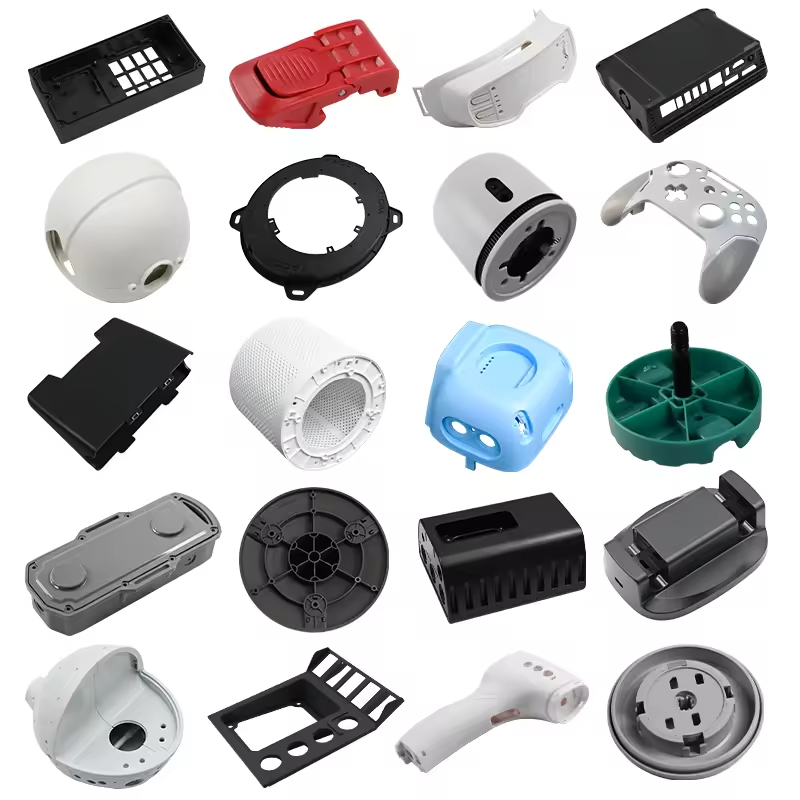
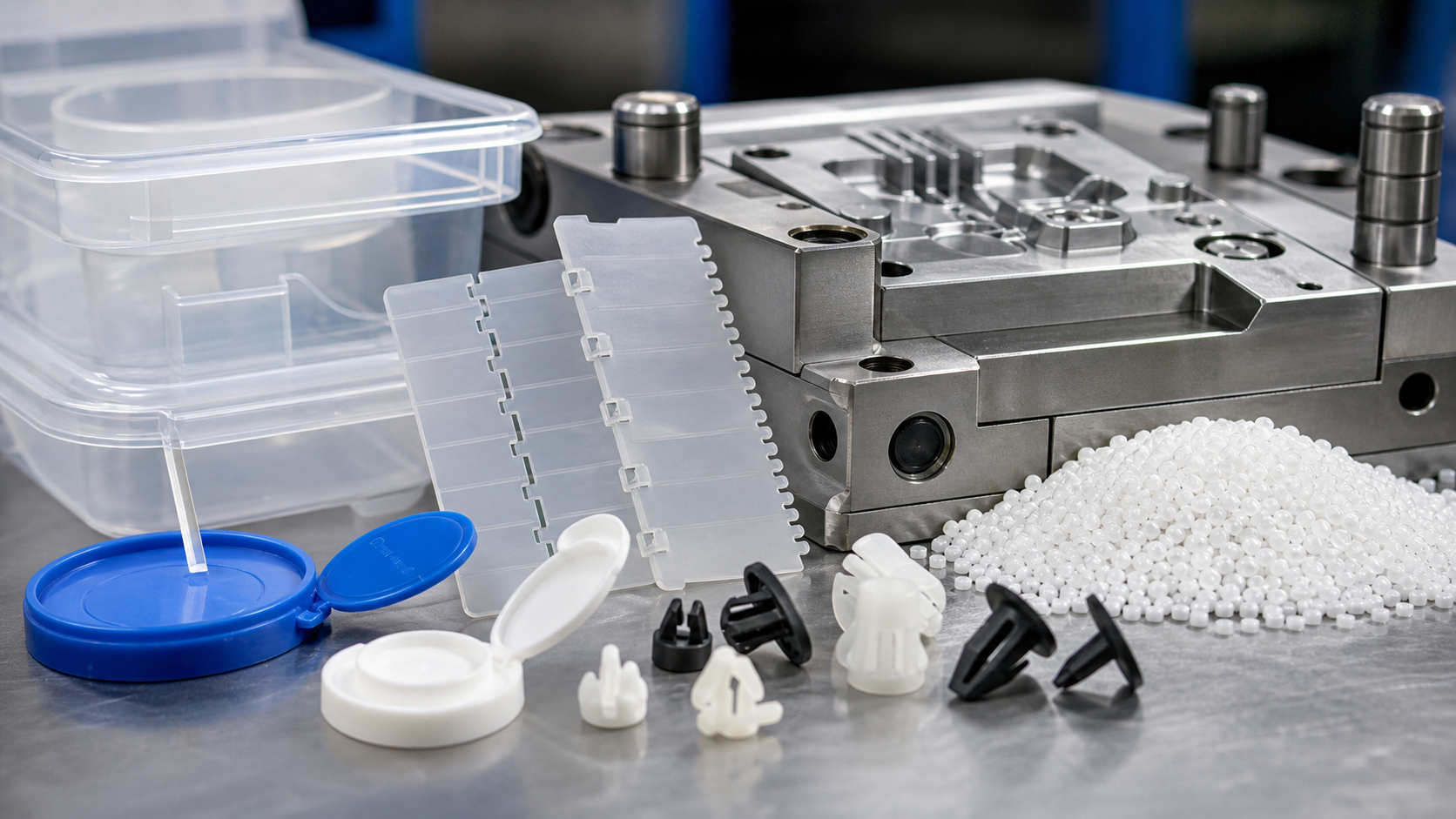
Polypropylene injection molding is a strong choice for lightweight, chemical-resistant, flexible or hinge-based plastic parts, but PP shrinkage and stiffness must be handled carefully in DFM.
PP is widely used for living hinges, containers, clips, caps and automotive trim because it is light, fatigue-resistant and economical. It also shrinks more than many engineering plastics, so part design and mold compensation matter.
PP Injection Molding Route
PP molding is often cost-effective, but thin walls, warpage, hinge design and gate location need early review.
| Маршрут | Наилучшее применение | Примечание для покупателя |
|---|---|---|
| Standard PP molding | Lightweight clips, lids and containers | Economical for many production parts |
| Living hinge molding | Integral hinges and flip covers | Needs hinge geometry and fatigue review |
| Filled PP molding | Higher stiffness parts | Review shrinkage, warpage and surface needs |
PP Grades and Alternatives
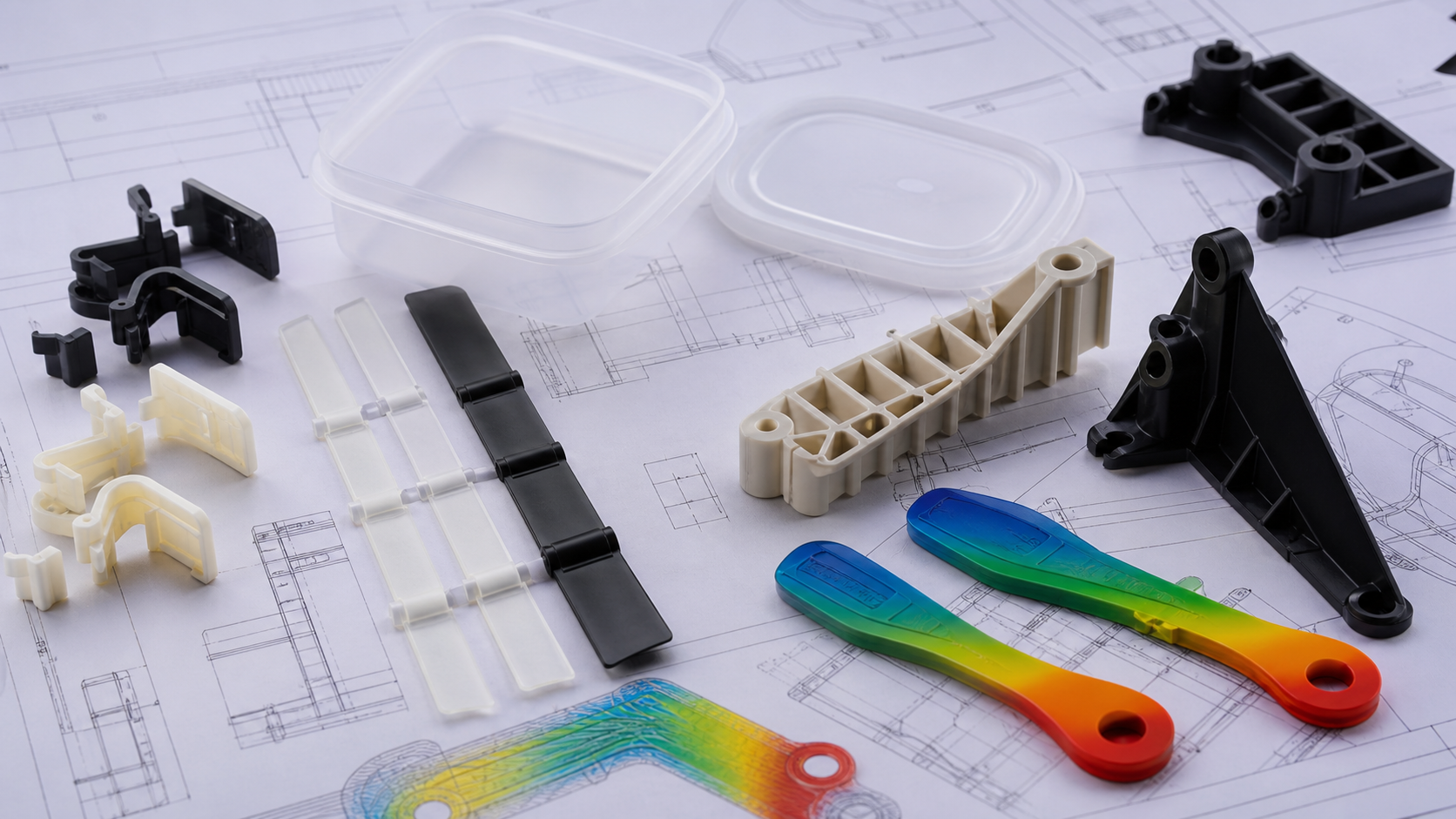
PP grades differ by stiffness, impact strength, filler content, heat resistance and UV stability.
| Материал | Идеально подходит для | Примечание по выбору |
|---|---|---|
| Homopolymer PP | Stiffer molded parts | Often used when impact demand is moderate |
| Copolymer PP | Better impact resistance | Useful for clips and covers |
| Talc-filled PP | Dimensional stability and stiffness | Check cosmetic and warpage requirements |
| UV-stabilized PP | Outdoor parts | Confirm exposure life and color |
PP Design Checks
PP part design should consider shrinkage, hinge life, snap fit flexibility and assembly loads.
- Design living hinges with proper thickness and flow direction.
- Allow for PP shrinkage during mold design.
- Avoid flat unsupported surfaces that can warp.
- Confirm snap fit strain and fatigue life.
- Specify whether recycled or virgin PP is required.
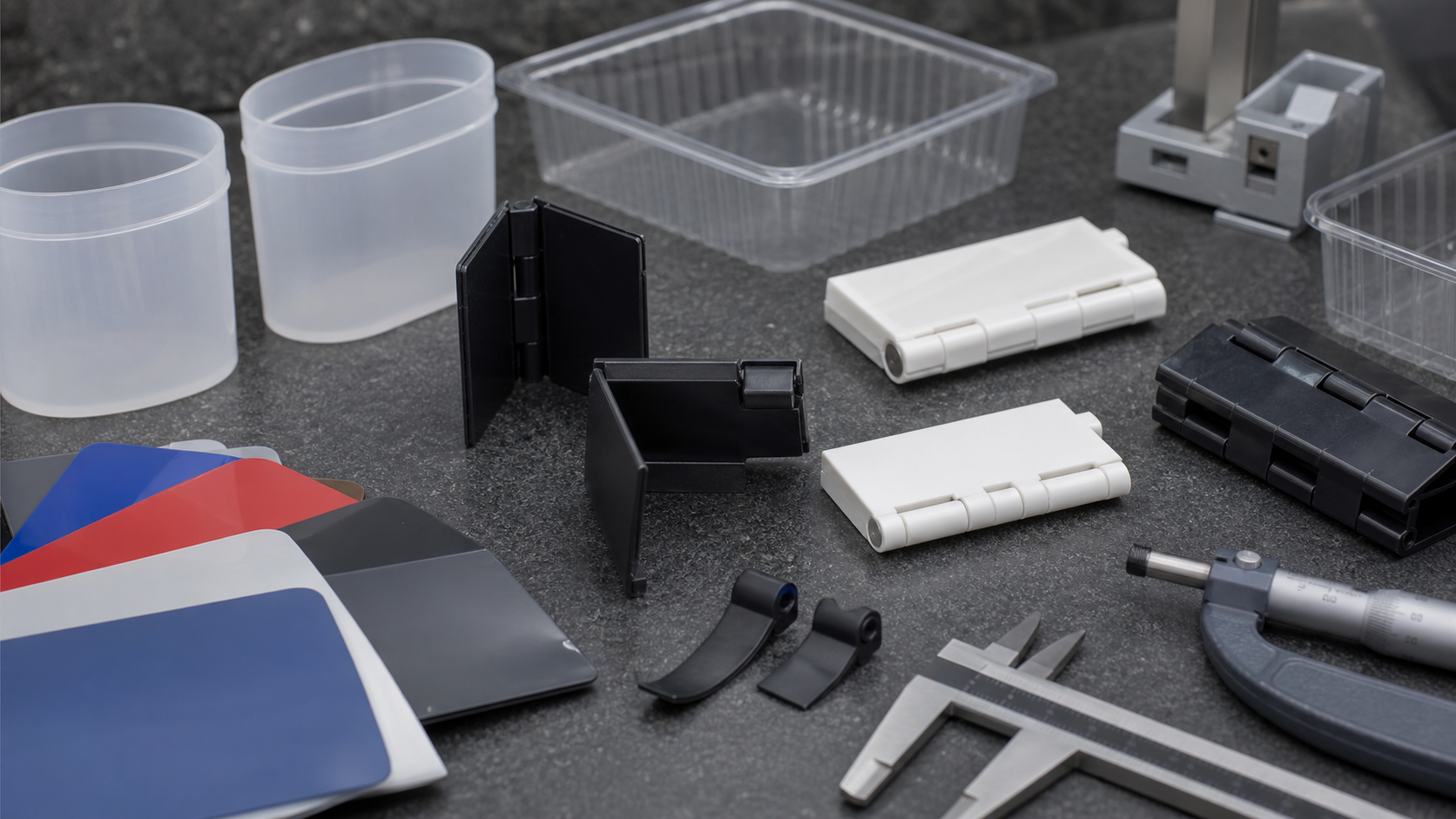
Use the PP material and design checks below with our услуги по литью пластмасс под давлением when planning a custom production part.
PP Injection Molding Design Factors
| Фактор | Почему это важно | DFM note |
|---|---|---|
| Shrinkage | PP shrinkage is higher than many engineering plastics. | Review tolerance, ribs, bosses and mold shrinkage assumptions. |
| Деформация | Uneven walls, long flow paths and unbalanced cooling can twist flat parts. | Use balanced wall design, gate placement and cooling. |
| Living hinges | PP is one of the best materials for molded hinges. | Hinge thickness, flow direction and radius control hinge life. |
| Химическая стойкость | PP resists many acids, bases and cleaning chemicals. | Confirm temperature, concentration and mechanical load. |
PP Homopolymer vs Copolymer
| Grade type | Наилучшее применение | Примечание по выбору |
|---|---|---|
| PP homopolymer | Stiffer parts, caps, containers and general molded components. | Good stiffness but lower low-temperature impact. |
| PP copolymer | Impact-resistant parts, automotive components and tougher covers. | Better toughness, especially at lower temperatures. |
| Filled PP | Stiffer or dimensionally improved parts. | Fillers can change shrinkage, surface and warpage behavior. |
Polypropylene DFM Checklist
- Allow realistic shrinkage and avoid over-tight tolerances on noncritical features.
- Keep wall thickness consistent to reduce sink and warpage.
- Gate living hinges so flow supports hinge performance.
- Use ribs carefully because thick ribs can cause sink and distortion.
- Review snap fits for creep, stress relaxation and repeated use.
- Validate chemical and temperature exposure before production approval.
Часто задаваемые вопросы
Для чего используется литье под давлением полипропилена?
Литье под давлением из полипропилена применяется для изготовления легких зажимов, крышек, контейнеров, шарнирных соединений, кожухов и деталей, которым требуется химическая стойкость или устойчивость к усталостному износу при изгибе.
Почему усадка полипропилена имеет важное значение при проектировании пресс-форм?
У полипропилена (ПП) усадка выше, чем у многих конструкционных пластиков, поэтому необходимо на раннем этапе проанализировать вопросы компенсации формы, толщины стенок, расположения литника и контроля коробления.
Подходит ли полипропилен для изготовления «живых» шарниров?
Да. Полипропилен является одним из наиболее распространённых материалов для изготовления «живых» шарниров при условии правильного расчёта толщины шарнира, направления течения и требований к усталостной прочности.
Какие требования должны указывать покупатели при заказе литых деталей из полипропилена?
Покупатели должны указать марку полипропилена, жесткость, требования к ударопрочности, необходимость в шарнирных соединениях или гибкости, воздействие химических веществ, цвет, требования к содержанию вторичного сырья и предполагаемый объем заказа.
Related Reading
Request a PP Molded-Part Review
For clips, caps, containers or living-hinge components, send the controlled drawing, PP grade or permitted alternative, and quantity by phase. Nylon Plastic can review material, hinge or snap-fit design, tooling and production scope before quotation.
Что должно быть указано в коммерческом предложении на литье полипропилена для петель или защелкивающихся соединений?
Identify whether the part must flex repeatedly, retain a clip load or resist a chemical. Specify the PP grade or permitted alternative, temperature range, mating parts and the acceptance test. The quotation should distinguish resin selection, gate and hinge review, tooling, sample validation and recurring production; a quote for a rigid housing does not cover the same review as a living hinge.
- Include CAD, drawing revision, critical fits, color, virgin or recycled-content rules, initial and annual quantity, destination and target timing.
- Define hinge cycles or clip retention, mating parts, chemical concentration and temperature, and any required documents.
- Specify the sample report, test method and acceptance limit; distinguish appearance approval from flex or load validation.
Agree which samples, functional tests and records are included in the quote. A printed or machined fit sample does not qualify a molded living hinge.