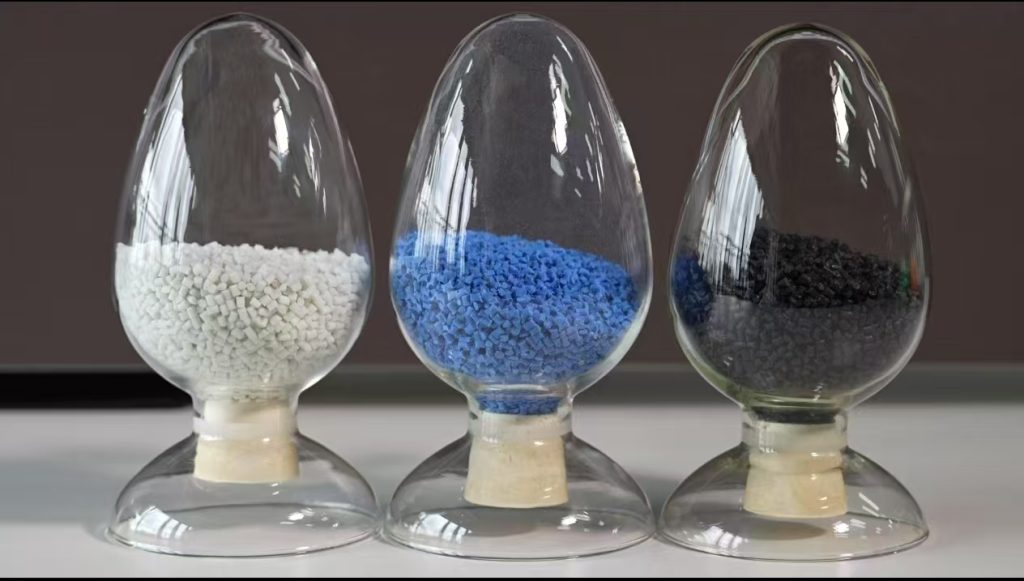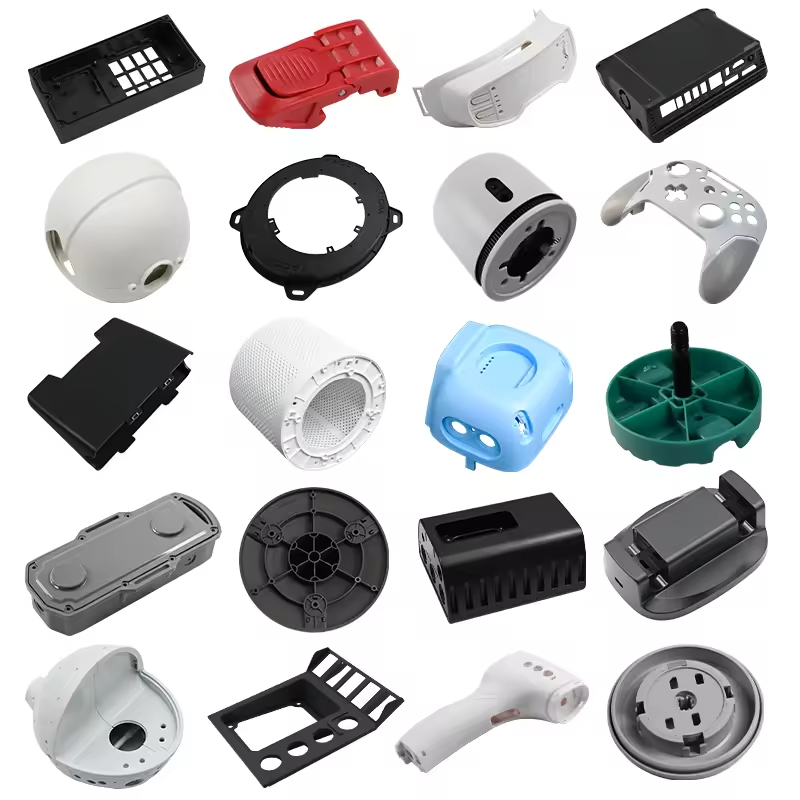
This PA66 GF15 vs GF30 vs GF60 guide helps engineers and buyers compare glass-filled nylon stiffness, molding behavior, warpage risk, and supplier selection before committing to tooling.
What Is the Difference Between PA66 GF15, GF30 and GF60?
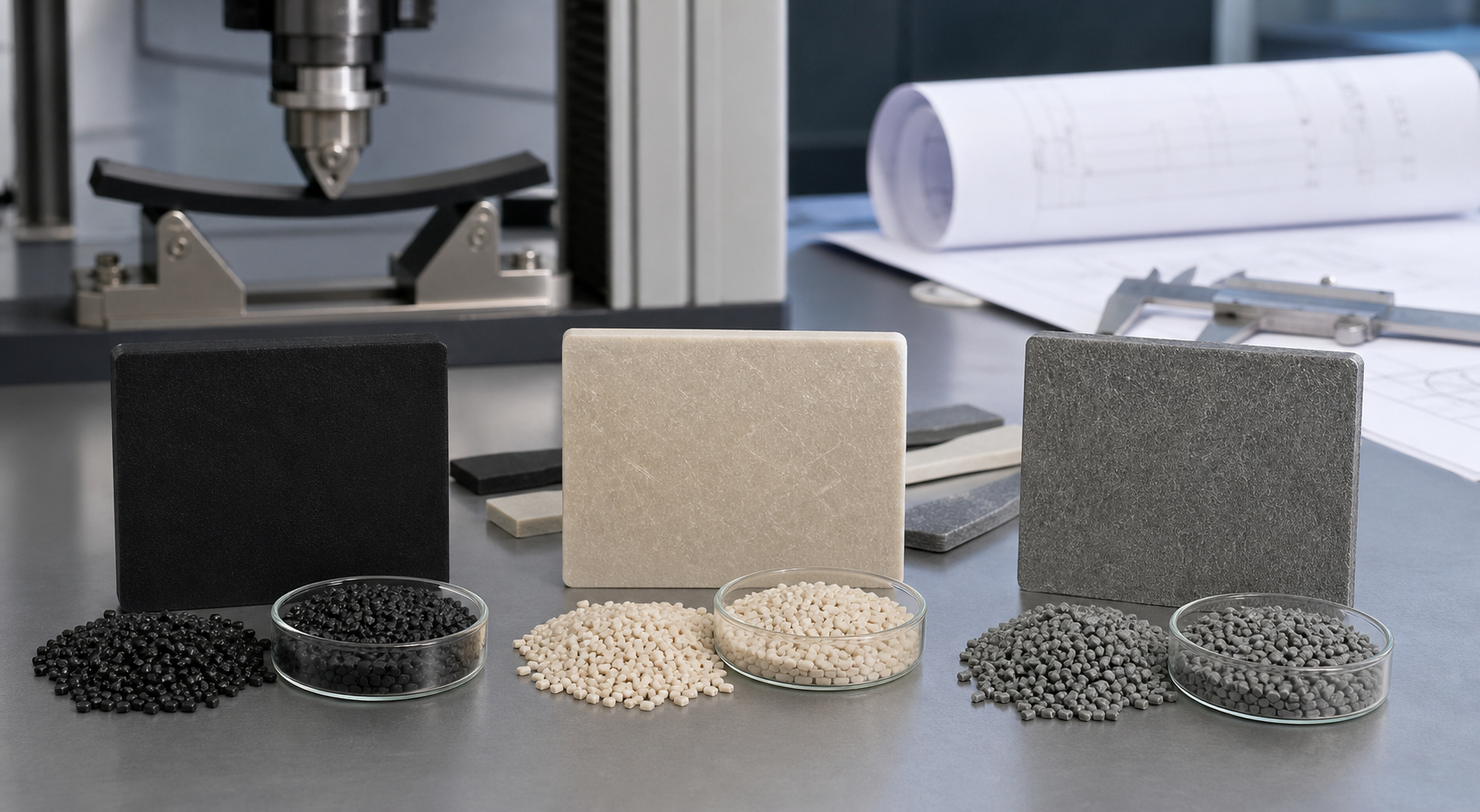
PA66 GF15, GF30 and GF60 are polyamide 66 grades reinforced with different glass-fiber levels. As glass content increases, stiffness, strength and heat resistance usually improve, but molding difficulty, tool wear, fiber-orientation effects and brittleness also increase.
The highest glass content is not automatically the best choice. PA66 GF15 is easier to mold and can keep better toughness. PA66 GF30 is the balanced engineering grade. PA66 GF60 is used when very high stiffness matters more than flexibility or easy processing.
PA66 GF15 vs GF30 vs GF60 at a Glance
| Класс | Glass content | Main advantage | Main trade-off | Оптимальный вариант |
|---|---|---|---|---|
| PA66 GF15 | 15% | Moderate stiffness with better toughness | Less rigid than GF30/GF60 | Clips, housings, medium-duty brackets |
| PA66 GF30 | 30% | Strong balance of stiffness, strength and processability | Warpage if design is poor | Automotive parts, electrical housings, structural components |
| PA66 GF60 | 60% | Very high stiffness and dimensional stability | More brittle, abrasive and difficult to mold | High-stiffness supports and metal-replacement parts |
PA66 GF15: Easier Molding With Moderate Reinforcement
PA66 GF15 is useful when a part needs more stiffness than unfilled PA66 but still needs some toughness and processing flexibility. It can work well for housings, clips and parts with moderate mechanical load.
Choose PA66 GF15 when the part has snap features, smaller ribs or geometry that would become too brittle with high glass content. It is not ideal for maximum load-bearing stiffness.
PA66 GF30: The Balanced Workhorse Grade
PA66 GF30 is widely used because it gives a practical balance between stiffness, heat resistance and moldability. For many structural plastic parts, it is the first grade worth evaluating.
This grade is common in automotive, industrial and electrical components. The main risk is directional shrinkage caused by glass fiber alignment. Gate location, rib design and wall thickness must be planned around the expected load direction.
PA66 GF60: High Stiffness With Higher Risk
PA66 GF60 is selected when stiffness and dimensional stability are the dominant requirements. It can support metal-replacement designs, rigid brackets and high-load components, but it is more abrasive and less forgiving than GF15 or GF30.
Avoid PA66 GF60 for designs with thin snap features, sharp corners or high impact requirements unless the part has been tested carefully. A lower glass grade may perform better in real assemblies.
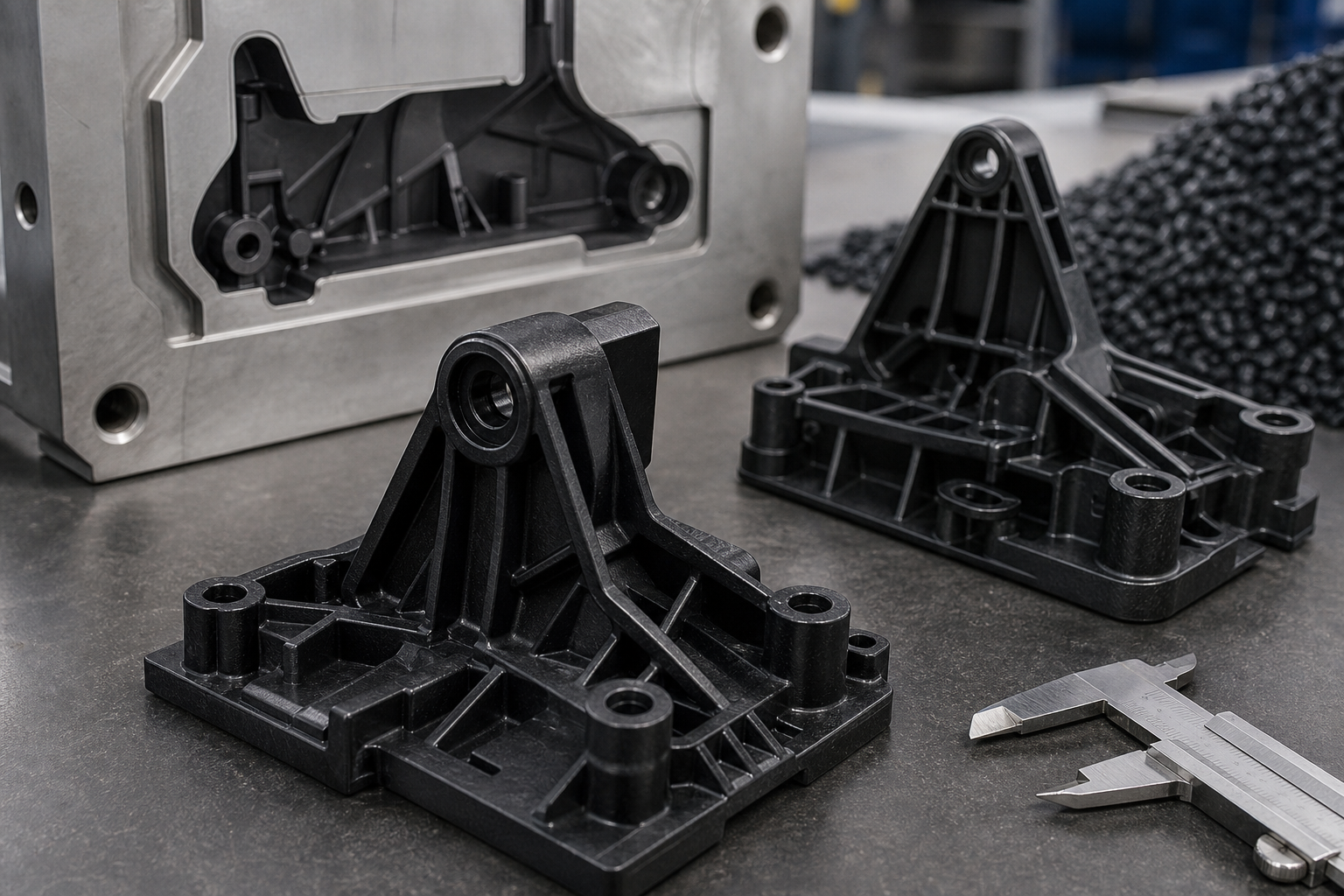
Molding and Design Comparison
| Фактор | GF15 | GF30 | GF60 |
|---|---|---|---|
| Moldability | Проще | Умеренный | More difficult |
| Tool wear | Умеренный | Выше | Высокий |
| Warpage risk | Нижний | Средний | Higher if design is poor |
| Snap-fit suitability | Лучше | Case-dependent | Usually limited |
| Metal replacement potential | Ограниченный | Хорошо | Strong but design-sensitive |
Common Selection Mistakes
Choosing GF60 Only Because It Looks Stronger
GF60 may be too brittle or too difficult to mold for some geometries. If the part needs impact resistance or flexible assembly features, GF30 or GF15 may be safer.
Ignoring Fiber Direction
Glass fibers align with melt flow. This changes shrinkage and strength by direction. A gate that looks convenient may place a weld line or weak direction exactly where the part carries load.
Copying Metal Geometry
Glass-filled nylon is often used for metal replacement, but the geometry should be redesigned for plastic. Ribs, radii, wall transitions and bosses matter.
How to Choose the Right PA66 GF Grade
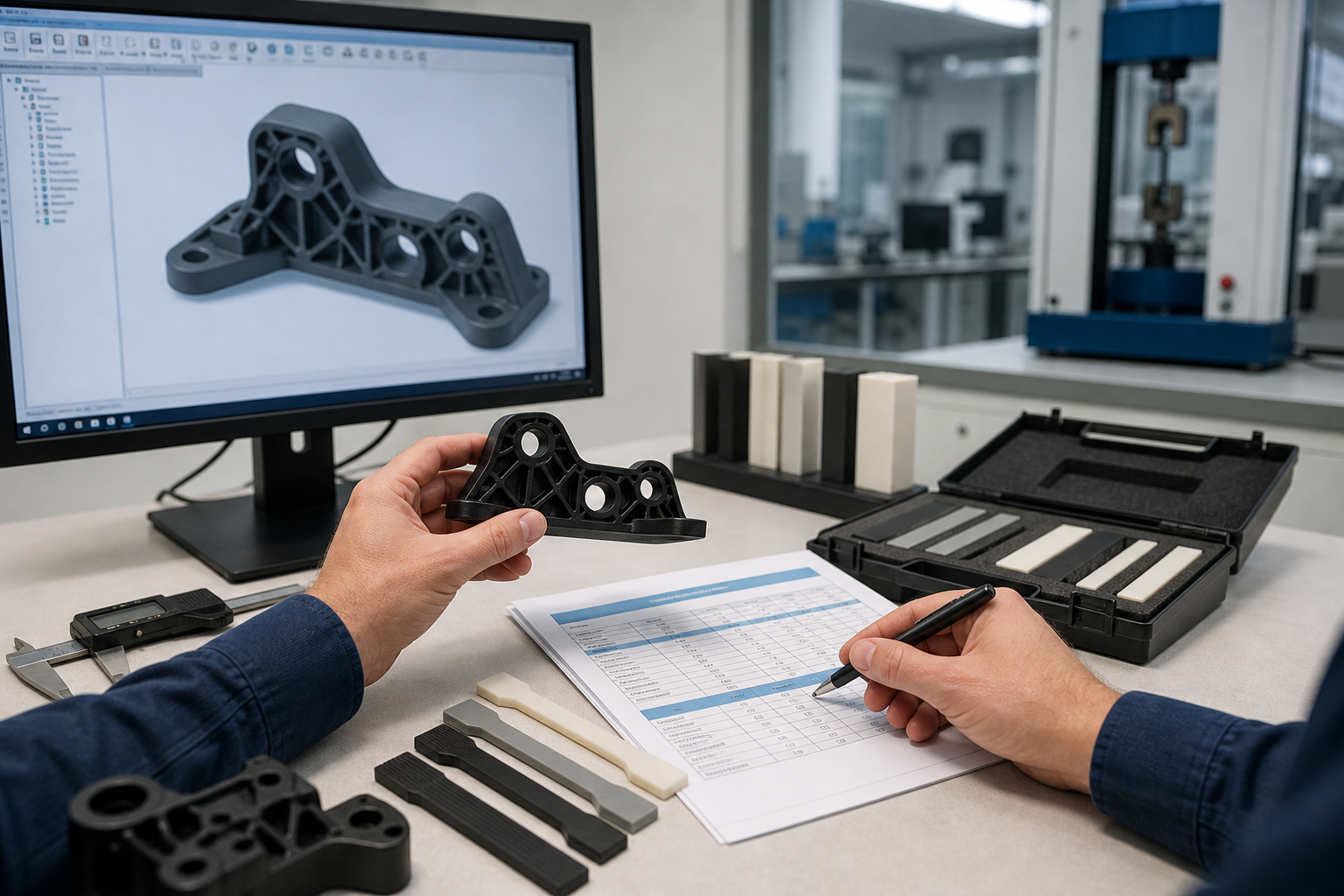
Start with the actual load case. Use PA66 GF15 for moderate stiffness and better toughness. Use PA66 GF30 as the baseline for many structural molded parts. Use PA66 GF60 only when the geometry, tooling and application justify the higher reinforcement level.
Before production, validate the selected grade with first-article inspection and functional testing under real temperature, humidity and assembly conditions.
Conclusion: GF30 Is Often the Starting Point
For many projects, PA66 GF30 is the most practical starting point. PA66 GF15 is better when toughness and moldability matter. PA66 GF60 is better for high-stiffness parts, but only when design and tooling can manage the added risk.
Nylon Plastic can help compare PA66 GF15, GF30 and GF60 based on drawings, working temperature, load direction and production volume.
Related Reading
Часто задаваемые вопросы
Is PA66 GF30 stronger than PA66 GF15?
PA66 GF30 is usually stiffer and stronger in flexural loading than PA66 GF15, but it may be less forgiving in impact or snap-fit features. The stronger choice depends on the actual part geometry and load direction.
When should I use PA66 GF60?
Use PA66 GF60 when the part needs very high stiffness and dimensional stability, and when the design avoids brittle features. It is best for rigid supports and structural components, not flexible clips.
Does higher glass content reduce shrinkage?
Higher glass content usually reduces overall shrinkage, but it can increase directional shrinkage differences. This means warpage can still be a problem if gate location and cooling are not controlled.
Is PA66 GF30 good for automotive parts?
Yes, PA66 GF30 is commonly used for automotive components because it balances stiffness, heat resistance and processability. The exact grade should be selected based on temperature, load, chemical exposure and dimensional requirements.
Can PA66 GF15, GF30 and GF60 use the same mold?
Sometimes they can be tested in the same tool, but shrinkage, flow, packing and wear behavior will differ. A mold optimized for GF15 may not produce the same results with GF60.
Can a supplier help recommend the right PA66 GF grade before sampling?
Yes. A practical supplier should review part geometry, temperature, load, creep, appearance and warpage risk before suggesting GF15, GF30 or GF60. That front-end review is often more useful than comparing tensile data alone.
What should buyers send when asking for a PA66 GF grade recommendation or quote?
Send the drawing or CAD model, operating temperature, load case, dimensional targets, environment, annual volume and any compliance or validation requirements. Those details help the supplier recommend a realistic grade and molding plan faster.
Need PA6 GF30 datasheet values including tensile, flexural, HDT, shrinkage and injection molding parameters? See our complete PA6 GF30 properties and processing guide.