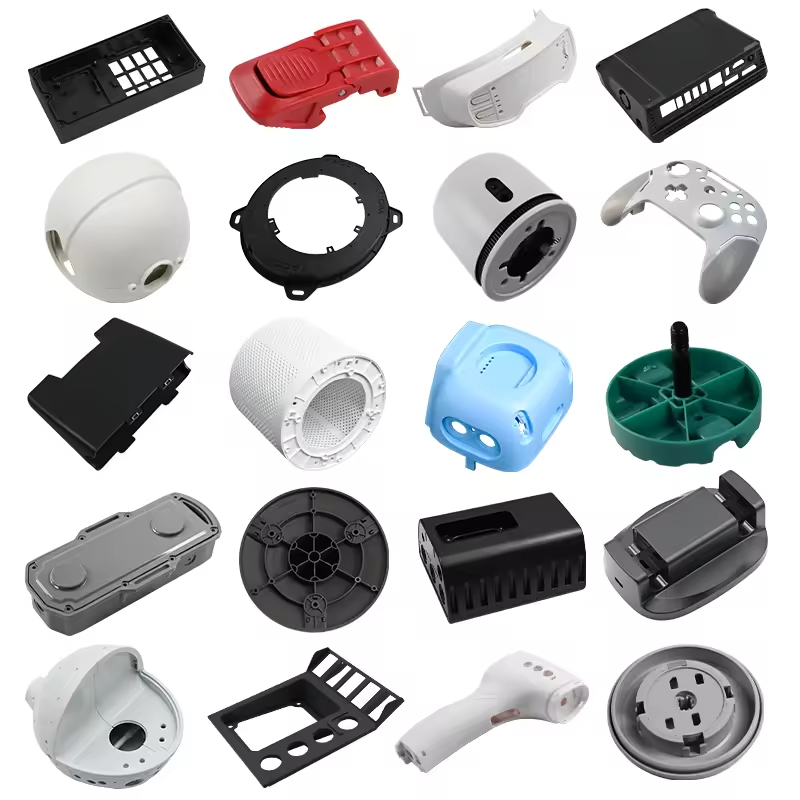
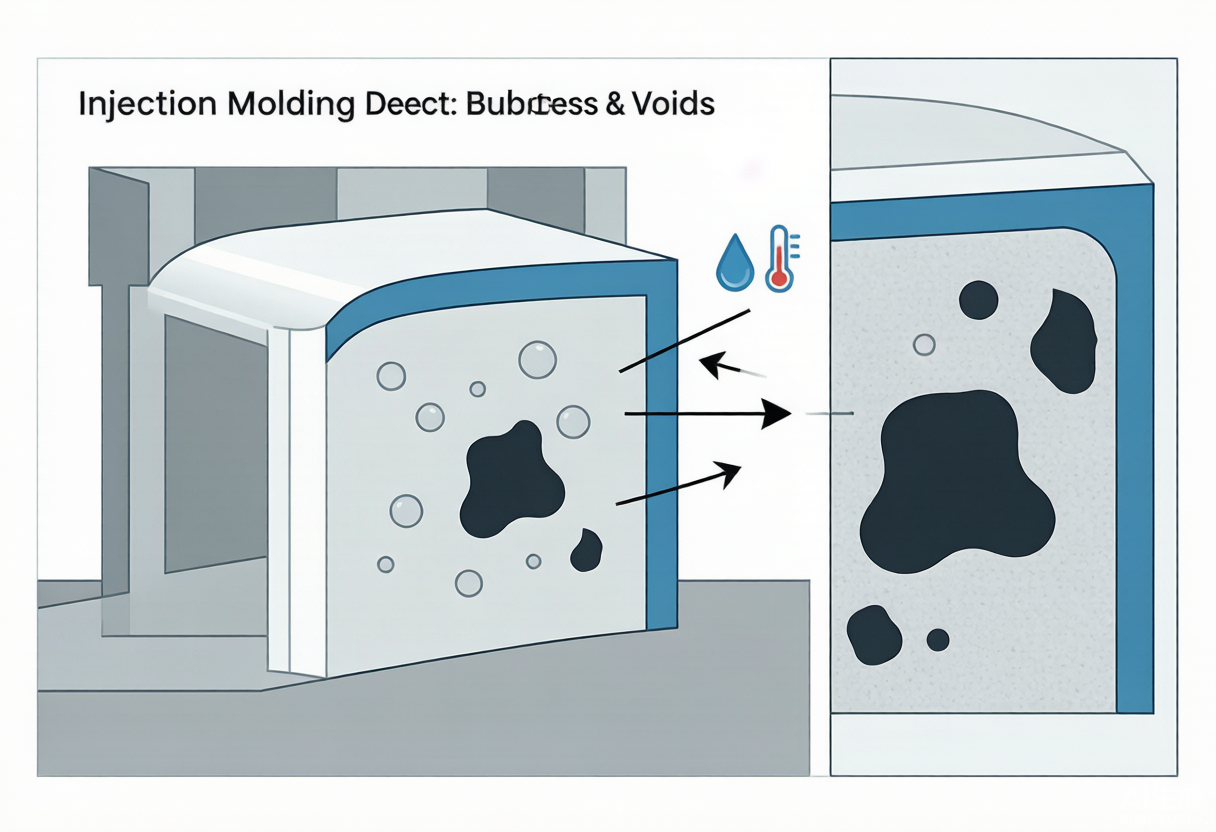
Injection molding bubbles are usually caused by trapped air, moisture in the resin, gas from overheated plastic, poor venting, insufficient packing, or thick wall sections that shrink internally. The right fix depends on whether the bubble is near the surface, inside a thick section, around a gate, or spread across the molded part.
For buyers, bubbles are not only a cosmetic defect. They can reduce strength, create leak risk, weaken bosses and clips, and signal that the material or molding process is not stable. A supplier should separate resin drying problems from mold venting, gate, packing and part design issues before changing tooling.
Common Causes of Injection Molding Bubbles
| Причина / материал | Типичный признак или применение | Действия покупателя или инженерно-технические меры |
|---|---|---|
| Moisture in resin | Splay, bubbles, brittle areas or silver marks | Dry resin according to material datasheet and confirm moisture control |
| Trapped air | Bubbles near ribs, bosses, end of fill or weld areas | Improve venting, gate location, flow path or injection speed profile |
| Перегрев | Gas marks, burning, black specks or random voids | Lower melt temperature, reduce residence time and check screw speed |
| Insufficient packing | Internal voids in thick sections | Increase packing pressure/time and review gate freeze |
| Part design | Repeated voids in heavy walls or isolated bosses | Reduce thick sections, core out bosses and improve wall transitions |
How to Diagnose Bubble Location
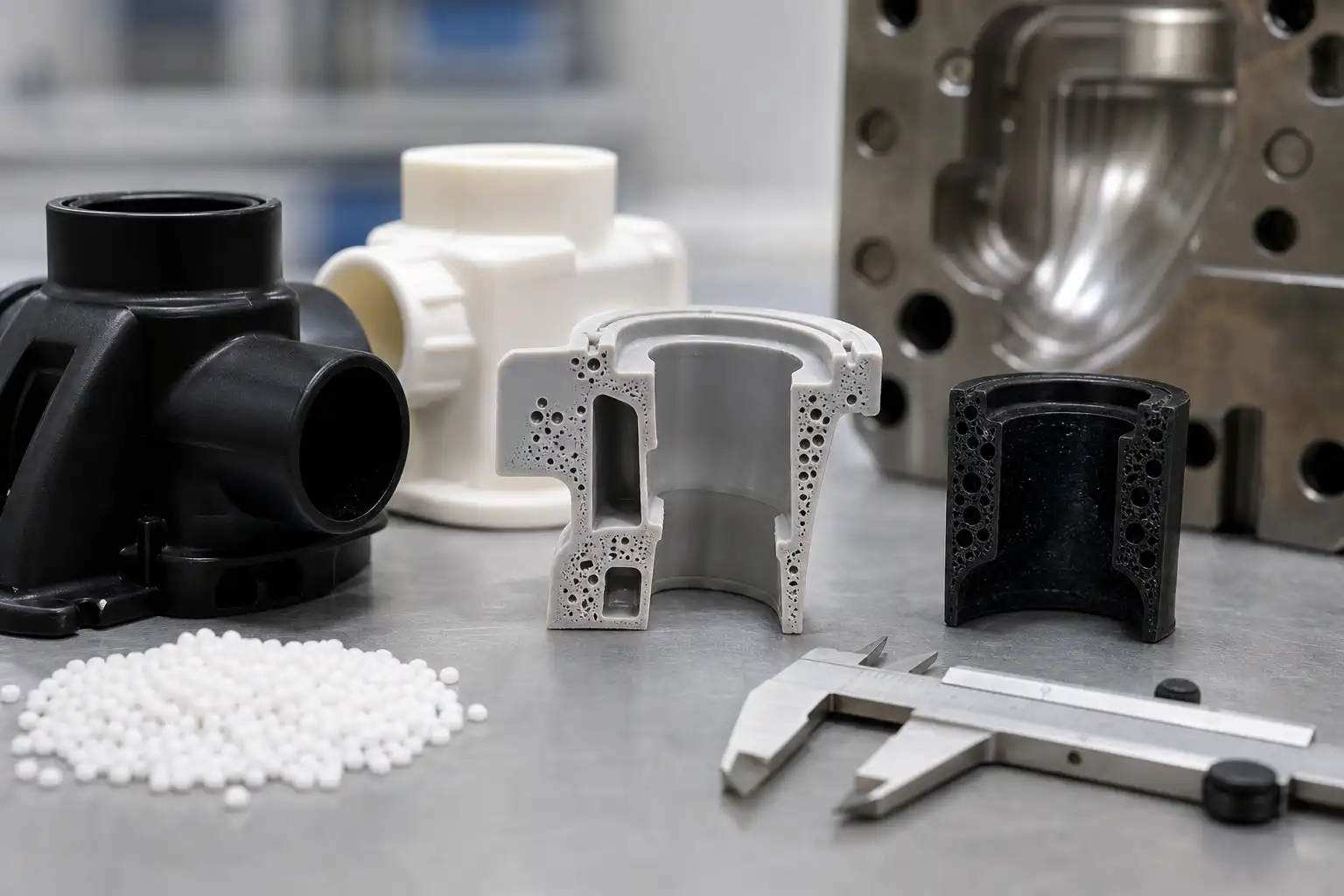
- Bubbles inside thick sections often point to shrinkage voids rather than external trapped air.
- Bubbles near the flow end usually indicate venting or injection speed problems.
- Bubbles with silver streaks often suggest moisture or material degradation.
- Bubbles around bosses and ribs may need DFM changes, not only process tuning.
- Bubbles that appear only after material changes should trigger a resin drying and grade review.
Material and Drying Checks
| Материал / корпус | Основная проблема | Примечание по выбору |
|---|---|---|
| Нейлон PA6 / PA66 | High moisture sensitivity | Drying is critical before molding loaded or glass-filled parts |
| ПК | Moisture and heat sensitivity | Poor drying can cause splay, bubbles and brittle parts |
| ABS | Moderate drying need | Check moisture, overheating and long residence time |
| POM | Thermal degradation risk | Avoid overheating and confirm safe processing range |
| PP / PE | Lower moisture concern | Focus more on venting, packing and wall design |
Buyer RFQ Details for Bubble Troubleshooting
Для проведения конструктивной экспертизы пришлите 3D-модель или 2D-чертеж, информацию о марке смолы или целевом материале, фотографии детали (если дефект уже имеется), данные об оборудовании и пресс-форме (при наличии), предполагаемый годовой объем производства, требования к внешнему виду, критические размеры, условия эксплуатации и любые стандарты контроля качества. Компания Nylon Plastic может провести анализ конструкции, материала и технологии литья до того, как будут внесены изменения в инструмент или производственный процесс.
Bubble Troubleshooting: Surface, Internal or Process-Origin
- Surface bubbles or blisters: check trapped gas, moisture, volatile contamination, venting, and local overheating.
- Internal voids in thick sections: check volumetric shrinkage, packing access, gate freeze, cooling, and section mass.
- Bubbles around a gate or insert: check shear, trapped air, insert temperature, venting, and flow hesitation.
- Lot-dependent bubbles: quarantine the lot and verify grade, moisture, storage, regrind, color, and residence time before changing the mold.
Cutting a part open, comparing the defect location with the flow path, and reviewing a controlled short-shot sequence often provides more useful evidence than changing several settings at once.
Как нейлоновый пластик способствует реализации проекта
Nylon Plastic has supported material selection and finished plastic-part manufacturing since 2005. For injection molding bubble diagnosis, the useful review connects the drawing, material, tooling or machining route, inspection state, and production plan before a quote is approved.
- Review nylon pellet identity, sealed storage, dryer performance, moisture testing, and the lot boundary when a hygroscopic resin is involved.
- Separate material handling from mold venting, packing, cooling, and thick-section design before approving a corrective action.
- Coordinate prototype or molded samples, dimensional inspection, cross-sections, and the production acceptance standard in the same review.
Related Reading
Часто задаваемые вопросы
What causes bubbles in injection molding?
Bubbles can result from trapped air, resin moisture, volatile material, overheating, poor venting, insufficient packing, or internal shrinkage in thick sections.
Are injection molding bubbles always a material problem?
No. The location and shape may point to mold venting, gate shear, packing, cooling, insert temperature, or section design. Verify material and process evidence together.
How can nylon moisture create bubbles?
Wet nylon can release vapor during melting and can also lose molecular weight through hydrolysis. Verify the exact grade, dryer dew point, residence time, and pellet moisture with a validated method.
What should buyers send for bubble troubleshooting?
Send the CAD and drawing, material grade and lot, moisture and dryer records, bubble location, cross-section or photos, gate and vent details, process settings, and acceptance requirements.
Request an Injection Molding Bubble Review
Send the material records, defect evidence, part files, and process information for a controlled root-cause review.