FDA compliant injection molding starts with the question engineers actually have to answer: what will the part touch, how long will it touch it, and what proof do we need when someone asks later?
That means the first pass is not just resin selection. It is material documentation, process control, cleaning, packaging, and whether the supplier can keep the same result after sampling ends and production begins.
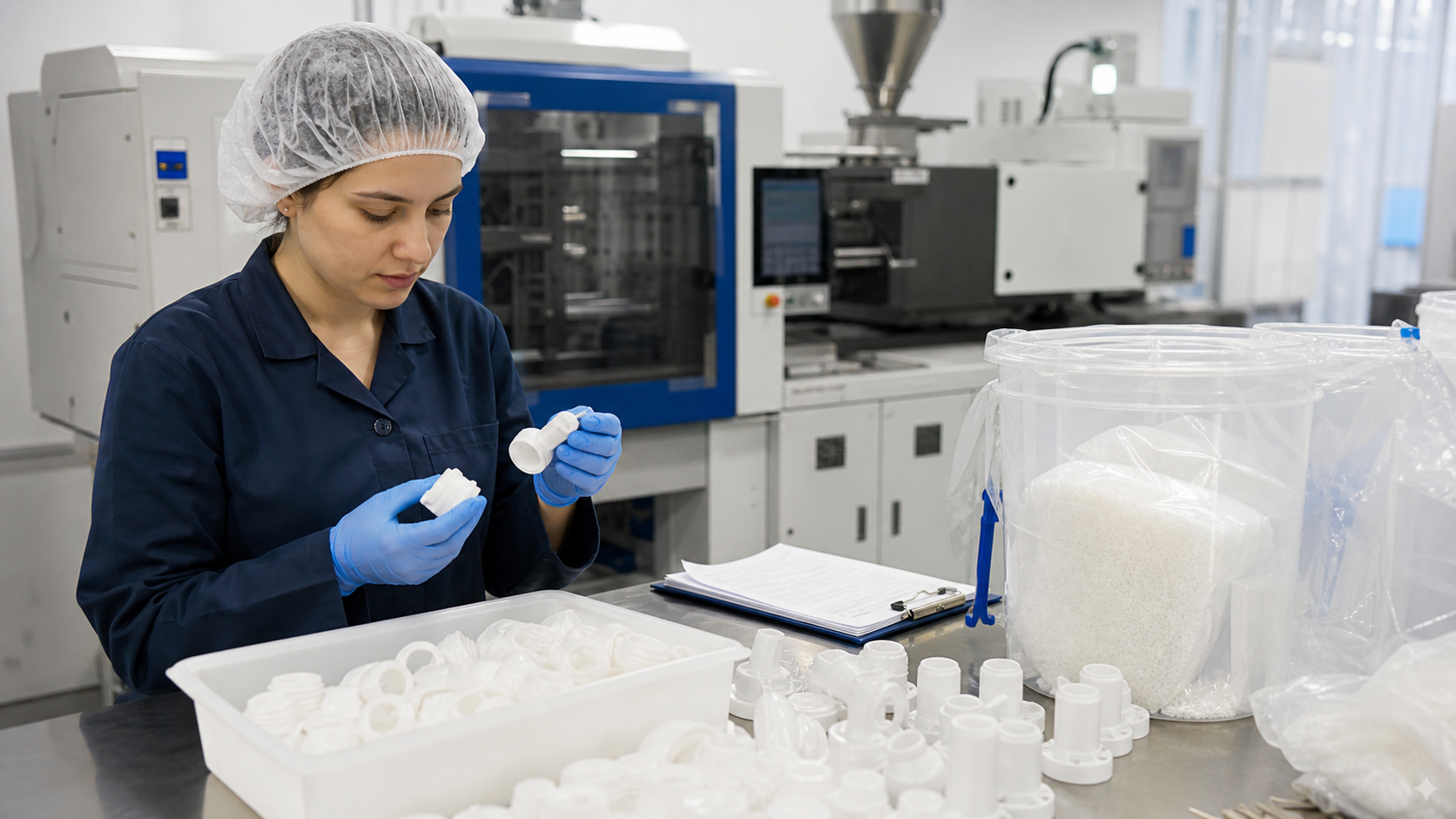
FDA-Compliant Plastic Injection Molding at a Glance
| Область принятия решений | What to Confirm | Почему это важно |
|---|---|---|
| Заявка | Food contact, medical, packaging, device housing, fixture or non-contact part | Different uses require different evidence |
| Материал | Exact resin grade, color, additive package and supplier document | Compliance depends on grade and formulation |
| Инструментальная оснастка | Parting line, gate, ejector, venting and surface finish | Tool design affects quality and contamination risk |
| Процесс | Drying, molding window, lot control and inspection | Stable process reduces variation |
| Документы | Material certificate, inspection report, lot records, drawing revision | Records must match the buyer’s quality system |
What FDA Compliance Means in Plastic Molding
FDA-related plastic molding usually starts with material selection. A resin may have food-contact or medical-related documentation for a specific grade, color and additive package. That does not automatically make every molded part approved for every application.
Buyers should specify the regulation, contact condition, temperature, chemical exposure, sterilization method if relevant, and documentation needed for their internal quality system.
Material Selection and Documentation
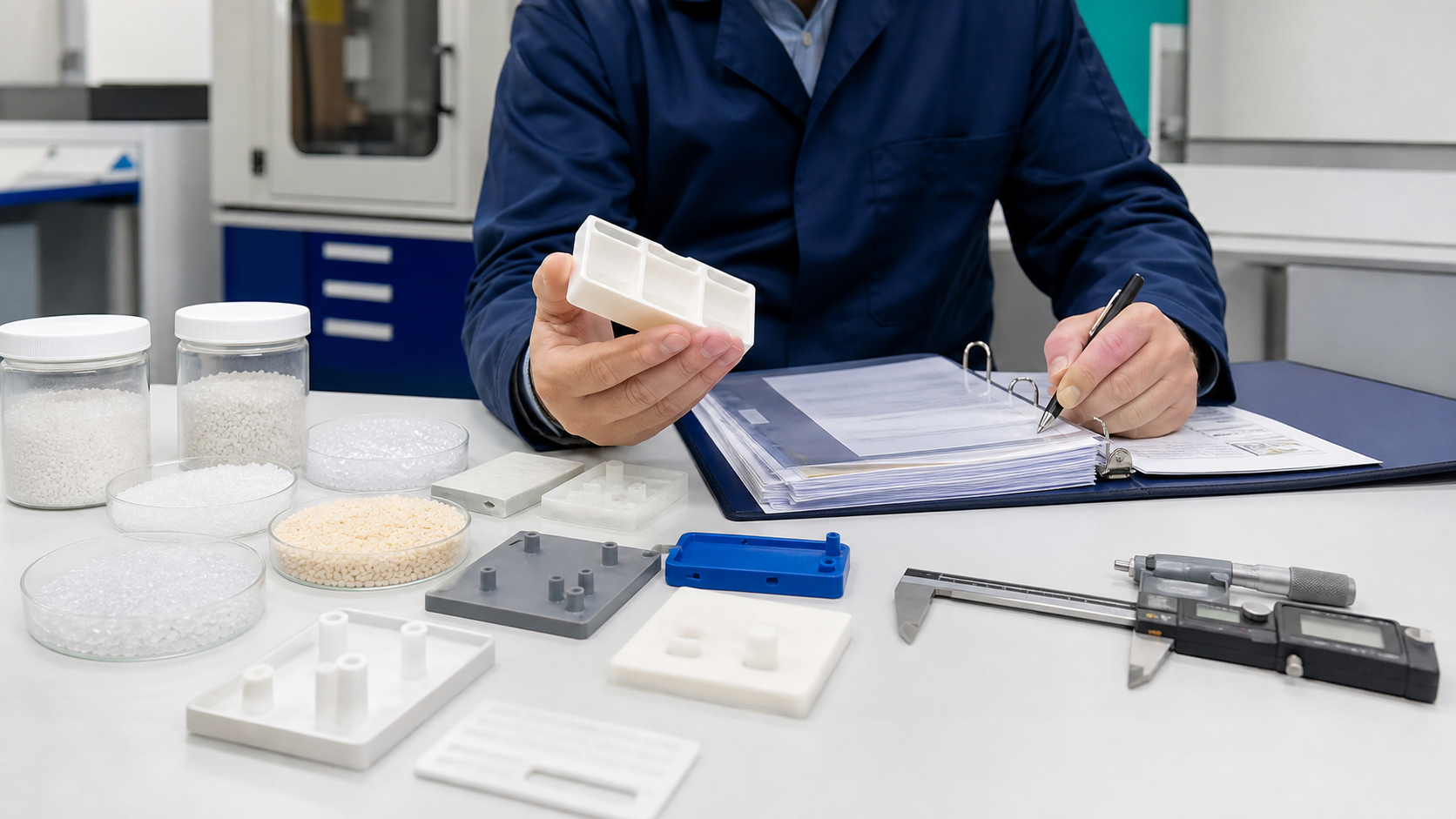
Common materials for regulated plastic parts may include PP, PE, PC, POM, nylon, PEEK, PPSU or other engineering plastics depending on use. The key is not only the polymer family, but the exact grade and its supporting documents.
- Confirm whether natural, white, black or colored material is allowed.
- Check whether additives, glass fiber or colorants affect the required documentation.
- Ask for material documents before tool launch if compliance is critical.
- Keep the approved grade stable across validation and production.
Tooling and Part Design Considerations
Tooling for regulated plastic parts should reduce avoidable quality risks. Gate location, venting, ejection, sink marks, weld lines, sharp corners and parting line location should be reviewed during DFM. Cosmetic requirements and cleaning expectations should also be discussed before tooling.
If the part must assemble with seals, filters, caps, tubes or other plastic components, share mating requirements and critical dimensions during RFQ.
Supplier Checklist for FDA-Related Molding Projects

| Checklist Item | Ask the Supplier | Buyer Output |
|---|---|---|
| Material grade | Can this exact resin and color be sourced consistently? | Approved material list |
| Документация | What certificate, datasheet or lot record can be provided? | Document requirement list |
| DFM review | Where are sink, weld line, gate and ejection risks? | DFM feedback before tooling |
| Проверка | Which dimensions and defects will be checked? | Inspection plan or FAI request |
| Change control | How are material or process changes communicated? | Supplier agreement or PO note |
Common Risks and How to Reduce Them
| Риск | Причина | Reduction Method |
|---|---|---|
| Wrong material assumption | Using only polymer name, not exact grade | Specify grade, color and document requirement |
| Late documentation request | Records not defined before production | List certificates and reports during RFQ |
| Part defects | Poor gate, venting or wall design | Run DFM before mold cutting |
| Validation mismatch | Prototype material differs from production material | Keep material and process route consistent |
Почему стоит выбрать нейлоновый пластик
Nylon Plastic supports custom plastic injection molding, material selection, tooling review, CNC machining and 3D printing. For regulated or FDA-related applications, the team can review drawings, discuss material documentation needs and help buyers define RFQ requirements before tooling starts.
Compliance Scope Before Tooling
| Требование | Question to Resolve | Evidence to Define |
|---|---|---|
| Exact resin and color | Which formulation, additive package and supplier are approved? | Grade, color, TDS, COA, lot traceability and change-notice process |
| Product contact | What does the part touch, for how long and under what temperature or cleaning cycle? | Application boundary, exposure list, qualification and customer responsibility |
| Tool and process | Where could gates, weld lines, flash, sink, venting or contamination affect the part? | DFM, mold layout, process controls, inspection and cleanliness requirements |
| Production records | What must be retained for each lot or change? | Material documents, inspection reports, sample approval, traceability and deviation path |
FDA-related molding is not a blanket claim that a factory or finished part is approved. The relevant question is whether the exact resin, color, additive package, process, cleaning exposure and product use have the documentation and validation required by the buyer’s application. Define that scope before the mold or material is locked.
How Nylon Plastic Supports Regulated-Part Reviews
Nylon Plastic supports material selection, injection molding, mold review, CNC machining and 3D printing for custom plastic parts. When nylon is considered, the team can compare unfilled PA, PA-GF20 or PA-CF30 with the application environment, documentation needs and production route without treating a generic polymer name as a compliance certificate.
- Separate material compliance, manufacturing controls, product validation and customer regulatory responsibility.
- Request exact grade documents and a change-control path before approving a substitute resin or color.
- Link DFM, inspection, cleanliness, traceability, packaging and lot-release records to the same part revision.
Related Reading
- Услуги по литью под давлением изделий из нейлона
- Plastic Parts Inspection and Metrology
- Руководство по расчету затрат на литье под давлением
Часто задаваемые вопросы
Означает ли термин «литье под давлением в соответствии с требованиями FDA», что завод одобрен FDA?
Нет. Заказчики должны точно определить требования к материалам, нормативным документам, контакту с продуктом, валидации и документации. Поставщик может обеспечить контролируемое производство и ведение документации, однако объем утверждения применения должен быть согласован.
Какие пластики используются для изготовления литых деталей, подпадающих под требования FDA?
В зависимости от области применения могут использоваться PP, PE, PC, POM, нейлон, PEEK и PPSU. Важное значение имеют конкретный сорт материала, цвет, добавки, условия контакта и сопроводительная документация.
Какие документы мне следует запросить?
К типичным запросам относятся: точные технические характеристики материала, сертификат или протокол анализа (COA), информация о партии, отчет о проверке, подтверждение проверки первого изделия, условия контроля изменений, а также любые документы об аттестации, относящиеся к конкретному применению.
Когда следует обсуждать требования по обеспечению соответствия?
До подготовки коммерческого предложения и изготовления пресс-форм. Задержки с поставкой материалов или предоставлением документации могут повлечь за собой изменения в выборе смолы, цвета, конструкции пресс-форм, технологического процесса или процедур валидации.
Является ли сертификат на материал тем же, что и одобрение FDA?
No. A certificate identifies or documents material information, while application compliance depends on the exact grade, formulation, contact conditions, processing, cleaning and required validation.
Request an FDA-Related Molding Review
Send the drawing, exact material or performance target, product-contact conditions, documentation needs, quantity and validation expectations for an RFQ review.