
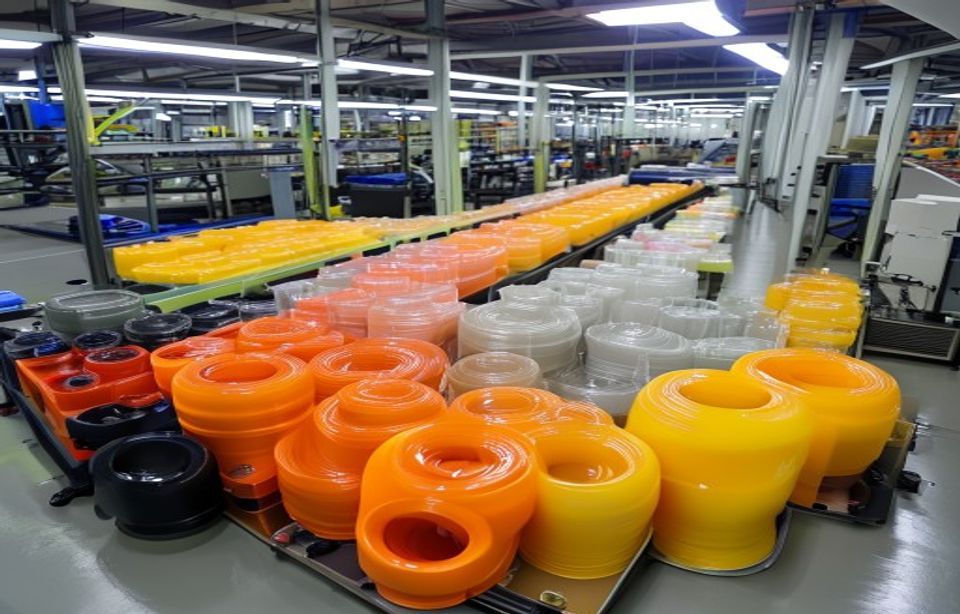
How to Choose a China Injection Molding Manufacturer
A qualified China injection molding manufacturer should be evaluated on engineering control, mold construction, process capability, quality documentation, capacity, communication, and commercial transparency, not on tooling price alone. The right supplier can manage DFM, mold build, trials, material control, molding, secondary operations, inspection, packaging, and export documentation against one approved specification.
Before awarding a mold, confirm who will design and manufacture it, where production will run, who owns the tooling, which resin and steel grades are quoted, how samples will be approved, and what records will accompany production. A low quotation becomes expensive when it excludes mold corrections, inspection, certified material, maintenance, packaging, or transfer rights.
| Supplier Decision | Evidence to Request | Risk Controlled |
|---|---|---|
| Engineering fit | Part-specific DFM, proposed gate and parting line, shrinkage assumptions, tolerance review | Late tool changes, visible defects, unstable dimensions |
| Tooling capability | Steel specification, hardness, cavity count, runner system, cooling concept, mold-life target | Premature wear, slow cycles, disputed tool scope |
| Production control | Machine list, process records, material traceability, maintenance plan, backup capacity | Inconsistent output and delivery interruption |
| Quality capability | FAI sample report, inspection equipment list, calibration records, control plan, capability format | Approval based on appearance rather than measured conformity |
| Commercial control | Itemized quotation, ownership clause, Incoterm, correction allowance, warranty and transfer terms | Hidden costs and supplier lock-in |
When Sourcing Injection Molding from China Makes Sense
China is often suitable when a project benefits from an integrated tooling and molding supply chain, requires multiple secondary operations, or needs competitive production economics at repeat volume. It can also be effective for bridge tooling and phased launches when the supplier can coordinate mold build, qualification, molding, assembly, and export packaging.
A local supplier may be the better choice when parts are required immediately, demand is extremely small, design changes are continuous, freight dominates part value, or regulations require a tightly defined domestic supply chain. The decision should compare total landed and qualified cost rather than country-level hourly rates.
| Project Condition | China Supplier May Be Advantageous | Local or Regional Supplier May Be Advantageous |
|---|---|---|
| Tooling complexity | Integrated mold shop, components, texturing and secondary-process network | Frequent in-person design changes or highly specialized local validation |
| Production volume | Repeat orders can absorb qualification and international logistics | Very small batches where setup and freight dominate |
| Lead-time priority | Parallel engineering, tooling and supply-chain work is well managed | Parts must arrive faster than international transport permits |
| Supply-chain strategy | Buyer wants one source for molded parts, assembly and packaging | Buyer requires local dual sourcing, local inventory or domestic-origin control |
Verify the Factory Behind the Quotation
A capable trading company can add value, but the buyer must know whether the quotation comes from the molding factory, a mold maker, an engineering company, or an intermediary. The contractual supplier and the physical manufacturer may not be the same organization. That distinction affects technical communication, change control, capacity commitments, tooling custody, and corrective action.
Ask for a live factory tour covering the toolroom, molding floor, resin storage, inspection area, maintenance area, warehouse, and packaging operation. Match the company name on the business license, quotation, quality certificate, bank account, and export documents. During the tour, ask the supplier to show a job traveler, a recent dimensional report, machine maintenance records, resin lot identification, and an active mold-trial process. A polished presentation is less useful than evidence from normal production.
Evaluate DFM and Mold Engineering Before Price
The supplier should identify molding risks from the actual CAD model. A useful DFM review addresses draft, wall transitions, ribs, bosses, undercuts, ejection, parting line, gate type and location, venting, weld-line position, texture, expected shrinkage, and tolerance capability. For thin walls, long flow lengths, filled materials, multiple gates, or warpage-sensitive geometry, ask whether flow analysis is required and who owns the report.
The mold quotation should state the mold-base standard, cavity and core steel, hardness, heat treatment, cavity count, interchangeable inserts, runner type, hot-runner brand where applicable, slides and lifters, cooling design, mold-life target, spare components, trial quantity, and correction allowance. Use the tool steel selection guide и gate design guide to normalize technical assumptions before comparing prices.
Build a Quality Plan Around the Drawing
Certification does not replace a part-specific quality plan. ISO 9001 may demonstrate a general management system, while automotive, medical, aerospace, food-contact, or electrical applications can require additional systems and records. Verify that the certificate covers the legal entity and manufacturing location performing the work, and confirm the scope and validity with the issuing body.
Define the approval package before tooling begins. Depending on risk, it may include:
- First Article Inspection with ballooned drawing and measured results.
- Material certificate showing manufacturer, grade, lot, color and compliance status.
- Mold-steel certificate and hardness record for critical tooling.
- Capability data for critical-to-quality dimensions after the process is stable.
- Control plan, inspection frequency, gauge method and reaction plan.
- Appearance standard with approved samples and defined cosmetic zones.
- Functional, leak, load, assembly or environmental testing where required.
- Traceability and change-control requirements for resin, colorant, tooling and process.
Tolerance requirements should use a defined datum scheme and distinguish critical dimensions from general tolerances. The injection molding tolerance stack-up guide explains how shrinkage, warpage and assembly clearance affect realistic acceptance limits.
Put Mold Ownership and Transfer Terms in Writing
Payment for a mold does not automatically define every ownership and transfer right. The purchase agreement should identify the legal owner, permitted use, storage location, maintenance responsibility, storage period, insurance or loss responsibility, and the conditions for transferring the mold to another factory.
Require permanent mold identification and a transfer package that can include 2D and 3D mold files, bill of materials, steel certificates, hot-runner documentation, wiring and water diagrams, spare-parts list, maintenance history, trial reports, approved process settings, and export crating requirements. Also confirm whether transfer charges, unpaid production balances, proprietary mold-base standards, or supplier-owned hot-runner components could delay removal.
Compare Total Landed and Qualified Cost
Normalize quotations to the same resin, annual quantity, cavity count, mold life, cycle time, scrap assumption, inspection plan, packaging and Incoterm. Then calculate:
Total landed and qualified cost = tooling and NRE + production parts + validation + secondary operations + packaging + freight and duty + expected maintenance and change cost.
The lowest factory price may not remain lowest after adding runner waste, inspection, rework, freight, duty, inventory, payment terms, or engineering changes. The injection molding cost guide provides a quotation-normalization model. For freight, customs documents, Incoterms and packaging, use the plastic parts shipping from China guide.
A Controlled Supplier Qualification Sequence
- Issue one controlled RFQ: send identical CAD, drawing, material, volume, quality and delivery requirements to shortlisted suppliers.
- Review part-specific DFM: assess whether the supplier identifies real geometry, tooling and process risks.
- Normalize quotations: compare equivalent mold construction, trial scope, part-price assumptions and commercial terms.
- Audit the manufacturing route: verify the legal entity, factory, equipment, people, quality records and subcontracted operations.
- Approve tooling specifications: freeze steel, cavities, gating, cooling, actions, ownership and mold-life expectations.
- Control T0 and T1: review samples, dimensional results, defects, process conditions and correction responsibility.
- Qualify production: approve the process, inspection plan, packaging and traceability before releasing volume orders.
- Monitor performance: track quality escapes, corrective-action closure, on-time delivery, mold maintenance and engineering changes.
Supplier Red Flags
- The quotation does not identify resin grade, mold steel, cavities, runner system or tool life.
- The supplier provides a generic DFM checklist without marking the actual part geometry.
- Company names differ across the quotation, certificate, bank account and export documents without explanation.
- The supplier will not show the production location or disclose subcontracted molding and inspection.
- Critical dimensions are accepted without a gauge method, sampling plan or capability discussion.
- Mold ownership is promised verbally but transfer files, maintenance and removal costs are undefined.
- The part price assumes an unspecified equivalent resin or unapproved regrind.
- Every requested change is described as free, but correction limits and approval stages are absent from the contract.
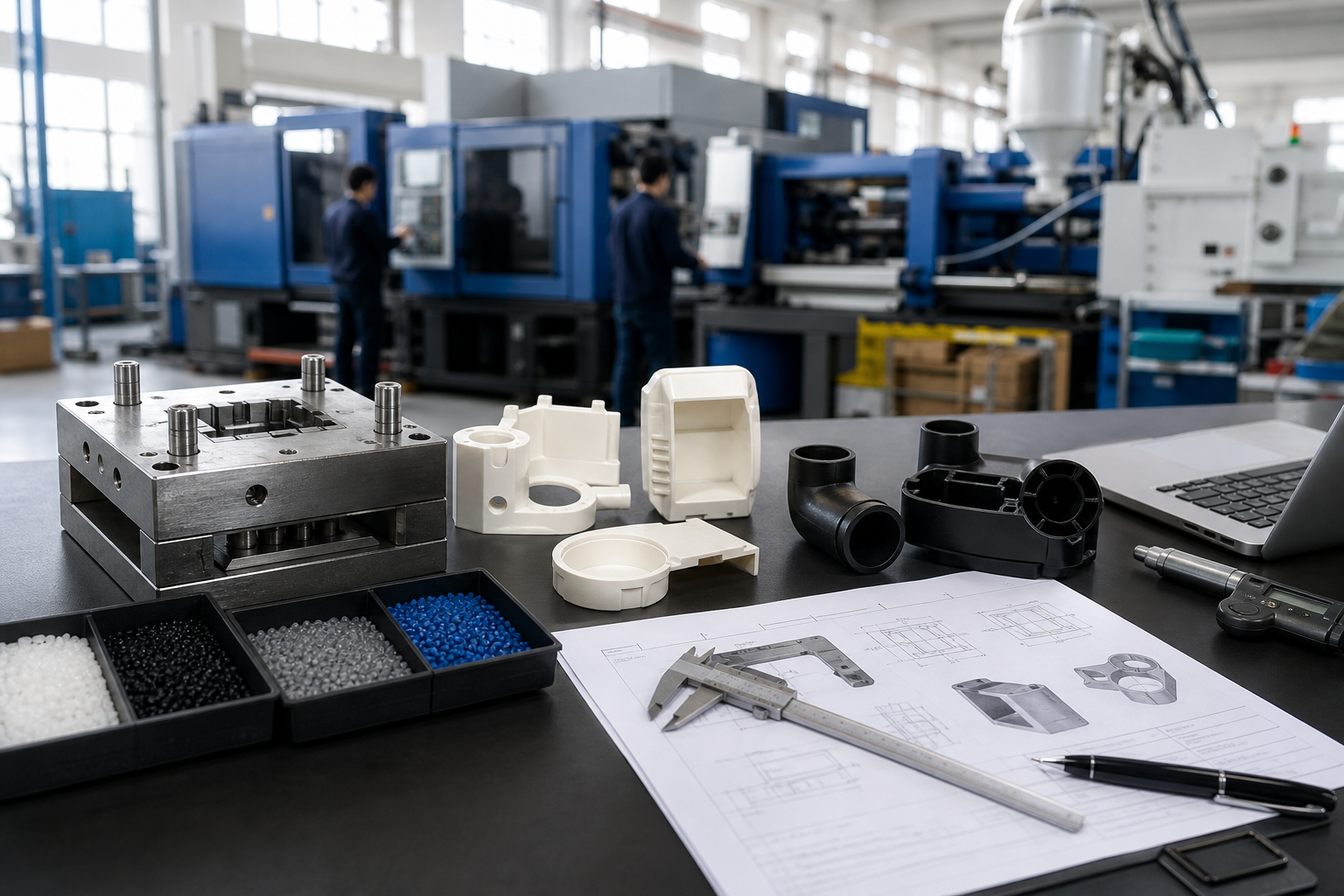
RFQ Checklist for a China Injection Molding Manufacturer
- Revision-controlled 3D CAD and 2D drawing.
- Exact resin grade, color, filler, compliance and regrind restrictions.
- Prototype quantity, first order, annual forecast, peak demand and program life.
- Critical dimensions, datum scheme, cosmetic zones, texture and approved standards.
- Insert molding, overmolding, assembly, welding, marking and packaging scope.
- Target mold life, cavity preference, ownership, storage, maintenance and transfer requirements.
- T0/T1 samples, FAI, capability, PPAP or other validation deliverables.
- Delivery address, Incoterm, currency, freight and duty responsibility.
For a manufacturing review, send these files and requirements through the form below. Nylon Plastic can review the part for DFM, tooling route, material risk, inspection scope, production volume and export requirements before quotation.
How to Normalize China Injection Molding Supplier Quotes
| Quote Item | Question to Normalize | Evidence to Request |
|---|---|---|
| Инструментальная оснастка | What steel, cavity count, hot or cold runner, standard parts, maintenance and ownership are included? | Mold layout, steel or component list, trial plan, ownership and transfer terms |
| Part price | Which resin, color, process, inspection, packaging, scrap and quantity break are included? | Exact grade, annual volume, approved sample, inspection scope and packing specification |
| Quality | How are critical dimensions, cavity, material lot, change control and nonconformance handled? | Control plan, reports, traceability, sample plan, reaction plan and change-notice process |
| Delivery | Does the timing include DFM, mold fabrication, trials, corrections, approval and export logistics? | Milestone schedule, assumptions, Incoterm, packing and escalation owner |
The lowest mold or piece price is not a comparable result when the tooling scope, resin, inspection, lead time, ownership, and landed cost assumptions differ. Put the same drawing revision and acceptance state in every supplier request.
Как нейлоновый пластик способствует реализации проекта
Nylon Plastic supports material-selection and finished-part reviews for injection molding enquiries. For China injection molding supplier evaluation, the useful review connects the drawing, material, tooling or machining route, inspection state, and production plan before a quote is approved.
- Review material, DFM, mold, molding, inspection, packaging, and export requirements against the same controlled drawing and revision.
- Compare unfilled PA, PA-GF20, and PA-CF30 options when the application needs a modified nylon route rather than a generic resin substitution.
- Keep sample approval, mold ownership, change control, lot traceability, and acceptance criteria visible before production release.
Related Reading
Часто задаваемые вопросы
How do I evaluate a China injection molding manufacturer?
Compare engineering, DFM, mold construction, molding, inspection, traceability, communication, packaging, export scope, change control, and the evidence behind the quoted capability.
What should a China injection molding RFQ include?
Send the controlled CAD and drawing, exact resin or performance target, color, annual volume, critical dimensions, appearance, tooling scope, inspection, packaging, Incoterm, and approval requirements.
How should mold ownership be documented?
Define who owns the tool, where it is stored, who pays maintenance and modifications, how access is handled, and what data or components transfer if production moves.
How can supplier quotes be compared fairly?
Use the same revision, resin, quantity, inspection, packaging, tooling ownership, delivery point, Incoterm, validation scope, and change-control assumptions before comparing total landed and qualified cost.
Request a China Injection Molding Supplier Review
Send the drawing, resin target, volume, tooling scope, quality requirements, delivery point, and supplier quotes for a normalized comparison.

