
В данном руководстве по литью под давлением изложено практические рекомендации по выбору материалов, анализу конструкции, производству и принятию решений о поставщиках.
Литье под давлением и литье в пресс-формы: два пути к производству
Литье под давлением и литье в пресс-форму основаны на одной и той же базовой концепции — впрыскивание расплавленного материала в стальную форму под высоким давлением, его затвердевание, извлечение детали и повторение цикла — однако сходство заканчивается на состоянии материала. При литье под давлением жидкий металл (как правило, сплавы алюминия, цинка или магния) впрыскивается в закаленную инструментальную сталь под давлением 10–175 МПа и при температуре 600–700 °C. При литье под давлением расплавленные термопласты под давлением 35–140 МПа и при температуре 180–350 °C впрыскиваются в формы, которые могут быть изготовлены из закаленной или предварительно закаленной стали. Один только разрыв в температурах — на 400 °C выше при литье под давлением — приводит к целой череде различий в стоимости инструментов, сроке службы пресс-форм, точности деталей и экономике производства единицы продукции, которые определяют, какой из процессов окажется более выгодным для конкретного применения.
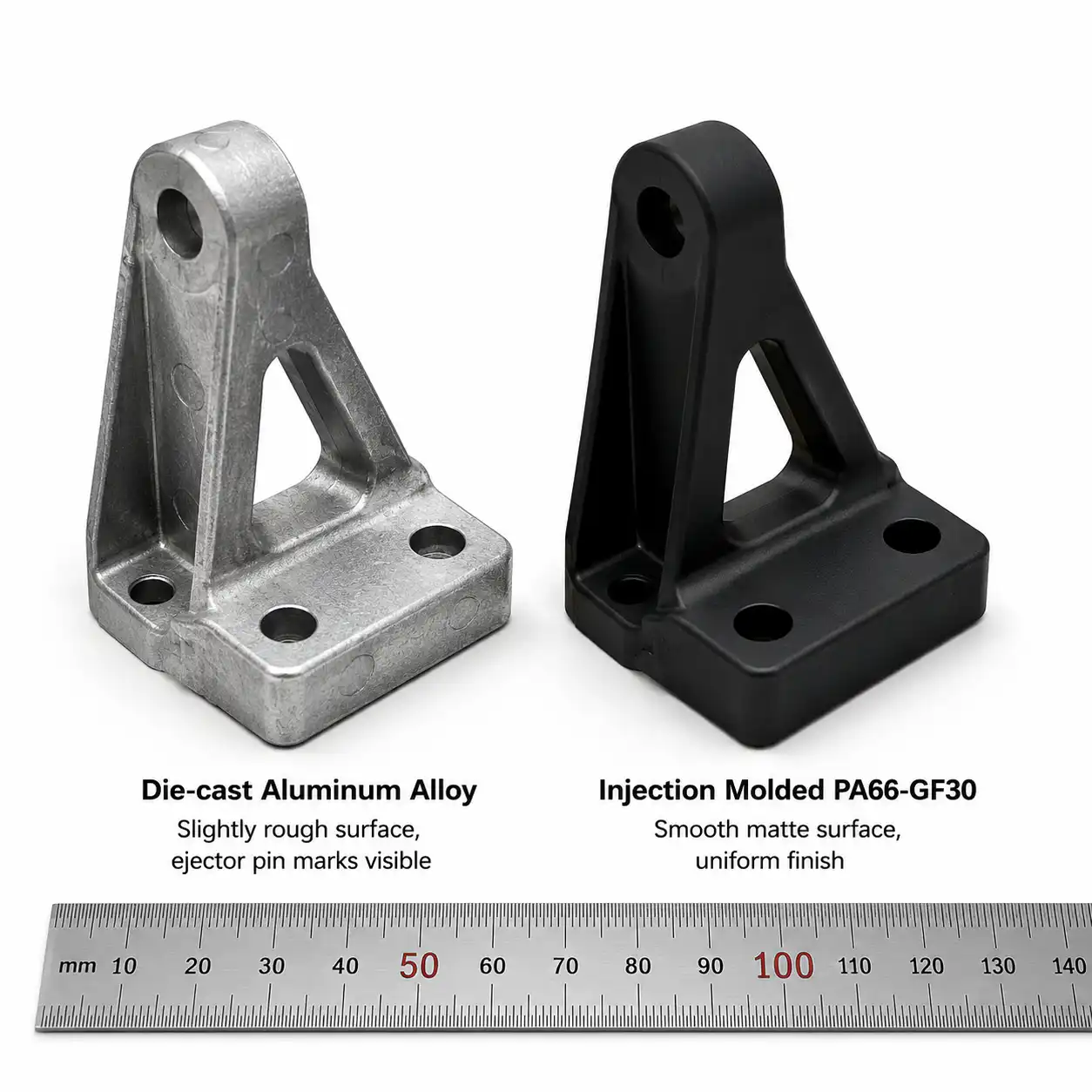
Выбор между литьем под давлением и литьем в пресс-форму — это не просто вопрос «металл или пластик», а вопрос соотношения общей стоимости и функциональности с учетом ваших объемов производства. Кронштейн, изготовленный методом литья под давлением из цинка, может стоить $2,50 за деталь с учетом затрат на инструмент и материал, но при этом обеспечивать в 3 раза большую жесткость по сравнению с аналогом из стеклонаполненного нейлона, стоимость которого составляет $0,80. При годовом объеме производства в 50 000 деталей стоимость инструмента для литья под давлением — $40 000 — по сравнению со стоимостью инструмента для литья под давлением — $15 000 — полностью меняет расчет в зависимости от того, что для вас является приоритетом: себестоимость единицы продукции, механические характеристики или первоначальные инвестиции. В данном руководстве подробно рассмотрены все переменные — механика процесса, выбор материала, срок службы пресс-формы, возможности по допуску и экономика крупных объемов — чтобы вы могли принять решение, опираясь на конкретные цифры, а не на интуицию.

Механика процессов: тепло, давление и затвердевание
Литье под давлением осуществляется двумя основными способами: с использованием «горячей камеры» и «холодной камеры». В машинах с «горячей камерой» плавильный котёл интегрирован с системой впрыска; гусиная шея погружается в расплавленный цинк или магний (температура ниже 450 °C), что позволяет сократить время цикла при производстве мелких деталей до 15–30 секунд. Машины с холодной камерой требуют переливания расплавленного алюминия в отдельную впускную гильзу — этот дополнительный этап увеличивает время цикла до 30–60 секунд, но позволяет использовать алюминиевые сплавы, которые могли бы вызвать химическое воздействие на погруженную в расплав систему впрыска. Литье под давлением, напротив, использует возвратно-поступательный шнек, который плавит, перемешивает и впрыскивает материал в рамках единого непрерывного процесса с продолжительностью цикла от 15 секунд для тонкостенной упаковки до 120 секунд для толстостенных конструкционных деталей.
Характеристики затвердевания создают принципиально иные ограничения при проектировании. Объем расплавленного металла при затвердевании уменьшается на 5–7%, в то время как для термопластов этот показатель составляет 0,2–2,5%. Такая более высокая усадка требует использования более массивных литниковых каналов, более крупных переливных углублений для удержания фронта усадки, а также применения давления интенсификации (вторичной фазы высокого давления после заполнения) для предотвращения пористости. Пластмассы затвердевают от стенки формы внутрь, образуя «замерзший» поверхностный слой толщиной 0,1–0,5 мм, который влияет на процесс заполнения; металлы образуют дендритный фронт затвердевания, который удерживает газ и приводит к образованию микропористости, если подача материала не организована надлежащим образом. Практическое следствие: детали, изготовленные методом литья под давлением, требуют минимальной толщины стенок 0,8–1,5 мм для алюминия по сравнению с 0,4–0,8 мм для пластмасс, литых методом литья под давлением, и детали, изготовленные методом литья под давлением, почти всегда нуждаются в более толстых участках в области литниковых каналов, чтобы обеспечить полное заполнение до того, как металл затвердеет.
Сравнительный анализ свойств металла и пластика: разница в эксплуатационных характеристиках
Когда деталь из нейлона, армированного стекловолокном, заменяет алюминиевую литую деталь, вы получаете примерно в 3 раза больший модуль упругости при растяжении (70 ГПа для алюминия против 8–15 ГПа для нейлона, армированного стекловолокном) и в 5 раз большую теплопроводность в обмен на снижение веса на 40–60% и устранение риска коррозии. Важные показатели полностью зависят от конкретного применения: алюминий A380 обладает пределом прочности на разрыв 324 МПа по сравнению с 150–220 МПа у стеклонаполненного нейлона 6/6 50%, но плотность нейлона (1,5 г/см³) по сравнению с плотностью алюминия (2,7 г/см³) означает, что разрыв в соотношении прочности к весу сокращается примерно до 1,5:1. Цинковые сплавы (Zamak 3 с пределом прочности на разрыв 283 МПа, плотностью 6,6 г/см³) жертвуют весом ради точности — превосходная текучесть цинка позволяет заполнять стенки толщиной всего 0,5 мм с более жесткими допусками на литье, чем это возможно для алюминия или пластика.
В плане усталостных характеристик металлы имеют явное преимущество. У литого под давлением алюминия предел усталости составляет около 100–140 МПа при 10⁷ циклах, тогда как у термопластов нет четкого предела усталости — их кривые S-N непрерывно снижаются. Кронштейн из нейлона GF, подвергаемый циклическим нагрузкам на уровне 50% от предела прочности, может выйти из строя уже через 10⁵–10⁶ циклов, что делает его непригодным для конструкций, подвергающихся высокоцикловым нагрузкам, без снижения номинальной нагрузки до 30% или ниже. Термостойкость демонстрирует аналогичную картину: нейлон 6/6 резко размягчается при температуре выше 120 °C и теряет 70% своей жесткости при комнатной температуре уже при 180 °C, в то время как алюминий A380 сохраняет полные механические свойства до 200 °C и рабочую прочность до 300 °C. В случае автомобильных деталей, устанавливаемых под капотом, именно этот фактор зачастую определяет выбор между металлом и пластиком, независимо от стоимости.
Срок службы пресс-формы: уравнение долговечности пресс-формы
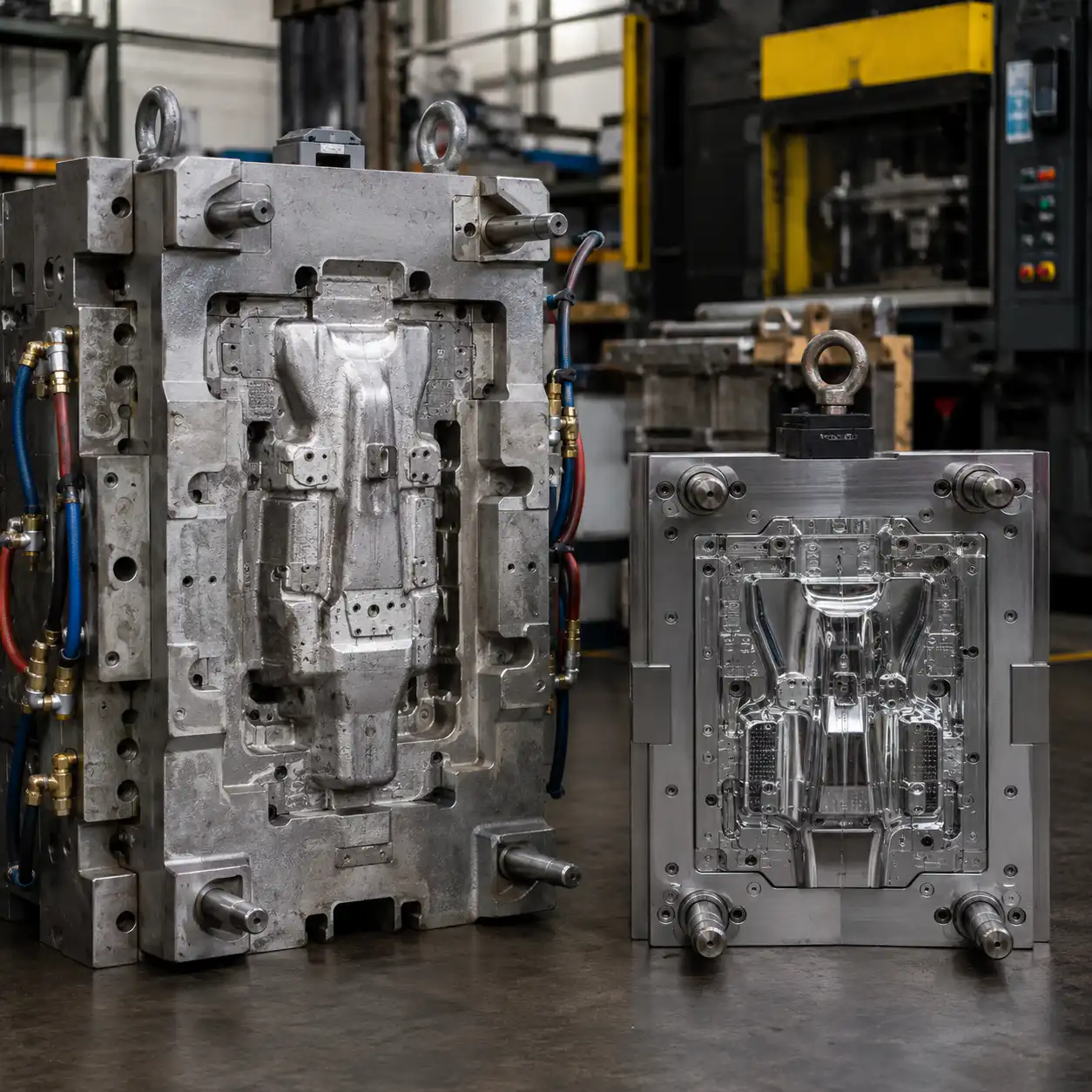
Формы для литья под давлением (так называемые «матрицы») работают в крайне суровых условиях: расплавленный металл температурой 600–700 °C попадает на сталь с температурой 180–250 °C, и этот цикл повторяется каждые 30–60 секунд круглосуточно при крупносерийном производстве. Такие термоциклы приводят к образованию термических трещин — сети мелких поверхностных трещин, возникающих в результате чередующегося расширения и сжатия материала, — которые в конечном итоге определяют срок службы матрицы. Хорошо обслуживаемая матрица для литья алюминия под давлением, изготовленная из стали H13 с твердостью 44–48 HRC, выдерживает 100 000–150 000 циклов, прежде чем появление термических трещин потребует капитального ремонта, и в общей сложности 200 000–300 000 циклов, прежде чем матрица будет списана. Использование высококачественных материалов для форм, таких как DIN 1.2367, или нанесение теплозащитных покрытий может продлить срок службы до 300 000–500 000 циклов, при этом стоимость инструмента увеличивается примерно на 30–50%. Цинковые матрицы служат значительно дольше — от 500 000 до 1 миллиона циклов — поскольку более низкая температура плавления (390–430 °C) снижает термическую нагрузку на сталь.
Формы для литья под давлением эксплуатируются в гораздо менее агрессивных термических условиях и, соответственно, служат дольше. Форма из стали P20, предназначенная для литья ABS или полипропилена, без труда выдерживает 500 000–1 000 000 циклов литья, требуя лишь незначительной замены вставок. Формы из закаленной инструментальной стали (H13, 48–52 HRC) для инженерных пластиков при надлежащем техническом обслуживании могут выдержать более 2 миллионов циклов. Исключение составляют стеклонаполненные материалы, абразивные стекловолокна которых изнашивают литниковые каналы, вентиляционные отверстия и поверхности выталкивателей — ожидайте 250 000–500 000 циклов, прежде чем эти изнашиваемые детали потребуют замены, хотя основная полость и сердечник могут прослужить в 3 раза дольше. Преимущество литья под давлением в виде увеличения срока службы пресс-формы в 5–10 раз частично компенсирует его более низкие механические характеристики на единицу продукции при производстве очень больших партий.
| Параметр | Литье под давлением алюминия | Литье под давлением с использованием цинка | Литье пластмасс под давлением |
|---|---|---|---|
| Температура плавления | 620–700 °C | 390–430 °C | 180–350 °C |
| Давление впрыска | 30–140 МПа | 10–50 МПа | 35–140 МПа |
| Минимальная толщина стенки | 0,8–1,5 мм | 0,5–1,0 мм | 0,4–0,8 мм |
| Типичный допуск | ±0,1–0,3 мм | ±0,05–0,1 мм | ±0,05–0,2 мм |
| Срок службы пресс-формы/оснастки | 100–300 тысяч снимков | 500 тыс. – 1 млн снимков | 500 тыс. — 2 млн снимков |
| Стоимость инструмента (одна полость) | $15,000-60,000 | $10,000-35,000 | $3,000-25,000 |
| Плотность (г/см³) | 2.6-2.8 | 6.6-6.7 | 0.9-1.5 |
| Прочность на разрыв (МПа) | 295-330 | 280-330 | 40-220 |
| Модуль упругости (ГПа) | 70-72 | 85-96 | 1.5-15 |
| Теплопроводность (Вт/м·К) | 96-110 | 105-115 | 0.2-0.5 |
| Постобработка | Удаление заусенцев, механическая обработка, гальваника | Минималистичные, зачастую готовые к использованию | Обработка ворот, покраска при необходимости |
| Возможность вторичной переработки | 100% (переплав, бесконечный) | 100% (переплав, бесконечный) | Переработанный материал 10-30%, ограниченное количество циклов |
Экономика масштаба: анализ точки безубыточности
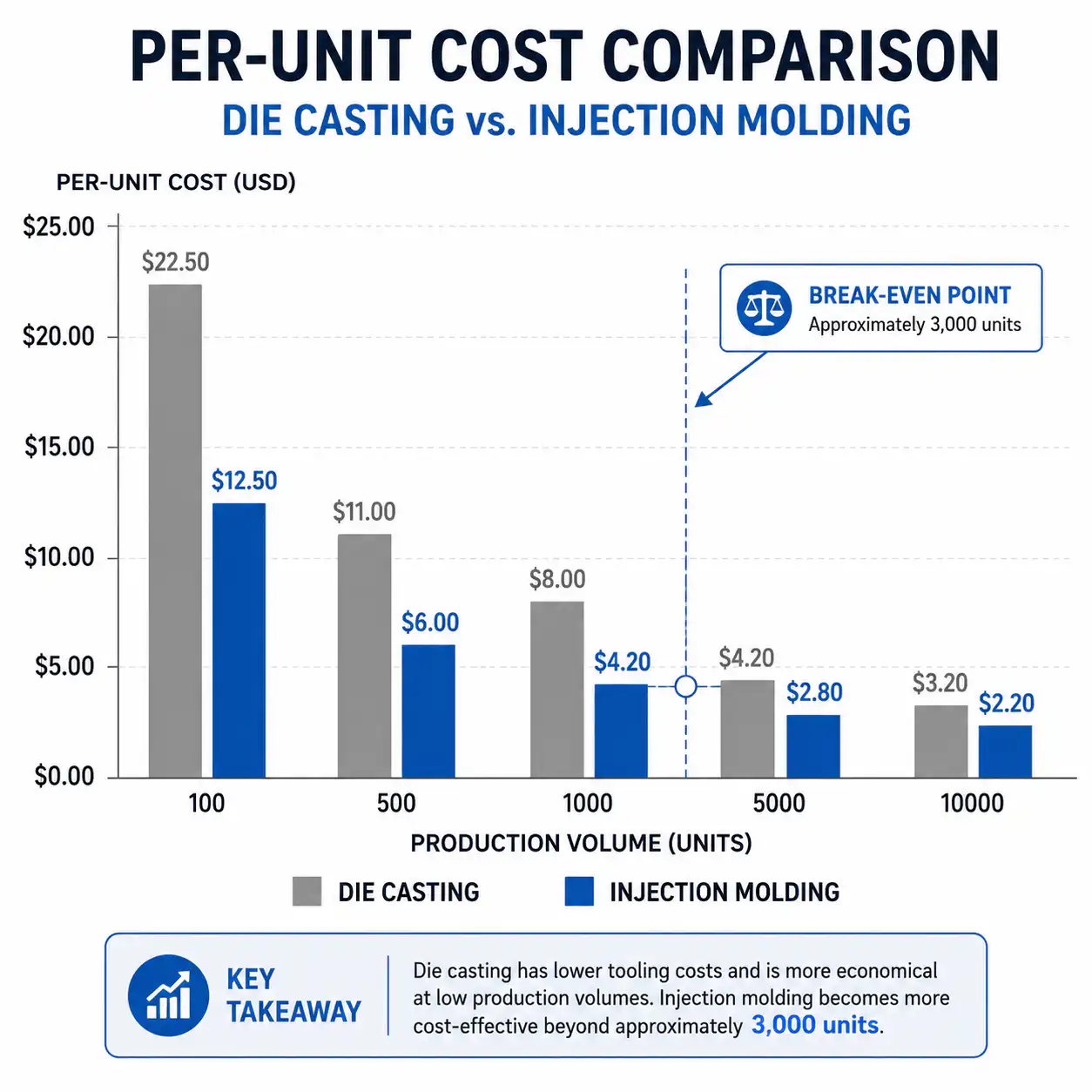
Экономическая эффективность литья под давлением по сравнению с литьем в пресс-формы зависит от трёх показателей: стоимости пресс-формы, стоимости материала за килограмм и времени цикла. Простой пример иллюстрирует эти расчёты: стоимость пресс-формы для литья алюминия под давлением составляет $25,000–35 000 за форму с одной полостью, стоимость материала составляет $2,50–3,50/кг для сплава A380, а время цикла — 35–50 секунд для детали весом 200 г. Стоимость аналогичной формы для литья под давлением стеклонаполненного нейлона составляет $12 000–18 000, стоимость материала — $3,50–5,50/кг для 30% GF нейлона 6/6, а время цикла — 25–35 секунд. При весе детали 100 г (нейлон весит на 62% меньше при той же геометрии) стоимость материала на одну деталь составляет $0,50–0,70 для алюминия против $0,35–0,55 для нейлона. Однако с учётом амортизации пресс-формы: при общем объёме производства 5 000 деталей стоимость детали, изготовленной методом литья под давлением, составляет $2,95–3,85 за единицу ($0,35 + $2,60–3,60 амортизация пресс-формы), тогда как литая под давлением версия обходится в $5,80–8,20 ($0,50 + $5,00–7,00 амортизация). Литье под давлением выгодно при небольших объемах производства.
По мере увеличения объёма производства до 100 000 деталей расчёты для применений, где прочность имеет решающее значение, меняются на противоположные. Амортизация инструментов снижается до $0,12–0,18 для литья под давлением и до $0,25–0,35 для литья под давлением в пресс-формах — это незначительные суммы по сравнению с затратами на материал и время цикла. Себестоимость одной детали составляет примерно $0,55–0,85 для литого под давлением нейлонового кронштейна и $0,80–1,30 для литого под давлением алюминиевого. Однако алюминиевая деталь в 3 раза жестче, в 2 раза прочнее и не подвержена ползучести при длительной нагрузке. Если для вашей области применения требуются такие механические характеристики, литье под давлением оправдывает себя уже одним лишь функциональным преимуществом. Если пластик соответствует техническим требованиям, более низкая себестоимость единицы продукции при литье под давлением и более короткие сроки изготовления пресс-форм (6–10 недель против 10–16 недель для литья под давлением) делают его экономически выгодным выбором для любых объемов производства — от 500 000 и более деталей.
- Начните с механических требований: Перед сравнением технологических процессов определите минимальную предел прочности на разрыв, модуль упругости, усталостную долговечность и диапазон рабочих температур. Если пластик соответствует техническим требованиям, литье под давлением в 90% случаях оказывается более экономичным — но не стоит навязчиво использовать полимер там, где действительно требуется металл.
- Рассчитывайте фактический вес детали, а не вес по геометрическим параметрам: Детали, изготовленные методом литья под давлением, требуют более толстых стенок и литниковых каналов. Деталь, вес которой из пластика составляет 50 г, после учета ограничений по минимальной толщине стенок может весить 160 г в алюминиевом исполнении — это в три раза превышает ожидаемые затраты на материал.
- Учет вторичных операций в общей себестоимости: Детали, изготовленные методом литья под давлением, почти всегда требуют механической обработки (нарезание резьбы, торцевание, сверление) по цене $0,50–3,00 за штуку. Детали, изготовленные методом литья под давлением, требуют обрезки литников по цене $0,01–0,05 за штуку. Учтите эти затраты при сравнении, прежде чем объявлять победителя.
- Учтите срок службы пресс-формы в графике амортизации: Стоимость алюминиевой формы для литья под давлением составляет $35 000 за 100 000 циклов = $0,35 на одну деталь в расчёте амортизации. Форма для литья под давлением со стоимостью $15 000 на 500 000 циклов = $0,03 на деталь. 10-кратная разница в амортизации инструмента на одну деталь может перевесить преимущества по стоимости материала.
- Учтите затраты, связанные с коррозией и нанесением покрытий: Для обеспечения коррозионной стойкости литого под давлением алюминия требуется нанесение хроматного конверсионного покрытия или анодирование, что увеличивает стоимость на $0,50–2,00 за деталь. Пластмассы по своей природе обладают коррозионной стойкостью — дополнительные затраты на покрытие не требуются, за исключением случаев, когда необходимо обеспечить защиту от ультрафиолета или улучшить эстетический вид.
- Оценка гибкости проекта с учетом будущих изменений: Модификация формы для литья под давлением обходится в $1 000–5 000 при внесении изменений, не требующих использования специальной стали. Модификация инструмента для литья под давлением обходится в $3 000–15 000, поскольку закаленная сталь H13 требует обработки методом электроэрозионной резки. Если ваш проект может претерпеть изменения, литье под давлением является вариантом с меньшим риском.
Матрица отраслевых применений
| Промышленность | Предпочтительный процесс | Типичный материал | Основной фактор выбора | Диапазон годового объема |
|---|---|---|---|---|
| Силовая передача автомобиля | Литье под давлением | Алюминий для A380 | Рабочая температура 180 °C и выше, конструктивные нагрузки | 50 тыс. — 2 млн |
| Корпуса для бытовой электроники | Литье под давлением | PC/ABS, магний (тонкий) | Вес, экранирование от электромагнитных помех, тонкие стенки | 100 тыс. — 10 млн |
| Сантехнические фитинги | Литье под давлением (цинк/латунь) | Замак 3, латунь | Прочность нити, номинальное давление | 100 тыс. — 5 млн |
| Корпуса для электроинструментов | Литье под давлением | GF-нейлон 6/6 | Ударопрочность, электроизоляция | 50 тыс. — 500 тыс. |
Система принятия решений по затратам: литье под давлением против литья под давлением по объему
Используйте данную модель, основанную на объёме производства, для выбора технологического процесса с наименьшими затратами. Все затраты включают амортизацию инструментов, стоимость материалов, время цикла и стандартные вторичные операции:
- Прототип (1–500 штук): Ни литье под давлением, ни литье в пресс-форму не являются экономически выгодными при производстве прототипов в небольших объемах. Воспользуйтесь обработкой на станках с ЧПУ из цельного материала (алюминия) или 3D-печатью (пластик). Бюджет на обработанные на станках прототипы составляет $500–3 000 за деталь, а на 3D-печатные — $50–300. Оснастка для литья под давлением прототипов существует ($5 000–15 000 для простых форм), но при объёме менее 2 000 деталей она редко оправдывает себя с экономической точки зрения.
- Небольшой объем (500–5 000 единиц): Литье под давлением с использованием алюминиевых прототипных форм ($3 000–8 000 для простой формы) имеет решающее преимущество перед литьем под давлением. Себестоимость одной детали: $1,50–4,00 для литьевого пластика против $8,00–20,00 для литого под давлением алюминия. Срок службы литьевой формы может составить всего 5 000–10 000 циклов, но при таких объёмах этого вполне достаточно.
- Средний объем (5 000–50 000 единиц): Переходная зона. Литье под давлением по-прежнему выигрывает по стоимости ($0,80–2,50 за деталь), но литье под давлением становится конкурентоспособным, если механические требования предполагают использование металла. В случае литья под давлением цинка себестоимость одной детали снижается до $1,50–4,00 благодаря более короткому времени цикла и меньшим отходам материала. Именно в этом случае выбор между “пластиком или металлом?” требует проведения подробного механического анализа.
- Крупные партии (50 000–500 000 единиц): Оба процесса являются полностью экономически выгодными. Литье под давлением: $0.30–0.80/деталь (инженерные пластики). Литье под давлением алюминия: $0.60–2.00/деталь. Литье под давлением цинка: $ 0,50–1,50 за деталь. При таких объёмах выбора следует руководствоваться эксплуатационными требованиями — разница в стоимости в пределах $ 0,30–1,20 за деталь может оправдаться благодаря превосходным свойствам металла.
- Серийное производство (более 500 000 деталей): Преобладают многогнездные пресс-формы и автоматизация. Литье под давлением в пресс-формах с 8–16 гнездами: $0,10–0,40/деталь. Литье под давлением в пресс-формах с 2–4 полостями: $0,40–1,00/деталь. Более короткие циклы литья под давлением и более длительный срок службы пресс-форм обеспечивают растущее преимущество по затратам по мере увеличения объемов производства, при условии, что пластик соответствует эксплуатационным требованиям.
Простая формула расчета точки безубыточности: (Стоимость штампа – Стоимость пресс-формы) ÷ (Стоимость пластиковой детали – Стоимость металлической детали) = Объем, при котором достигается безубыточность. Если результат превышает объем вашего проекта, литье под давлением обходится дешевле; если ниже — литье под давлением выигрывает по общей стоимости.
Распространенные неисправности и способы их устранения
| Дефект | Основная причина | Решение |
|---|---|---|
| Пористость (литье под давлением) | Запертый газ, образовавшийся в результате турбулентного наполнения, или усадочная пористость, возникшая из-за недостаточной подачи материала во время затвердевания | Увеличьте давление интенсификации для алюминия до 70–100 МПа. Добавьте переливные отверстия в местах заполнения. Снизить температуру расплава на 15–25 °C для уменьшения содержания растворенного газа. Перейти на литье под вакуумом (добавляется $2-5K к инструменту) для деталей, для которых пористость имеет критическое значение. |
| Деформация (литье под давлением) | Дифференциальное охлаждение или усадка, вызванная ориентацией, особенно выраженная в случае материалов, армированных стекловолокном | Сбалансируйте охлаждение пресс-формы, чтобы обеспечить разность температур ΔT ≤ 5 °C по всей полости. Уменьшите давление уплотнения на 10–20%, если избыточное уплотнение усиливает ориентацию. Установите устройство для послеформового охлаждения ($500–2 000). Для материалов GF отрегулируйте расположение литника, чтобы обеспечить симметричную картину течения. |
| Контроль температуры (формы для литья под давлением) | Многократные термоциклы от 180 °C (температура кристаллизатора) до 650 °C и выше (металлический контакт) приводят к образованию сети поверхностных трещин | Поддерживайте температуру матрицы на уровне не менее 200–250 °C для уменьшения температурного градиента. Используйте высококачественную сталь H13 или 1.2367, прошедшую надлежащую термообработку до 44–48 HRC. Нанесите PVD-покрытие (CrN или AlCrN, толщиной 0,003–0,005 мм) для увеличения срока службы матрицы. Проводите снятие напряжений матрицы через каждые 100K выстрелов. |
| Вмятины на поверхности изделия (литье под давлением) | При охлаждении толстые участки или ребра дают большую усадку, чем окружающие их тонкие стенки | Обеспечьте толщину ребра не более 60% от номинальной толщины стенки. Увеличьте давление в формовочной смеси на 15–25% с увеличением времени выдержки. Если изменения в конструкции невозможны, добавьте неярко выраженную текстуру для маскировки усадки (SPI C-1 или текстурный узор). Для эквивалентов литья под давлением добавьте литники или переливные углубления для компенсации усадки. |
Почему стоит выбрать нейлоновый пластик для вашего проекта
Точное производство
Более 30 производственных линий с ЧПУ и литьевых линий под одной крышей
Сертифицировано по стандарту ISO 9001:2015
Сертифицированная система качества, полные протоколы проверок
Срок выполнения заказа: 15–25 дней
Быстрое выполнение заказа с возможностью ускоренной обработки
Международная доставка
Авиа- и морские перевозки в Северную Америку, Европу и Азию
Скачайте наше руководство «Литье под давлением против литья под давлением с использованием литьевых форм»
Бесплатное справочное руководство в формате PDF, содержащее таблицы выбора материалов, правила проектирования и контрольные списки для оценки поставщиков.
📥 Скачать руководство «Литье под давлением vs литье в пресс-форму» (PDF)
Похожие статьи
Руководство по выбору технологий для прототипирования и мелкосерийного производства
Стратегия определения линии разъема, углы скоса и расположение выталкивателей
Характеристики материалов и рекомендации по применению различных марок нейлона
Параметры обработки и правила проектирования армированного нейлона
Часто задаваемые вопросы
Что дешевле — литье под давлением или литье в пресс-форму?
При сравнении общей себестоимости одной детали литье под давлением обходится дешевле литья под давлением практически при любом объеме производства. Типичная пластиковая деталь, изготовленная методом литья под давлением, обходится в $0,30–2,50 за единицу (материал + время цикла + амортизация), тогда как сопоставимая алюминиевая деталь, изготовленная методом литья под давлением, обходится в $0,60–4,00 за единицу. При больших объемах производства разрыв увеличивается, поскольку срок службы форм для литья под давлением в 3–10 раз превышает срок службы форм для литья под давлением, что быстрее снижает амортизацию инструмента на одну деталь до нуля. Однако “дешевле” имеет смысл только в том случае, если материал соответствует вашим механическим требованиям — самая дешевая деталь, которая выходит из строя в процессе эксплуатации, является самым дорогим вариантом из всех.
Может ли нейлон, армированный стекловолокном, заменить литье под давлением из алюминия?
Да, во многих областях применения — но не во всех. Стеклонаполненный нейлон 6/6 марки 50% обладает прочностью на разрыв 200–220 МПа (примерно 65–70% от 324 МПа алюминия A380) при весе на 45% меньше и исключает проблемы с коррозией. К успешным примерам замены металла на пластик относятся впускные коллекторы автомобилей (в 1990-х годах стеклонаполненный нейлон заменил алюминий), крышки клапанов, корпуса насосов и несущие кронштейны, где рабочие температуры не превышают 150 °C. Нейлон GF не подходит в качестве замены алюминия в следующих случаях: если рабочая температура непрерывно превышает 150 °C; если для отвода тепла требуется теплопроводность алюминия; если постоянные статические нагрузки могут вызвать ползучесть; или если ударные нагрузки при низких температурах (-20 °C и ниже) могут привести к хрупкому разрушению.
В каком процессе применяются более жесткие допуски?
Литье под давлением цинка обеспечивает самые жесткие допуски на отливки среди всех технологий массового производства (±0,05–0,1 мм для размеров менее 25 мм) благодаря превосходной текучести цинка и низкой усадке при затвердевании. Следующим по точности является литье под давлением с допусками ±0,05–0,2 мм для правильно спроектированных деталей, причем аморфные материалы (АБС, ПК) обеспечивают более жесткие допуски, чем полукристаллические (нейлон, ПП). Литье под давлением алюминия немного отстает — ±0,1–0,3 мм, поскольку более высокая усадка алюминия и более высокая рабочая температура приводят к большему отклонению размеров. Однако последующая механическая обработка позволяет довести точность любого из этих процессов до ±0,01 мм по критическим элементам — при дополнительных затратах в размере $0,50–3,00 за каждый обработанный элемент.
Как сравнивается срок службы форм при использовании этих двух технологий?
Срок службы форм для литья под давлением значительно дольше: 500 000–1 000 000+ циклов для форм из стали P20 с использованием ненаполненных материалов и 1 000 000–2 000 000+ циклов для форм из закаленной стали. Срок службы форм для литья под давлением значительно короче из-за термической усталости: 100 000–150 000 циклов для алюминия до появления термических трещин, после чего требуется капитальный ремонт, а общий срок службы формы составляет 200 000–300 000 циклов. Формы для литья под давлением цинка служат дольше (500 000–1 000 000 циклов), поскольку более низкая температура плавления цинка (390–430 °C по сравнению с 620–700 °C для алюминия) снижает термические напряжения. Практическое следствие: для программ, превышающих 500 000 деталей, следует заложить в бюджет как минимум одну сменную литейную матрицу ($ 25 000–60 000), в то время как одной качественной формы для литья под давлением может хватить на всю программу.
Related Reading
- Литье с вставками: полное руководство по технологическому процессу, проектированию и областям применения
- Обработка на станках с ЧПУ и литье под давлением: полное сравнение производственных технологий
- Обработка на станках с ЧПУ или литье под давлением: как выбрать подходящий технологический процесс для изготовления пластиковых деталей

